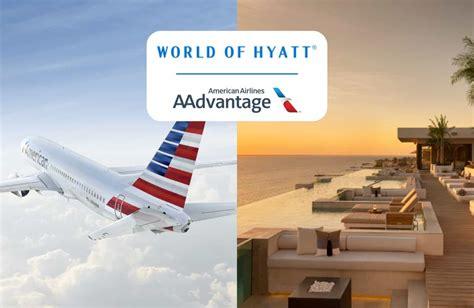
The long-standing loyalty relationship between American Airlines AAdvantage and World of Hyatt has entered a new phase, and the change is more significant than the companies’ relatively quiet announcement might suggest. On September 9, American and Hyatt confirmed that they had mutually agreed to end the additional benefits attached to their enhanced partnership. The two loyalty programs will remain partners, but the deeper relationship that once distinguished them from ordinary airline-hotel arrangements is effectively being dismantled.
The timing is particularly notable because Hyatt simultaneously announced a new relationship with Delta Air Lines SkyMiles. In other words, Hyatt is not walking away from the idea of having a particularly close relationship with a major US airline. Instead, it is replacing American with Delta and bringing back several features that made the original American-Hyatt arrangement especially attractive to frequent travelers.
For customers who remember the partnership at its strongest, the change marks the end of a seven-year experiment in combining airline and hotel loyalty. Yet the practical impact is less dramatic than it might initially appear. The American-Hyatt relationship had already been significantly reduced before the final announcement, meaning much of the value that once made the partnership distinctive had disappeared.
American Airlines and Hyatt Are Ending the Enhanced Partnership
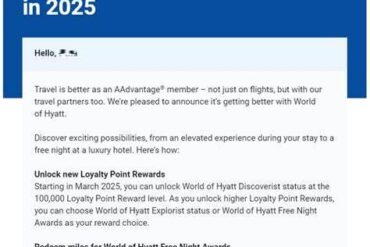
American and Hyatt first created their enhanced relationship in 2019, offering members of both loyalty programs a series of reciprocal benefits. The arrangement went beyond simply allowing travelers to earn airline miles or hotel points. It was designed to connect the two ecosystems and encourage customers to concentrate more of their travel spending with both companies.
One of the most valuable features was the ability to earn one AAdvantage mile or one World of Hyatt point per dollar spent with the partner. This form of reciprocal earning, often described as “double dipping,” allowed travelers to receive rewards from both programs during the same transaction. For frequent flyers and hotel guests, that could significantly increase the value of maintaining loyalty with both brands.
The relationship also provided reciprocal recognition and opportunities to receive rewards connected with the other program. AAdvantage members could encounter World of Hyatt benefits through American’s loyalty structure, while Hyatt members could receive AAdvantage-related rewards through Hyatt’s Milestone Rewards system. Elite-status fast tracks and promotional opportunities further reinforced the idea that the two programs were working together rather than merely sharing a basic earning arrangement.
However, the partnership had already been moving in a different direction. The most attractive double-dipping earning benefit ended in 2025, substantially reducing the everyday value of the arrangement. After that change, the remaining benefits were increasingly concentrated around milestone rewards, occasional promotions and other limited advantages.
That history matters because the September 2026 announcement did not suddenly erase a relationship that remained as powerful as it was in 2019. Instead, it formalized the final stage of a partnership that had already been gradually scaled back.
The Biggest Change Happened Before the Partnership Officially Ended
For many travelers, the most important question is how much they actually lose when the enhanced partnership disappears. The answer depends heavily on how they used Hyatt and American.
Someone who regularly stayed at Hyatt properties while also flying American could once accumulate rewards through both loyalty programs at the same time. That created a meaningful incentive to choose the two companies over competitors, particularly for business travelers whose hotel and airline spending could be substantial.
Once the reciprocal earning structure disappeared, however, that incentive became much weaker. The remaining connection still had value, but it was no longer fundamentally different from the relationships American maintains with several other hotel groups or Hyatt maintains with numerous airlines.
This is why the latest announcement is best understood as the completion of a gradual separation, rather than an abrupt collapse. American and Hyatt are not completely ending their commercial relationship. Hyatt remains an AAdvantage partner, and AAdvantage members can continue receiving certain Hyatt-related benefits during the transition period.
The difference is that neither company will continue treating the other as a particularly privileged partner.
Delta Replaces American as Hyatt’s Preferred US Airline Relationship
The most revealing part of the announcement is what Hyatt did next. On the same day that it confirmed the end of the enhanced American partnership, Hyatt announced a new relationship with Delta SkyMiles.
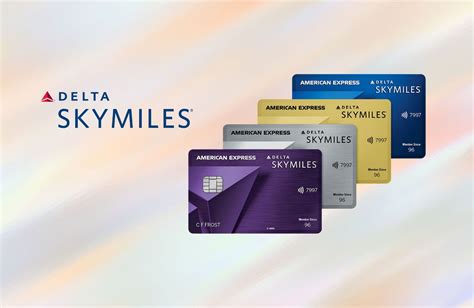
The details of the new collaboration are particularly interesting because they resemble the type of arrangement American and Hyatt once operated. Delta Medallion members will be able to earn miles when spending on qualifying Hyatt stays while also receiving World of Hyatt-related benefits. At the same time, World of Hyatt elite members will be able to earn points on qualifying Delta tickets while receiving SkyMiles-related benefits.
Hyatt explicitly describes this structure around a “Dual Earn” concept. That is important because it effectively restores the type of reciprocal earning that disappeared from the American relationship in 2025.
The precise commercial terms behind Hyatt’s decision are not public. Neither company has disclosed a detailed explanation showing why Delta ultimately replaced American as its closer airline partner. However, the structure of the two agreements provides an important clue.
Hyatt has chosen to maintain a deep relationship with a major US airline, and the new Delta arrangement restores several elements that had made its American relationship distinctive. That suggests the hotel company continues to see strategic value in having a preferred airline relationship, even as it maintains partnerships with multiple carriers.
The decision should therefore not be interpreted simply as Hyatt abandoning airline loyalty partnerships. Instead, Hyatt appears to be reallocating its most significant US airline partnership.
Why Delta May Have Won Hyatt’s Business
The exact reasons behind the decision remain private, so any explanation of Hyatt’s internal evaluation must be treated as an inference rather than an established fact. Large corporate partnerships are rarely determined by a single issue. Commercial costs, customer acquisition, loyalty economics, marketing commitments, technology integration and the expected value of bringing customers between two programs can all influence negotiations.
American, Delta and potentially other airlines could have offered Hyatt different proposals for maintaining or expanding the relationship. A partnership involving reciprocal rewards can be expensive because both companies effectively give customers additional loyalty currency and benefits. The arrangement only makes financial sense when the additional customer activity generated by the partnership is expected to justify those costs.
The seven-year history between American and Hyatt is significant in this context. The companies began with an unusually comprehensive relationship but subsequently removed one of its most valuable components. Delta, by contrast, is entering the relationship with an agreement that restores a form of reciprocal earning.
That does not prove that Delta simply offered Hyatt more money or a better financial package. The public record does not establish the precise negotiating terms. It does, however, show that Delta is now taking the position previously occupied by American as Hyatt’s closer US airline loyalty partner.
For Delta, the arrangement provides another way to connect SkyMiles members with a major hotel loyalty program. For Hyatt, it creates an airline relationship capable of directing airline travelers toward Hyatt properties while encouraging Hyatt customers to consider Delta for flights.
American Still Has a Hyatt Relationship
The end of the enhanced partnership does not mean American AAdvantage and World of Hyatt are becoming complete strangers.
American AAdvantage members with linked Hyatt accounts can continue accessing World of Hyatt rewards through February 28, 2027, provided their accounts are linked by November 15, 2026. World of Hyatt members can continue earning AAdvantage rewards through December 31, 2026, subject to the same November 15 account-linking deadline.
After the transition, Hyatt will remain one of American’s hotel loyalty partners, but its position will become much less distinctive.
American’s broader hotel strategy already includes relationships with Marriott Bonvoy and IHG Rewards, among others. Under the future structure described in the partnership details, AAdvantage members may earn 500 miles per Hyatt stay, while American’s relationships with Marriott and IHG can provide up to two AAdvantage miles per dollar on qualifying bookings.
That makes Hyatt less unusual within the American loyalty ecosystem.
World of Hyatt members will also retain a way to convert Hyatt points into AAdvantage miles. The stated rate is 5,000 World of Hyatt points for 2,000 AAdvantage miles. That conversion option means the programs remain connected, but it lacks the strategic significance of a full reciprocal partnership.
Hyatt Still Works With Multiple US Airlines
Hyatt’s relationship with Delta should also be viewed within its much larger global airline network. The hotel program maintains partnerships with multiple airlines across North America, Europe, Asia-Pacific and other markets.
In the United States, Hyatt continues to work with American Airlines, Delta Air Lines, United Airlines and Southwest Airlines. Most of these airline relationships provide a basic earning benefit of 500 miles per qualifying Hyatt stay, while Southwest Rapid Rewards members can earn 600 miles per stay.
That means American has not been removed from Hyatt’s airline ecosystem. It has simply lost the more prominent position that it held under the former enhanced partnership.
The distinction is important for frequent travelers. A World of Hyatt member who occasionally flies American can still earn rewards through the existing partnership. What disappears is the additional layer of benefits that once made concentrating travel between American and Hyatt particularly attractive.
United and Marriott Show What a Deep Partnership Can Look Like
The changing American-Hyatt relationship also highlights another major US airline-hotel partnership: United Airlines MileagePlus and Marriott Bonvoy.
Known as RewardsPlus, the United-Marriott relationship includes reciprocal elite benefits and preferential points-to-miles conversion opportunities. United miles can be converted to Marriott points at a 1:1 ratio, while the programs have also offered promotions involving earning in both ecosystems.
The arrangement demonstrates why the American-Hyatt changes matter strategically. Airline and hotel loyalty partnerships can range from simple mileage-earning agreements to much deeper relationships involving elite recognition, reciprocal earning and preferential transfers.
American and Hyatt once occupied the deeper end of that spectrum. Their new relationship will be much closer to a conventional partner arrangement.
For American, that leaves a noticeable gap at a time when the airline is attempting to strengthen its overall premium proposition. The carrier does not necessarily need to immediately reproduce the old Hyatt agreement with another hotel company, but a comparable partnership could provide another tool for connecting AAdvantage members with premium hotel loyalty benefits.
What the Change Means for Frequent Travelers
For most customers, the practical impact will depend on how heavily they used the American-Hyatt relationship. Travelers who rarely combine American flights with Hyatt stays are unlikely to see a major difference. Those who relied on reciprocal benefits, however, will have fewer reasons to concentrate spending across both programs.
The bigger story is therefore not the loss of one particular perk. It is the changing structure of US airline and hotel loyalty partnerships.
American and Hyatt began their enhanced relationship at a time when both companies could use reciprocal rewards to encourage customers to cross between their ecosystems. Seven years later, that model has changed. The most lucrative double-dipping benefit has already disappeared, and Hyatt has now chosen Delta for a new relationship that restores many of the features that once defined its partnership with American.
The companies may continue working together for years through their standard loyalty agreement. But the era in which American AAdvantage and World of Hyatt represented one of the deepest airline-hotel loyalty partnerships in the US is coming to an end.
For Hyatt, Delta is now the new strategic connection. For American, Hyatt remains available, but as one hotel partner among several rather than a uniquely aligned loyalty program. And for travelers, the shift is another reminder that airline and hotel loyalty partnerships can change significantly even when the underlying brands continue doing business together.