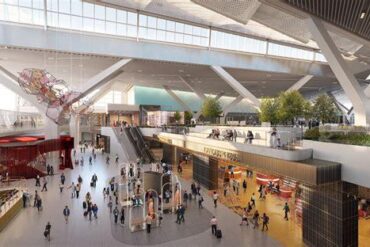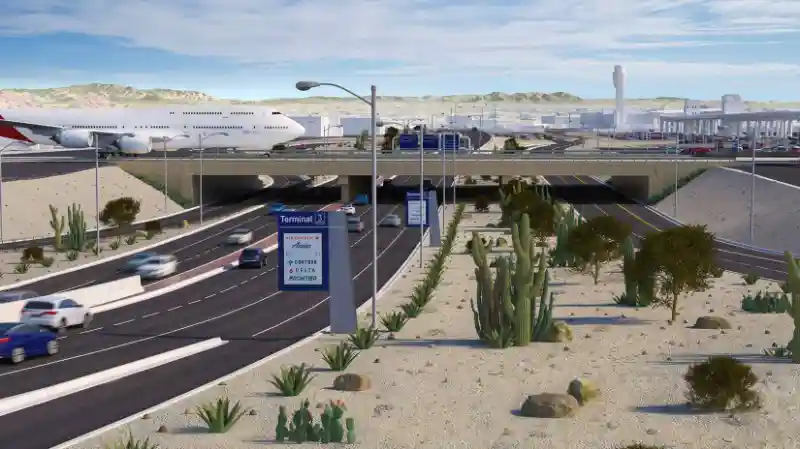
American Airlines is set to play a central role in the next major chapter of Phoenix Sky Harbor International Airport (PHX) after being selected as the primary airline for the planned West Terminal. The project will be the airport’s first entirely new terminal since Terminal 4 opened in 1990, marking a significant expansion for one of the United States’ busiest and fastest-growing aviation gateways. For American, the decision reinforces Phoenix as one of the most important hubs in its domestic and international network.
The planned terminal comes as Phoenix continues to handle enormous passenger volumes while its existing terminal infrastructure approaches its practical limits. American already dominates the airport, carrying more than 40% of Phoenix Sky Harbor’s passenger traffic and serving more than 20 million customers through Phoenix each year. During peak periods, the airline operates more than 300 daily departures to over 100 destinations, making its Phoenix operation a major connecting platform rather than simply a local airline base.
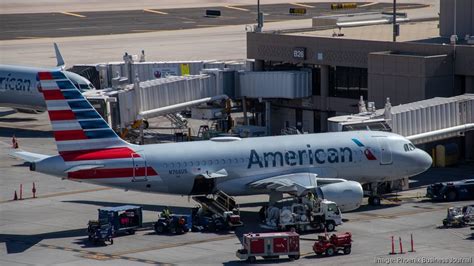
The selection also has historical significance. American Airlines and its predecessor carriers have served Phoenix since 1930, giving the airline a relationship with the Arizona capital that stretches back nearly a century. In 1963, the carrier introduced the region’s first scheduled jet service using the Boeing 707, helping establish Phoenix as an increasingly important commercial aviation market. Today, American connects Phoenix with destinations across North America, Hawaii, Europe, and other international markets.
American Airlines Becomes the Anchor of Phoenix’s West Terminal
Phoenix selected American after months of analysis examining operational requirements, community considerations, and financial factors. The decision makes the airline the anchor carrier for the future West Terminal, although Phoenix Sky Harbor has not yet completed the full allocation of airlines and gates that will eventually define the facility.
For American, the project offers an opportunity to build additional capacity around an already substantial hub operation. American CEO Robert Isom said the new facility will support continued growth, broader global connectivity, and additional premium spaces for passengers. Those features could become particularly important as airlines increasingly compete not only through network size but also through upgraded airport and onboard experiences.

American’s presence in Arizona also extends well beyond aircraft operations. The airline employs approximately 8,000 people across the state, making its Phoenix hub an important part of the region’s wider aviation and employment ecosystem. The West Terminal therefore represents more than a collection of new gates; it could become a long-term physical platform for American’s continued expansion in one of its most strategically important markets.
Why Phoenix Sky Harbor Needs a New Terminal
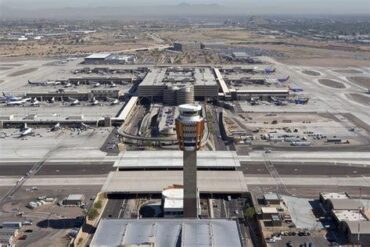
The need for another terminal has developed gradually as passenger demand and aircraft capacity have increased. Terminals 3 and 4 are effectively built out in terms of additional gates, limiting the airport’s ability to accommodate future growth within its existing footprint. Phoenix handled more than 48 million passengers in 2023, demonstrating the scale of demand already moving through the airport.
Terminal 4 currently carries more than 75% of Sky Harbor’s passengers, placing considerable pressure on the airport’s largest existing facility. Although Terminal 4 has undergone extensive development since opening, simply adding more gates to the current complex cannot provide unlimited capacity.
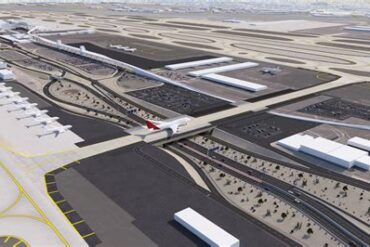
The West Terminal is planned for the western side of the airport, between Terminal 3 and Taxiway U, near the locations formerly occupied by Terminals 1 and 2. Terminal 1 closed in 1990, while Terminal 2 remained in operation until 2020 before being demolished. The redevelopment of this part of the airport therefore represents a return to an area that has already played a significant role in Phoenix’s aviation history.
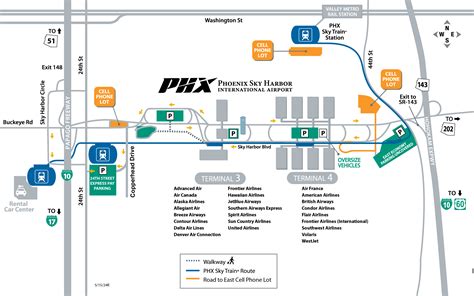
The project is also being developed alongside other infrastructure improvements. Taxiway U is being upgraded to improve airfield efficiency, while a new six-gate concourse is under construction on the north side of Terminal 3. These projects can expand operational capability before the much larger West Terminal is eventually completed.
West Terminal Could Bring More International Capacity
One of the most significant possibilities surrounding the new terminal is its potential role in expanding international service from Phoenix. American already uses Phoenix as a gateway to destinations beyond the continental United States, including Hawaii and international markets. The West Terminal is expected to accommodate additional widebody aircraft, creating greater flexibility for long-haul operations.
The airport has not yet determined exactly how large the terminal will be. Instead, Phoenix plans to establish the number of gates and concourses according to projected passenger demand for 2033, when the facility could potentially open. This approach is intended to prevent the airport from building an oversized complex based on today’s demand while still providing room for future expansion.
The proposed terminal is expected to use a modular design, allowing additional concourses to be added as demand develops. That could be particularly valuable for an airport facing decades of potential passenger growth. Rather than treating the initial project as a fixed endpoint, Phoenix is effectively planning a terminal that can evolve with the market.
Construction Is Still Several Years Away
Despite American’s selection as the primary airline, the new terminal remains years from becoming a reality. Phoenix entered a collaborative planning phase in 2026, with the airport expecting to procure a design team in 2027. Construction could begin in late 2029, while a potential opening has been identified for late 2033.
Those dates are not guaranteed. The scope, design, gate count, financing, and construction schedule remain subject to further development. The airport currently estimates that the West Terminal could cost approximately $4.5 billion, although a final project budget has not yet been established.
Funding is expected to rely on passenger facility charges, airport revenue, and bonds, rather than local tax dollars. That financing structure is consistent with the airport’s broader strategy of using aviation-generated revenue to fund major infrastructure improvements.
Phoenix Is Expanding Before the West Terminal Opens
The West Terminal will eventually become the most visible part of Phoenix’s long-term capacity strategy, but the airport is not waiting until 2033 to improve its infrastructure. Sky Harbor plans to invest hundreds of millions of dollars in Terminal 4, which remains the airport’s primary passenger facility.
That combination of projects is important because Phoenix’s growth cannot depend on a single future terminal. Existing facilities must continue handling increasing demand during the years required to design, finance, and construct the West Terminal. At the same time, improvements to taxiways and Terminal 3 can provide additional operational capacity before the new facility opens.
For American Airlines, the West Terminal represents a major opportunity to strengthen its position at Phoenix Sky Harbor. For the airport, it provides a potential long-term answer to capacity constraints that have become increasingly difficult to solve within the existing terminal footprint. If the current schedule holds, passengers could see Phoenix’s first new terminal in nearly four decades by 2033, creating a new gateway for American and potentially reshaping the airport’s international and domestic network for decades to come.