A commercial flight can spend hours moving at hundreds of knots with barely a noticeable change in speed, only for passengers to suddenly feel the aircraft slow down during the final part of the journey. The engines may sound different, the nose may appear to change attitude, and the aircraft can seem to settle into a slower rhythm. To someone sitting in the cabin, especially without a view of the flight deck displays, that change can feel like something has gone wrong.
In most cases, however, a slowdown during descent is exactly what the pilots and air traffic controllers expect to happen. It is part of a carefully managed transition from high-altitude cruise to the much slower speeds required around an airport. One of the most important reasons is an FAA rule that limits aircraft to 250 knots below 10,000 feet MSL in most U.S. airspace.
The rule is sometimes informally described as having a “10-knot margin,” but it is important to understand what that means. The regulation itself establishes a 250-knot maximum, not a separate 260-knot operating target. The practical idea behind the often-mentioned margin is that pilots and controllers work with speed tolerances and operational considerations, while the legal limit remains the key reference point. This distinction matters because a passenger may see an aircraft briefly hovering around the mid-250-knot range on a flight-tracking display and assume the crew is breaking a rule when the actual operating circumstances are more complicated.
Why Airliners Slow Down Near 10,000 Feet
The most noticeable speed reduction usually happens because the aircraft is transitioning into terminal airspace, where hundreds of airplanes may be converging on the same airport. At cruising altitude, aircraft can be separated by large vertical and horizontal distances. Near a major airport, however, arriving and departing aircraft occupy a much smaller volume of airspace, making speed control an important part of maintaining an orderly traffic flow.
The FAA’s 14 CFR 91.117 generally prohibits operating an aircraft below 10,000 feet MSL at an indicated airspeed greater than 250 knots. The regulation also contains exceptions when an aircraft’s minimum safe airspeed is higher than the prescribed limit. FAA guidance confirms that aircraft receiving a speed assignment above 250 knots at or above 10,000 feet must comply with the regulation once cleared below that altitude.
That explains why a passenger may feel a fairly distinct reduction in speed around this point in a descent. A widebody aircraft that has spent much of its descent traveling at speeds approaching the high 200-knot range must transition toward the regulatory limit before continuing into lower altitudes.
The timing is not necessarily identical on every flight. A pilot might begin reducing speed well before reaching 10,000 feet, allowing the aircraft to arrive at the restriction smoothly. Another arrival may require a more noticeable reduction closer to the target altitude. The difference depends on the aircraft, its weight, the published arrival procedure, traffic conditions, weather, and the instructions being issued by air traffic control.
STAR Routes Quietly Control How Your Flight Descends
One of the biggest reasons passengers experience repeated slowdowns and level-offs is the Standard Terminal Arrival Route, commonly known as a STAR. These published instrument procedures provide structured paths for aircraft approaching major airports.
A STAR is much more than a line on a navigation display. It can contain specific altitude and speed restrictions designed to integrate aircraft into the arrival stream. When an airplane follows the lateral route of a published procedure, its crew must comply with applicable published restrictions unless they are amended by an authorized clearance.
This creates an invisible framework around an airport. One aircraft might be descending toward 6,000 feet while another is held at 8,000 feet, and a third may be instructed to maintain a particular speed. From the cabin, these changes can feel random. From the perspective of the flight crew and controller, they are pieces of a carefully sequenced traffic pattern.
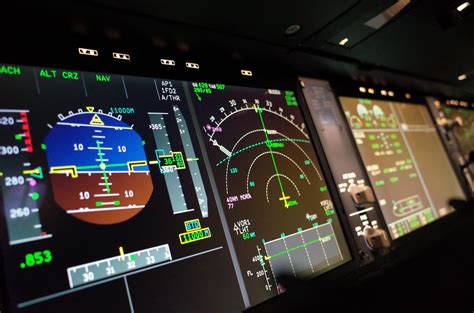
The FAA’s air traffic-control procedures specifically address speed adjustments and recognize that simultaneous speed reduction and descent can be difficult, particularly for turbojet aircraft. Controllers may therefore specify whether the pilot should reduce speed first or descend first.
That is one reason an aircraft can sometimes appear to stop descending briefly. A level-off around 10,000 feet can be an entirely normal part of complying with the speed restriction. FAA aeronautical guidance specifically notes that leveling at 10,000 feet during descent to comply with the airspeed restriction is commonplace and is anticipated by controllers.
What Passengers Actually Feel When Speed Changes
A speed reduction does not necessarily feel like a dramatic braking maneuver. Airliners do not have conventional brakes that slow them through the air. Instead, pilots manage energy using several flight controls and engine settings.
The most straightforward method is reducing thrust. If the aircraft continues descending while the engines produce less thrust, aerodynamic drag and the descent itself can gradually reduce airspeed. The aircraft’s pitch and flight-path management also influence how quickly speed changes.
Pilots may also use speedbrakes or spoilers. These panels disturb airflow over the wings and increase drag, allowing the aircraft to lose energy more quickly. Their use varies according to aircraft type, airline procedures, weather, traffic conditions, and the situation on the arrival.
Flaps can also contribute to slowing the aircraft, but their primary purpose is not simply to act as brakes. Extending flaps changes the aerodynamic characteristics of the wing and allows the airplane to generate sufficient lift at lower speeds. As the aircraft approaches the runway, progressively greater flap settings allow it to transition from high-speed cruise configuration into its landing configuration.
Passengers can therefore feel several different sensations during a descent. A slight forward sensation may accompany deceleration. A change in engine noise can occur as thrust is reduced. There may also be a subtle change in pitch as the aircraft’s flight-control system adjusts to maintain the commanded path.
None of these sensations by themselves indicate a problem.
Why 250 Knots Is Not the Only Speed Rule
The 250-knot restriction is only one part of the speed-control system. The FAA also establishes additional restrictions in certain low-altitude airspace.
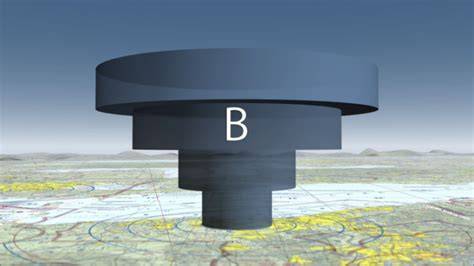
For example, 200 knots is generally the applicable maximum under Class B airspace and in certain circumstances involving Class C and Class D airspace or proximity to the ground, subject to the specific provisions of the regulations. These restrictions are particularly relevant to general aviation, although commercial aircraft can also encounter them depending on their location and operation.
Class B airspace surrounds the busiest airports and is often depicted as an inverted wedding cake, with multiple layers extending outward from the airport. Class C and Class D airspace serve other towered airports and have different dimensions and operating requirements.
For airline passengers, the important point is that speed restrictions become increasingly significant as an aircraft gets closer to an airport. A flight might begin its descent at several hundred knots, transition toward 250 knots around 10,000 feet, and then progressively slow to lower speeds as it approaches the terminal area and runway.
This is why a descent can feel like a series of small adjustments rather than one smooth reduction.
The 10-Knot Idea Is More Complicated Than It Sounds
The phrase “FAA 10-knot rule” can create a misleading impression that the FAA has a standalone regulation saying airplanes may fly 10 knots above or below 250 knots. That is not the actual structure of the regulation.
The legally significant rule is 250 knots below 10,000 feet MSL, subject to its exceptions. The FAA’s operational guidance also deals with assigned speeds, controller instructions, and the way pilots transition from higher speeds to compliant speeds.
That distinction is important when interpreting flight-tracking data. Airspeed displayed to passengers through tracking applications may not correspond directly to the indicated airspeed used for regulatory compliance. Groundspeed, indicated airspeed, calibrated airspeed, and true airspeed are different measurements, and wind can cause substantial differences between what an aircraft is doing through the air and how quickly it is moving across the ground.
A jet showing a groundspeed of 290 knots on a tracking application is therefore not necessarily violating the 250-knot rule. The regulation concerns indicated airspeed, not the groundspeed shown by many consumer flight-tracking services.
This is one of the easiest ways for passengers to misinterpret perfectly normal flight behavior.
Why Pilots Must Protect Their Airspeed
Speed management is not merely about following regulations. Maintaining sufficient airspeed is one of the fundamental requirements of safe flight.
Large swept-wing aircraft are designed to operate within specific aerodynamic envelopes. At high altitude, the crew must remain aware of both low-speed and high-speed limits. At low altitude, the margin between normal maneuvering speeds and stall-related speeds becomes increasingly important as the aircraft transitions toward landing.
A stall occurs when the wing exceeds its critical angle of attack and can no longer produce the required lift, rather than simply because the airplane reaches one universal speed. Nevertheless, airspeed is an essential reference for managing the aircraft’s energy and ensuring adequate margins.
The accident involving Air France Flight 447 remains one of the most widely studied examples of the consequences of an airliner entering a high-altitude stall. The Airbus A330’s recovery challenge illustrated how difficult it can be to regain controlled flight after a transport-category aircraft reaches an unusual aerodynamic state.
For that reason, pilots do not simply slow an aircraft because a controller says “slow down.” They must continuously consider the aircraft’s configuration, weight, altitude, maneuvering requirements, weather, and available energy.
Why a Heavy Aircraft May Need Different Treatment
The 250-knot rule has an important safety exception. If an aircraft’s minimum safe airspeed for a particular operation is higher than the regulatory maximum, the aircraft may operate at that minimum safe speed rather than being forced below a speed that would be unsafe. FAA documentation explicitly recognizes this exception.
This can matter more during departure than arrival, especially for heavily loaded aircraft whose clean-wing operating speeds may be relatively high. Pilots can advise ATC when they need to maintain a higher speed for safe operation.
Arriving aircraft are generally in a different situation. By the time a long-haul aircraft reaches the terminal area, it has burned a substantial amount of fuel and therefore weighs considerably less than it did at takeoff. Its maneuvering speeds are consequently lower, and the aircraft is progressively configured for landing.
The speed reduction therefore becomes part of a carefully managed transition rather than an abrupt command to make a heavy jet fly slowly.
Why Airlines Sometimes Level Off During Descent
Passengers often become particularly concerned when the aircraft stops descending and remains at one altitude for several minutes. Yet this can be completely normal.
Arrival procedures can include altitude constraints that require an aircraft to cross specific fixes at specific altitudes. Controllers may also temporarily level an aircraft to maintain separation from other traffic. In some cases, a level-off allows the crew to reduce speed before continuing the descent.
FAA guidance specifically acknowledges leveling at 10,000 feet during descent to comply with the airspeed restriction as a commonplace operation.
Major airports can make this even more noticeable. When dozens of aircraft are converging on the same runways, controllers have to manage spacing in three dimensions. A small speed adjustment made several miles upstream can prevent a much larger conflict later in the arrival sequence.
From the passenger cabin, this can feel like the airplane has “paused.” Operationally, it may simply be part of the traffic-management system working exactly as intended.
The Final Transition to Landing Speed
Once the aircraft is established closer to the airport, the 250-knot restriction becomes only one stage in a much longer deceleration process. The airplane must eventually reach its final approach speed, which depends on aircraft weight, configuration, runway conditions, wind, and the operator’s procedures.
Flaps are progressively extended as the aircraft slows. The landing gear is deployed at an appropriate point, adding substantial drag. The aircraft then settles onto a stabilized approach, normally aligned with the runway and following the intended vertical flight path.
The goal is not simply to make the aircraft slow. The crew must arrive at the runway with the correct speed, configuration, altitude, alignment, and energy state.
That is why the descent may contain several noticeable changes instead of one continuous glide. Each adjustment is helping move the aircraft from the high-energy cruise environment toward the highly controlled conditions required for landing.
Why Most Mid-Flight Slowdowns Are Not Emergencies
The next time an airliner suddenly seems to slow down, the sensation can be easy to misread. Passengers may hear the engines become quieter, feel a small change in acceleration, or notice the aircraft leveling before descending again. Those sensations can be surprisingly dramatic when experienced without knowing what the flight crew is doing.
But during an ordinary arrival, speed changes are expected. Air traffic control uses speed adjustments to sequence aircraft. STARs impose published restrictions. The FAA establishes maximum speeds at lower altitudes. Pilots manage thrust, drag, configuration, and pitch to meet those requirements while preserving safe operating margins.
The famous “10-knot rule” is therefore less a mysterious aviation trick than a window into the larger system behind commercial flying. The real rule is the FAA’s 250-knot limit below 10,000 feet, while the apparent 10-knot margin is an oversimplified way of describing operational tolerances rather than a separate legal authorization.
What feels like an unexpected slowdown from seat 32A is often the visible result of dozens of invisible decisions involving pilots, controllers, published procedures, aircraft performance, and traffic sequencing. The airplane is not necessarily losing control or encountering trouble. More often, it is simply entering the carefully choreographed part of the flight where speed matters almost as much as altitude.