Gustavus Airport in Alaska recorded just 10,243 passenger enplanements in 2025, making it the quietest primary commercial airport in the United States by passenger volume. That figure is almost insignificant beside the tens of millions of passengers handled by the country’s largest hubs, yet Gustavus plays an important role for a community with no road connection to the rest of Alaska.
The contrast highlights the extraordinary scale of the US aviation system. The Federal Aviation Administration (FAA) oversees a network of more than 19,000 airports, including commercial airports, general aviation facilities, and private airfields. Depending on the definition used, roughly 500 to 600 airports provide commercial service.
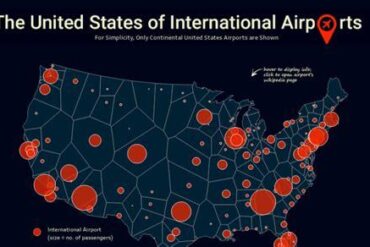
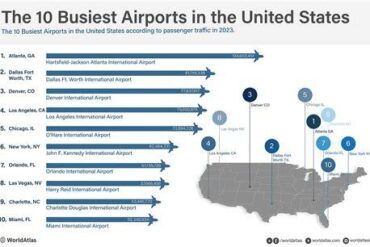
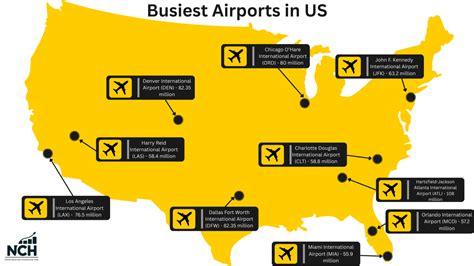
At the opposite end of the spectrum are airports such as Hartsfield-Jackson Atlanta International Airport, Dallas/Fort Worth International Airport, and Chicago O’Hare International Airport. These major hubs process millions of passenger boardings every year. Between those giants and America’s smallest commercial facilities, however, lies an enormous range of airports serving communities with very different levels of demand.
The FAA’s Preliminary Calendar-Year 2025 Enplanement Data provides a useful way to identify the quietest primary commercial airports. An enplanement represents a passenger boarding a commercial aircraft, rather than every person entering or passing through a terminal. Based on that measure, these are the 10 primary commercial airports with the lowest passenger volumes in 2025.
Gustavus Airport Is America’s Quietest Primary Commercial Airport

Gustavus Airport (GST), located in Gustavus, Alaska, recorded 10,243 enplanements in 2025, placing it at the bottom of the FAA’s primary commercial airport ranking. Although the number is tiny compared with the country’s major airports, Gustavus performs an important transportation function for the isolated southeastern Alaska community and visitors heading toward Glacier Bay National Park and Preserve.
The airport is state-owned and open to public use. Its passenger facilities are remarkably compact, with a single-story terminal containing the principal functions travelers need, including check-in, security, waiting areas, and baggage claim. Rather than being designed around high passenger throughput, the facility reflects the requirements of a small community where air travel is an essential link to the wider world.
Gustavus Airport also has an unusual historical background. The facility was constructed in 1943 during World War II as Gustavus Army Airfield and was used by the US Army Air Forces. Following the war, it transitioned to civilian use and eventually became an important transportation link for Gustavus, which remains without a road connection to the rest of Alaska.
Today, commercial aviation at Gustavus combines scheduled airline service with smaller regional operations. Alaska Airlines operates seasonal flights to Juneau during the summer using Boeing 737-700 aircraft, while Air Excursions/Alaska Seaplanes provides year-round regional and air-taxi services with smaller propeller aircraft.
The Alaska Airlines route is particularly notable because it is among the shortest scheduled mainline jet routes in the United States. The flight between Gustavus and Juneau covers only about 41 miles and can take approximately 15 minutes. For passengers, the journey is less about covering a great distance than maintaining an essential connection between communities separated by Alaska’s rugged geography.
Show Low Regional Airport Nearly Matches Gustavus
Only 102 enplanements separated Gustavus Airport from Show Low Regional Airport (SOW) in 2025. The Arizona airport recorded 10,345 passenger boardings, making it the second-quietest primary commercial airport in the country.
Show Low is located about two miles east of the city of Show Low in Navajo County, within Arizona’s White Mountains. Its elevation of approximately 6,415 feet (1,955 meters) makes it one of the higher-altitude commercial airports in the United States.
Despite its small passenger count, Show Low experienced a remarkable increase in traffic during 2025. The airport recorded only 3,655 enplanements in 2024, meaning its 2025 total represented an increase of more than 183%.
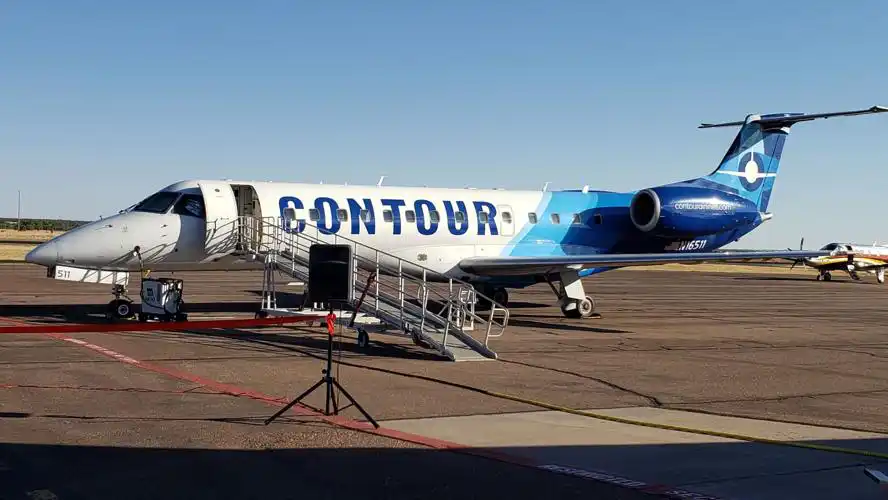
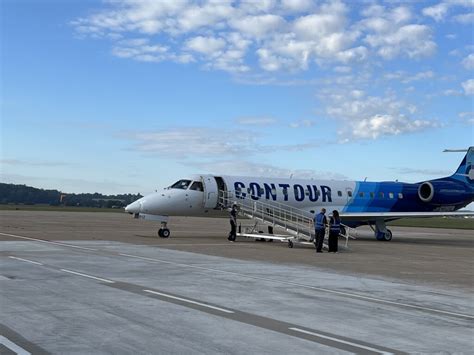
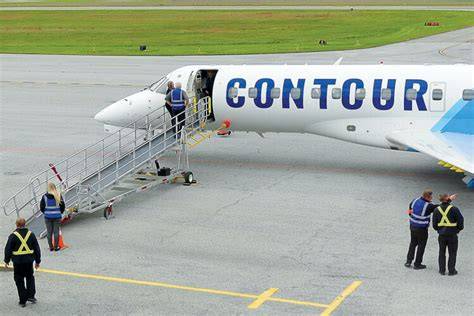
The change followed Contour Aviation’s assumption of the federal Essential Air Service contract on October 1, 2024. The previous operator used nine-seat propeller aircraft, including Cessna Caravans. Contour instead introduced 30-seat Embraer ERJ135 regional jets, substantially increasing the number of seats available on the route to Phoenix Sky Harbor International Airport.
This illustrates why passenger rankings at small airports can change dramatically. A relatively modest alteration in aircraft size or government-supported service can have a huge effect when an airport starts from a very low baseline.
Telluride Regional Airport Handles Just Over 10,000 Enplanements
Telluride Regional Airport (TEX) ranked third among the quietest primary commercial airports, recording 10,385 enplanements in 2025. The airport is located approximately six miles west of Telluride, Colorado, at an elevation of about 9,078 feet (2,767 meters).
That extreme elevation is one of Telluride’s defining aviation characteristics. Aircraft performance, weather conditions, runway requirements, and operational planning can all become more significant at high-altitude airports. Consequently, the airport’s commercial operation is considerably more specialized than that of many facilities at lower elevations.
Key Lime Air is the airport’s scheduled carrier, operating service to Denver International Airport and Phoenix Sky Harbor International Airport with Fairchild Dornier 328JET aircraft. Service patterns vary throughout the year, reflecting the seasonal nature of demand in a mountain destination closely associated with tourism and skiing.
Telluride’s passenger numbers are also a reminder that an airport can be strategically important without having a large volume of traffic. Its location provides direct air access to a remote mountain destination where surface transportation can involve lengthy journeys through difficult terrain.
Cape Girardeau Regional Airport Has a Diverse Small-Airport Network
Cape Girardeau Regional Airport (CGI) in Missouri ranked fourth, with 10,410 enplanements in 2025. Although its annual passenger volume was only slightly higher than Telluride’s, the airport’s scheduled network demonstrates how even a very small commercial facility can connect travelers with several major markets.
Contour Aviation operates scheduled flights from Cape Girardeau to Dallas/Fort Worth International Airport, Chicago O’Hare International Airport, Pensacola International Airport, and Orlando Sanford International Airport. Some services operate year-round, while others are seasonal.
The aircraft serving these routes are Bombardier CRJ regional jets. Such aircraft provide considerably more capacity than the small turboprops found at some remote airports, but the airport still remains firmly within the low-volume end of the US commercial aviation system.
The network also gives Cape Girardeau access to two major airline hubs, Dallas/Fort Worth and Chicago O’Hare, allowing travelers from southeastern Missouri to connect onward to a much broader range of destinations.
Devils Lake and Jackson Remain Below 11,000 Enplanements
The next two airports were separated by only three passenger boardings. Devils Lake Regional Airport (DVL) in North Dakota recorded 10,414 enplanements, while Jackson Regional Airport (MKL) in Tennessee recorded 10,417.
Devils Lake is served by United Airlines through SkyWest Airlines, with Bombardier CRJ-200 regional jets operating flights to Denver International Airport. The service provides the Devils Lake area with access to one of the largest connecting hubs in the United States despite the airport’s very small local passenger base.
Jackson Regional Airport has a different network structure. Key Lime Air operates Embraer ERJ-145 aircraft to Hartsfield-Jackson Atlanta International Airport and Chicago O’Hare International Airport. Both routes operate multiple times per week, providing connections into two of the most important airline hubs in the country.
These airports demonstrate the role of regional aviation in the US. Their passenger numbers would not support the infrastructure or frequency of a large hub, but a handful of regional flights can still provide meaningful access to the national air transportation network.
Altoona-Blair County and Decatur Airport Continue the List
Altoona-Blair County Airport (AOO) in Martinsburg, Pennsylvania, recorded 10,671 enplanements in 2025. Contour Aviation operates scheduled Embraer ERJ service from the airport to Charlotte Douglas International Airport, with additional seasonal service to Myrtle Beach International Airport.
Charlotte is particularly important because it serves as a major hub for American Airlines. A relatively small airport can therefore offer passengers access to a much larger domestic network without operating numerous routes of its own.
Decatur Airport (DEC) in Illinois ranked next with 10,837 enplanements. United Airlines, through SkyWest Airlines, operates Bombardier CRJ-200 service to Chicago O’Hare International Airport. The connection gives travelers from central Illinois direct access to one of the country’s largest aviation hubs.
The two airports occupy very different geographic regions, but their operating model is similar: limited local demand is supplemented by scheduled regional flights that connect smaller communities with large hub airports.
Salem’s McNary Field Had No Current Scheduled Airline Service
McNary Field (SLE) in Salem, Oregon, recorded 11,060 enplanements during 2025, putting it ninth among the quietest primary commercial airports in the FAA data.
The airport is unusual within this group because it had no current scheduled commercial service after Avelo Airlines ended its Salem operations in late 2025 following the cancellation of its remaining route to Burbank, California.
Its inclusion demonstrates an important limitation of annual enplanement rankings. Passenger figures describe what happened during a particular calendar year, not necessarily the level of service available at the airport today. An airport can record thousands of passenger boardings during a year and subsequently lose its scheduled airline service.
For Salem, the change also shows how vulnerable small commercial airports can be to route cancellations. Losing a single route can effectively remove an airport from the scheduled passenger network, even when the airport itself remains operational and available for general aviation activity.
Waynesville-St. Robert Regional Airport Rounds Out the Top 10
Waynesville-St. Robert Regional Airport (TBN) in Missouri recorded 11,199 enplanements in 2025, making it the 10th-quietest primary commercial airport in the country.
Contour Aviation operates Bombardier CRJ aircraft on routes connecting the airport with Nashville International Airport, Dallas/Fort Worth International Airport, and Chicago O’Hare International Airport. Some services are seasonal, while the Dallas/Fort Worth route operates year-round.
The airport serves the Waynesville and St. Robert area and provides another example of how small airports depend on carefully structured regional networks. Rather than offering dozens of destinations, these facilities generally concentrate their limited scheduled capacity on connections to major hubs.
The resulting network may look small compared with an airport such as Atlanta or Dallas/Fort Worth, but for passengers in smaller communities, a single regional flight can represent a valuable link to the national system.
The 10 Quietest Primary Commercial Airports in 2025
The FAA’s preliminary 2025 enplanement data places the airports in the following order:
| Rank | Airport | Location | 2025 Enplanements |
|---|---|---|---|
| 1 | Gustavus Airport (GST) | Gustavus, Alaska | 10,243 |
| 2 | Show Low Regional Airport (SOW) | Show Low, Arizona | 10,345 |
| 3 | Telluride Regional Airport (TEX) | Telluride, Colorado | 10,385 |
| 4 | Cape Girardeau Regional Airport (CGI) | Cape Girardeau, Missouri | 10,410 |
| 5 | Devils Lake Regional Airport (DVL) | Devils Lake, North Dakota | 10,414 |
| 6 | Jackson Regional Airport (MKL) | Jackson, Tennessee | 10,417 |
| 7 | Altoona-Blair County Airport (AOO) | Martinsburg, Pennsylvania | 10,671 |
| 8 | Decatur Airport (DEC) | Decatur, Illinois | 10,837 |
| 9 | McNary Field (SLE) | Salem, Oregon | 11,060 |
| 10 | Waynesville-St. Robert Regional Airport (TBN) | Missouri | 11,199 |
The striking feature of the table is how closely grouped the numbers are. The difference between first-place Gustavus and 10th-place Waynesville-St. Robert was fewer than 1,000 enplanements for the entire year. That means the distinction between the quietest airports is relatively narrow even though their locations, aircraft, and service models vary considerably.
Billings Logan Is the Quietest Small Hub Airport
The definition changes when moving beyond primary nonhub airports. Under the FAA classification system, a small hub accounts for between 0.05% and 0.25% of the nation’s annual passenger boardings. In practical terms, that generally corresponds to roughly 450,000 to 2.3 million annual enplanements.
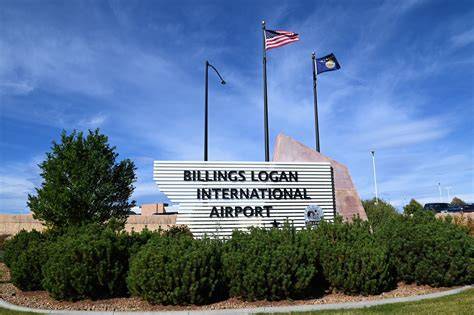
Within that category, Billings Logan International Airport (BIL) recorded the lowest passenger volume in 2025, with approximately 503,097 enplanements.
The Montana airport has a much broader network than the airports at the bottom of the primary-airport ranking. United Airlines serves Denver and Chicago, while American Airlines operates flights to Dallas/Fort Worth, Phoenix, and Chicago. Delta connects Billings with Minneapolis-St. Paul and Salt Lake City, while Horizon Air operates Alaska Airlines services to Portland and Seattle.
Allegiant also serves Billings with flights to Las Vegas and Phoenix-Mesa Gateway Airport. Cape Air uses Billings as a regional operating base, connecting the city with smaller Montana communities including Glasgow, Glendive, Havre, Wolf Point, and Sidney.
The airport also completed a $60 million renovation of Concourse B in 2024, adding gates and modernizing jet bridges. The project doubled the terminal’s aircraft capacity to nine active gates.
Norfolk Is the Quietest Medium Hub Airport
The next FAA category is the medium hub, representing between 0.25% and 1% of national passenger boardings. These airports typically record roughly 2.3 million to 9.3 million enplanements annually.
In 2025, Norfolk International Airport (ORF) recorded approximately 2,466,474 enplanements, the lowest total among medium hubs.
Norfolk’s relatively low position within this category should not be mistaken for a small route network. The airport serves American Airlines, Delta Air Lines, Frontier Airlines, JetBlue Airways, Southwest Airlines, United Airlines, and Breeze Airways, with Breeze operating a significant focus-city operation.
In 2026, Breeze also launched service from Norfolk to Cancun, Mexico, giving the airport its first nonstop international flight in 25 years. Richmond International Airport followed Norfolk in the medium-hub category with approximately 2,481,863 enplanements in 2025.
Honolulu Is the Quietest Large Hub by Passenger Volume
At the large-hub level, the scale changes dramatically. Large hubs account for at least 1% of national passenger boardings, yet the least-busy airport in this category still recorded more than 10 million enplanements.
Daniel K. Inouye International Airport (HNL) in Honolulu recorded approximately 10.43 million enplanements in 2025, compared with about 10.45 million in 2024.
Honolulu’s ranking illustrates just how misleading the word “quietest” can become when applied across airport categories. HNL may be the lowest-volume large hub, but it remains one of the most internationally connected airports in the United States.
Major domestic airlines operate extensive services to Hawaii, while Honolulu also serves as a major gateway between the United States and the Asia-Pacific region. Destinations include Tokyo, Seoul, Sydney, Auckland, and numerous South Pacific markets.
Cirium’s scheduled data indicates that airlines have planned more than 77,800 flights from Honolulu in 2026, offering more than 13 million seats. Within Hawaii, the airport also maintains extremely frequent connections to Kahului, Molokai, Lihue, and Kona.

America’s Quietest Airports Reveal the Depth of the US Aviation Network
The FAA’s 2025 figures show that America’s aviation system is far more diverse than a list of the country’s busiest airports suggests. At one end are giants such as Atlanta, Dallas/Fort Worth, Chicago O’Hare, Denver, and Los Angeles, where passenger volumes reach tens of millions of annual boardings. At the other are airports such as Gustavus, Show Low, and Telluride, where annual enplanements remain close to 10,000.
Yet passenger volume alone does not determine an airport’s importance. Gustavus provides an essential connection for an isolated Alaskan community and access to Glacier Bay. Telluride provides air access to a high-altitude mountain destination. Devils Lake, Decatur, and other small airports connect local communities with major hubs that would otherwise require much longer surface journeys.
The broader US market remains enormous. According to the FAA, international enplanements increased by 33% over the decade ending in 2025, while domestic enplanements rose by 23%. The agency has forecast another increase in passenger volume for US carriers in 2026, although growth is expected to moderate to approximately 2.4%.
That continued growth exists alongside hundreds of airports operating on a completely different scale. The quietest commercial airports may see only a few dozen passengers on an average day, but they remain pieces of a nationwide aviation network stretching from remote Alaska to the continental interior and from small regional communities to the country’s largest international gateways.