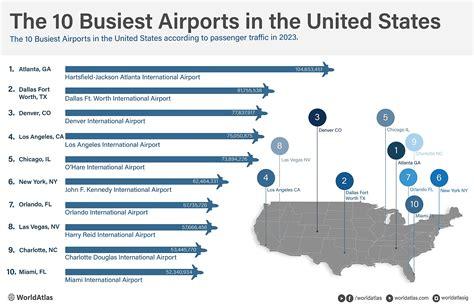
Air travel in the United States operates on a scale unmatched anywhere else in the world. With a vast domestic network connecting hundreds of cities, American airports process enormous numbers of passengers every year. While airports can be measured by several metrics—including runway count, land size, or aircraft movements—the most widely recognized indicator of an airport’s scale is annual passenger volume. This metric reflects the total number of travelers departing, arriving, or connecting through an airport within a given year.
The United States dominates global aviation in this category. In fact, four of the ten busiest airports in the world are located in the United States, demonstrating the strength of the country’s domestic air travel market. Unlike global hubs such as Dubai International Airport or London Heathrow, many major American airports rely heavily on domestic travel. The vast geographic size of the country and the cultural reliance on air transportation create an environment where domestic routes often generate more traffic than international ones.
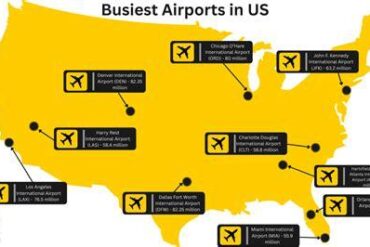
This article examines the six largest airports in the United States by passenger volume, exploring their operational scale, airline dominance, strategic importance, and the destinations that define their networks.
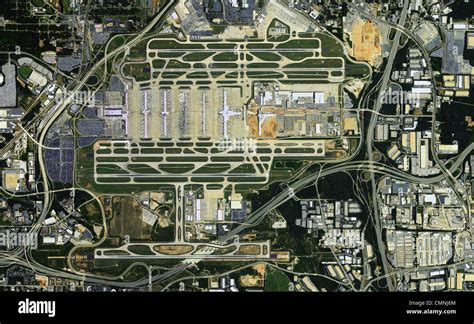
Hartsfield–Jackson Atlanta International Airport (ATL)
Annual passengers: 106,302,208
Hartsfield–Jackson Atlanta International Airport stands at the pinnacle of global aviation. For decades, ATL has consistently ranked as the busiest airport in the world, a title it has held almost continuously since 1998. The airport serves as the primary gateway to Atlanta, Georgia, and processes more than 106 million passengers annually, making it not only the busiest airport in the United States but also the largest hub in global aviation.
The airport’s extraordinary traffic levels stem largely from its role as the world’s largest airline hub for Delta Air Lines. Delta operates more than 1,000 daily flights from ATL, connecting travelers across North America and to destinations worldwide. The airline holds a commanding market share of nearly 80%, turning Atlanta into what aviation analysts often call a “fortress hub.”
This concentration of operations allows for an incredibly efficient hub-and-spoke network. Passengers traveling between smaller cities frequently connect through Atlanta, which explains why ATL processes such massive passenger numbers even though Atlanta itself is not the largest metropolitan area in the country.
The airport’s busiest domestic routes highlight its role as a national connector. Cities like Orlando, New York LaGuardia, and Fort Lauderdale consistently generate the highest traffic volumes. Meanwhile, international connections are led by Amsterdam Schiphol and Paris Charles de Gaulle, reflecting Delta’s joint venture partnerships with European carriers KLM and Air France.
ATL’s infrastructure supports this massive flow with multiple parallel runways, a vast terminal complex, and one of the world’s most efficient passenger train systems connecting concourses. The airport functions almost like a self-contained city dedicated entirely to aviation logistics.
Dallas/Fort Worth International Airport (DFW)
Annual passengers: 85,660,127
Located between the cities of Dallas and Fort Worth in Texas, Dallas/Fort Worth International Airport ranks as the second-busiest airport in the United States. With more than 85 million annual passengers, DFW serves as one of the most important aviation gateways in North America.
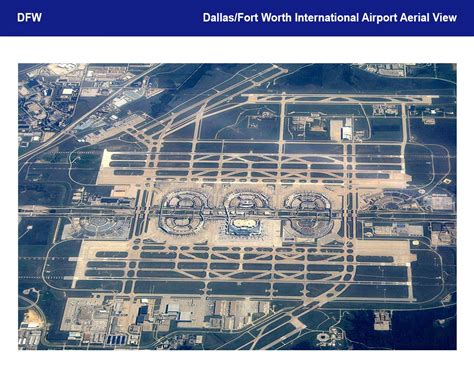
One of the defining features of DFW is its immense land area of 69.7 square kilometers, making it among the largest airports in the world by physical size. Only Denver International Airport surpasses it within the United States. This enormous footprint allows the airport to accommodate multiple parallel runways, extensive cargo facilities, and sprawling terminal infrastructure.
The airport’s importance is closely tied to American Airlines, whose headquarters are located nearby. American Airlines uses DFW as its largest hub, and the airline along with its regional affiliates controls over 75% of the airport’s passenger traffic. This makes the airport one of the most concentrated airline hubs in the world.
Because of this dominance, Dallas/Fort Worth functions as a critical transfer hub for American Airlines’ global network. Flights connect the southern United States to major international destinations, especially in Latin America. Mexico in particular represents the airport’s largest international market.
Domestically, the busiest route from DFW is Los Angeles International Airport, a connection that links two of the largest aviation markets in the country. With hundreds of daily departures and an extensive route network, DFW plays a crucial role in maintaining connectivity across the United States.
Beyond traffic volume, the airport is also recognized for sustainability. It became the first carbon-neutral airport in North America, setting a benchmark for environmentally conscious airport operations.
Chicago O’Hare International Airport (ORD)
Annual passengers: 84,851,825
Chicago O’Hare International Airport remains one of the most recognizable names in aviation. Serving the Chicago metropolitan region, the third-largest urban area in the United States, O’Hare processes nearly 85 million passengers annually.
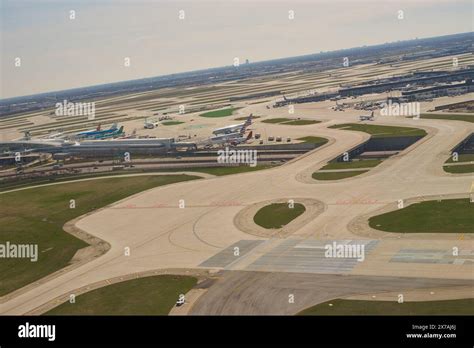
Originally opened in 1944, O’Hare replaced Chicago Midway Airport as the city’s primary aviation gateway. Over time it evolved into one of the most important airline hubs in the world, consistently ranking among the busiest airports globally.
One of O’Hare’s defining characteristics is its eight-runway layout, which supports a remarkable level of aircraft activity. In 2025 alone, more than 857,000 flights took off or landed at the airport, making it the busiest airport in the United States by aircraft movements.
O’Hare is dominated by two major carriers: United Airlines and American Airlines. United controls approximately 46% of the market, while American holds nearly 30%. Together they account for the overwhelming majority of operations at the airport.
The airport connects passengers to 297 destinations worldwide, giving it one of the most extensive route networks on the planet. According to OAG’s Megahub index, O’Hare ranks among the most connected airports globally, reinforcing its importance as a strategic transfer point for both domestic and international flights.
Popular domestic routes include New York LaGuardia, Los Angeles, and Denver, each representing key business and tourism corridors within the United States.
Denver International Airport (DEN)
Annual passengers: 82,427,962
Denver International Airport is one of the most fascinating airports in the United States due to its sheer scale. Located in Colorado, DEN processes more than 82 million passengers annually, ranking it fourth in the nation by passenger volume.
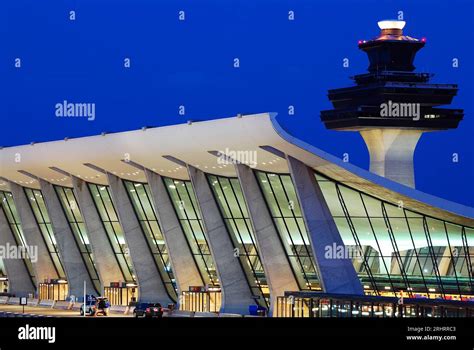
The airport sits at an elevation of 5,430 feet above sea level, making it one of the highest major airports in the country. Its high-altitude location requires longer runways for aircraft performance, which partly explains the airport’s impressive infrastructure.
DEN is also the largest airport in the United States by land area, covering a staggering 137.8 square kilometers. This massive expanse allows for future expansion and supports six runways, including Runway 16R/34L, the longest commercial runway in North America at nearly 4.9 kilometers.
United Airlines plays a dominant role at Denver, controlling roughly half of the airport’s market share. The airport also serves as the largest operating base for Southwest Airlines and Frontier Airlines, both of which use Denver as a strategic hub for low-cost domestic routes.
Denver’s location in the center of the United States makes it an ideal mid-continent connection hub. Travelers flying between the East and West Coasts frequently connect here.
The airport now serves over 230 destinations, including nearly 200 domestic routes, making it the largest domestic hub in the country. International routes continue to expand, with major connections to Cancun, Vancouver, Frankfurt, Munich, and London Heathrow.
Los Angeles International Airport (LAX)
Annual passengers: 73,709,594
Los Angeles International Airport serves as the primary gateway to Southern California and one of the most significant aviation hubs in the Pacific region. Handling more than 73 million passengers annually, LAX ranks fifth among the busiest airports in the United States.
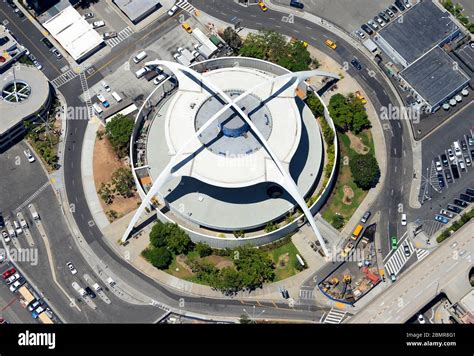
Unlike many large American airports dominated by a single airline hub, LAX operates as a hybrid hub. Several airlines maintain significant operations here, including Delta Air Lines, United Airlines, American Airlines, Southwest Airlines, and Alaska Airlines.
This multi-carrier environment creates a uniquely balanced competitive landscape. Delta leads passenger traffic at the airport with roughly 19% market share, followed by United and American.
Another unusual characteristic of LAX is its passenger composition. Only around 12% of travelers connect through the airport, while a massive 88% are origin-and-destination passengers. This reflects the immense population and economic power of the Los Angeles metropolitan area.
International traffic plays a major role at LAX. The airport serves as the primary transpacific gateway for the United States, with heavy passenger flows to Asia and Oceania. Important routes include Tokyo Haneda, Seoul Incheon, Taipei, and London Heathrow, all exceeding one million passengers annually.
The airport’s strategic Pacific location ensures its continued importance in global aviation, particularly as travel between North America and Asia continues to grow.
John F. Kennedy International Airport (JFK)
Annual passengers: 62,629,455
John F. Kennedy International Airport is the busiest airport serving New York City, the largest metropolitan region in the United States. With more than 62 million passengers annually, JFK ranks sixth among the busiest airports in the country.
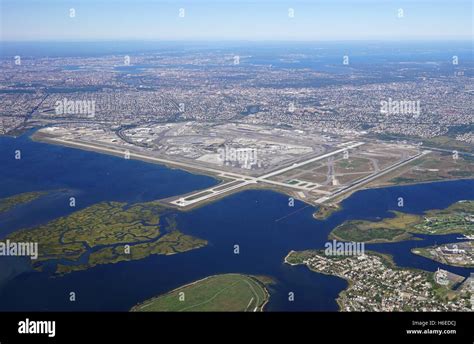
The airport operates four runways and five passenger terminals, accommodating more than 460,000 aircraft movements per year. As the primary international gateway for New York, JFK handles a vast share of the city’s long-haul flights.
Several airlines maintain major operations at the airport. Delta Air Lines and American Airlines both operate significant hubs, while JetBlue Airways uses JFK as its primary home base.
One notable absence has historically been United Airlines, which instead focuses its New York operations at Newark Liberty International Airport. However, industry reports indicate the airline may return to JFK operations in the coming years.
International travel defines JFK’s role in global aviation. The airport connects travelers to destinations across all six inhabited continents, making it one of the most globally connected airports in the world.
Among international routes, London Heathrow stands out as the busiest, with millions of passengers traveling between the two financial capitals each year. Other major routes include Paris Charles de Gaulle and Rome Fiumicino, reinforcing JFK’s importance as a transatlantic hub.
The Power of America’s Domestic Aviation Network
The dominance of these six airports highlights a defining characteristic of American aviation: the immense strength of the domestic travel market. Unlike airports in regions where international travel dominates, many US hubs rely heavily on internal connections across the country’s vast geography.
Cities thousands of miles apart—such as New York, Los Angeles, Denver, and Atlanta—generate enormous passenger flows that sustain some of the busiest airports on Earth.
Major airline hub strategies also contribute to these numbers. Airlines like Delta, American, and United concentrate flights at key airports, creating powerful connecting hubs capable of processing tens of millions of passengers every year.
At the same time, international airports around the world—such as Dubai International Airport—are rapidly growing and challenging the dominance of American hubs in passenger traffic rankings.
Even so, the scale of the United States aviation system remains extraordinary. With massive hub airports spread across the country, the nation continues to operate some of the largest and most complex airport ecosystems in global aviation.