How the Largest US Airports Are Measured
There are several ways to define the largest airport in the United States. An airport can be ranked by physical land area, aircraft movements, number of destinations, terminal capacity, or the total number of passengers traveling through its facilities. For travelers and the broader aviation industry, however, annual passenger volume remains one of the clearest measures of an airport’s scale and commercial importance.
The United States dominates global aviation partly because of its enormous domestic travel market. Four US airports rank among the world’s busiest airports by total passenger traffic, demonstrating how much demand exists for air travel between American cities. The country’s biggest airports also serve as gateways to international markets, connecting North America with Europe, Asia, Latin America, Africa, and Oceania.
Passenger numbers can reveal something that airport land area or aircraft movements cannot. A massive airport may have enormous runways and hundreds of daily flights without handling as many travelers as a more compact airport with dense schedules and high-capacity aircraft. Likewise, an airport can have huge passenger numbers without being dominated by connecting traffic.
The following six airports stand out in the supplied 2025 figures, ranging from the enormous Hartsfield-Jackson Atlanta International Airport to John F. Kennedy International Airport in New York. Together, they illustrate the different models that make an airport successful, from connecting hubs and airline fortresses to major origin-and-destination gateways.
1. Hartsfield-Jackson Atlanta International Airport — 106.3 Million Passengers
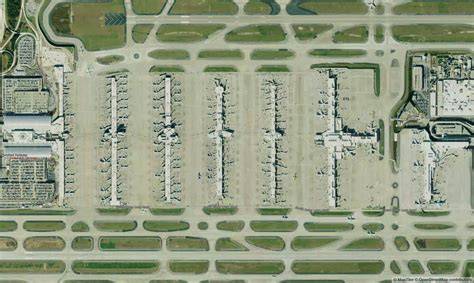
At the top of the list is Hartsfield-Jackson Atlanta International Airport (ATL), which handled 106,302,208 passengers in 2025. Although that represented a decline from the more than 108 million passengers recorded in 2024, Atlanta remained one of the most important airports in the world and retained its remarkable position as the world’s busiest airport by passenger volume.
Atlanta has held the world’s busiest-airport title since 1998, apart from the extraordinary disruption caused by the COVID-19 pandemic in 2020. Its success is closely tied to geography. Atlanta sits within a strategically useful position in the southeastern United States, allowing airlines to connect passengers from numerous American cities through a single enormous hub.
The airport’s relationship with Delta Air Lines is particularly important. Delta carried approximately 85.2 million passengers at ATL in 2025, giving the airline an overwhelming presence. Delta’s market share was close to 80%, transforming Atlanta into one of the clearest examples of an airline hub built around a dominant carrier.
More than 1,000 daily Delta flights operate from Atlanta, creating a network that reaches virtually every major region of the United States as well as numerous international destinations. Frontier Airlines, Southwest Airlines, American Airlines, and Spirit Airlines also operate at ATL, but their combined presence remains much smaller than Delta’s.
Atlanta’s international network reflects its role as a major SkyTeam hub. Amsterdam Schiphol and Paris Charles de Gaulle are particularly important international destinations because they are hubs for Delta’s joint-venture partners KLM and Air France. Cancun is another major international market, while Orlando, New York LaGuardia, and Fort Lauderdale are among the airport’s most important domestic routes.
The scale of ATL demonstrates that passenger volume does not necessarily depend on being the largest international gateway. Instead, Atlanta’s enormous numbers are powered by an extraordinary combination of domestic connectivity, connecting passengers, airline concentration, and high-frequency operations.
2. Dallas/Fort Worth International Airport — 85.7 Million Passengers
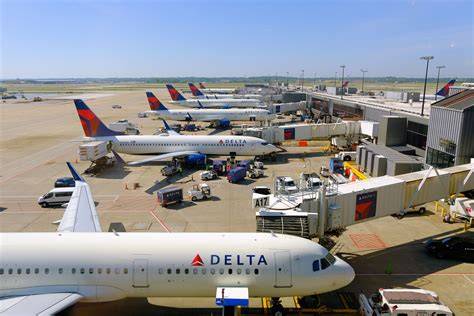
Dallas/Fort Worth International Airport (DFW) ranked second among the airports covered by the supplied figures, handling 85,660,127 passengers in 2025. The airport is simultaneously one of the largest passenger hubs in America and one of the world’s most significant aviation facilities by land area and operational scale.
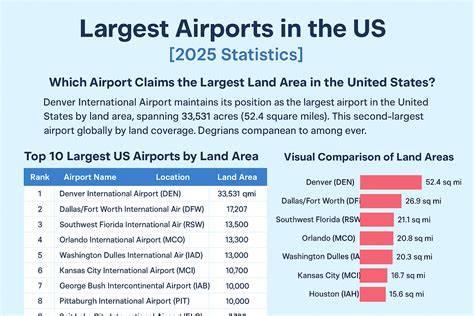
DFW covers approximately 69.7 square kilometers, making it the second-largest airport in the United States by land area according to the supplied figures, behind Denver. Its physical scale gives the airport room for a huge runway system, multiple terminals, extensive aircraft parking, cargo facilities, and future expansion.
The airport is also inseparable from American Airlines. Dallas/Fort Worth is American’s largest hub, and American Airlines together with its regional affiliates accounts for more than 75% of the airport’s market share. The concentration is substantial enough to make DFW one of the strongest airline hubs in the United States.
American’s position at DFW is supported by the enormous population and economic strength of the Dallas-Fort Worth metropolitan area. The airport serves both Dallas and Fort Worth, while its central location in Texas makes it an effective connecting point for flights traveling across the United States.
DFW also has an important international role. Mexico is the airport’s largest international market, reflecting strong business, tourism, and cultural ties between Texas and Mexico. At the same time, the airport provides extensive connectivity to Europe, Asia, and other parts of Latin America.
Its busiest domestic route in the supplied data is Los Angeles International Airport, reinforcing the importance of DFW’s links to major population and business centers. Frontier Airlines and Spirit Airlines also maintain operating bases at the airport, adding low-cost capacity alongside American’s massive network.
Another distinction is DFW’s environmental achievement. The airport is described as the world’s largest carbon-neutral airport, making sustainability part of its increasingly important identity. Its combination of enormous land area, passenger traffic, airline concentration, and international connectivity makes DFW a uniquely comprehensive aviation hub.
3. Chicago O’Hare International Airport — 84.9 Million Passengers
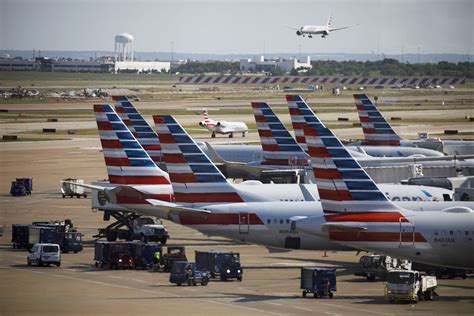
Chicago O’Hare International Airport (ORD) handled 84,851,825 passengers in 2025, placing it just behind Dallas/Fort Worth in the supplied ranking. O’Hare is the primary international gateway for the Chicago metropolitan area and has played a central role in American aviation for decades.
O’Hare opened in 1944 and eventually replaced Chicago Midway as the city’s primary airport. Today, its eight runways support an enormous volume of commercial aviation, with approximately 857,392 aircraft movements in 2025. That operational figure makes O’Hare particularly important even beyond its passenger ranking.
Unlike Atlanta, which is overwhelmingly dominated by one airline, O’Hare is primarily a two-airline hub. United Airlines and American Airlines hold market shares of approximately 46.3% and 29.9%, respectively. Their combined presence gives O’Hare a powerful dual-hub structure and provides travelers with a huge range of domestic and international connections.
The airport serves approximately 297 destinations, reinforcing Chicago’s position as a global aviation center. OAG’s 2025 Megahub Index also placed O’Hare as the seventh-most-connected airport worldwide, underlining the strength of its schedule and connecting opportunities.
New York LaGuardia, Los Angeles, and Denver are among the airport’s most important domestic markets. Internationally, O’Hare connects Chicago with major cities across Europe, Asia, Canada, Mexico, and beyond.
O’Hare’s importance also comes from its location. Chicago is one of the largest metropolitan areas in North America and a major business, transportation, and convention center. That means the airport supports a combination of origin-and-destination traffic and connecting passengers, helping sustain high passenger volumes throughout the year.
The airport’s continued importance shows why passenger volume and aircraft movements should be considered together. O’Hare is not simply moving large numbers of people; it is operating one of the most complex and heavily used airline networks in the United States.
4. Denver International Airport — 82.4 Million Passengers
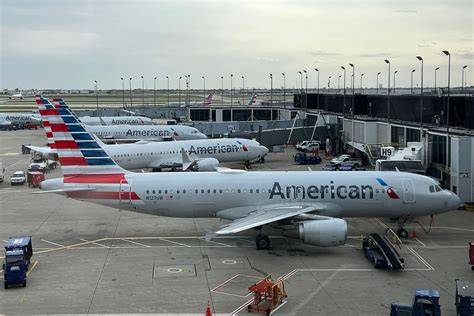
Denver International Airport (DEN) handled 82,427,962 passengers in 2025, making it another giant of the American airport system. Denver is particularly interesting because its enormous passenger volume exists alongside extraordinary physical scale.
With approximately 137.8 square kilometers of land, Denver is one of the largest airports in the world by area. Its six runways include runway 16R/34L, which stretches approximately 3.03 miles (4.88 kilometers) and is described in the supplied material as the longest civil runway in North America.
Denver is also located at an elevation of approximately 5,430 feet (1,655 meters). The high-altitude environment presents operational considerations for aircraft, particularly during hot weather, when thinner air can affect aircraft performance.
In 2025, more than 700,000 flights arrived at or departed from DEN. The airport has become one of the most important airline hubs in the western and central United States, with United Airlines holding approximately 49.9% of the airport’s market share.
Southwest Airlines and Frontier Airlines also have major operations at Denver. Their respective market shares are approximately 29.3% and 9.4%, creating a particularly interesting competitive structure in which several major airlines maintain substantial operations.
Denver’s route network is another major advantage. The airport serves more than 230 destinations, including a remarkable collection of domestic and international markets. Phoenix, Chicago, and Las Vegas are among its important domestic destinations, while Cancun, Vancouver, London, Frankfurt, and Munich are important international markets.
The airport’s growth ambitions are equally significant. In September 2025, Denver became the largest domestic hub in the United States with 197 domestic destinations, according to the supplied reference material. Its long-term Strategic Vision 100 aims to support growth toward 100 million annual passengers by 2045.
That target highlights how Denver has evolved from a major regional airport into a truly national aviation powerhouse.
5. Los Angeles International Airport — 73.7 Million Passengers
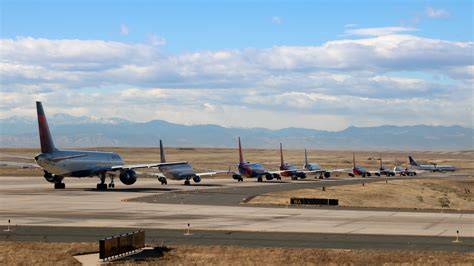
Los Angeles International Airport (LAX) handled 73,709,594 passengers in 2025, placing it among the largest airports in the United States despite a nearly 4% decline from the previous year.
LAX is the primary airport serving Greater Los Angeles, one of the world’s largest metropolitan economies. It competes and cooperates with several other airports in Southern California, including Hollywood Burbank, Ontario International, and John Wayne Airport.
One of the most interesting characteristics of LAX is its hybrid hub model. Unlike Atlanta, where connecting traffic plays an enormous role, only about 12% of LAX passengers connect through the airport. Approximately 88% are origin-and-destination passengers, meaning they are beginning or ending their journeys in the Los Angeles region.
That distinction is crucial to understanding why LAX remains so busy. Los Angeles is not simply an airline connecting point. It is an enormous destination in its own right, attracting tourists, business travelers, international visitors, and residents traveling throughout the United States.
LAX also has substantial operations from all three major US network airlines: Delta Air Lines, United Airlines, and American Airlines. Delta led the airport’s airline rankings with approximately 13.9 million passengers, followed by United with 11.9 million and American with 11.3 million.
Southwest Airlines and Alaska Airlines also maintain significant operations. This broad airline presence gives LAX a more diversified structure than airports dominated by a single carrier.
International connectivity is one of LAX’s defining strengths. London Heathrow, Seoul Incheon, Guadalajara, Taipei, and Tokyo Haneda each exceeded one million passengers in 2024 according to the supplied data. Those markets demonstrate Los Angeles’ role as a major gateway between the United States and the Asia-Pacific region, as well as a critical connection to Europe and Latin America.
6. John F. Kennedy International Airport — 62.6 Million Passengers
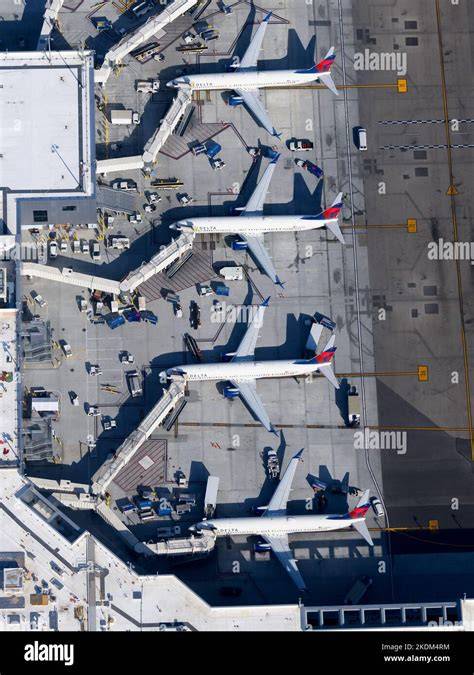
John F. Kennedy International Airport (JFK) recorded 62,629,455 passengers in 2025 across five terminals. Located in Queens, JFK is the busiest of the three major airports serving the New York metropolitan area, alongside Newark Liberty International Airport and LaGuardia Airport.
JFK handled approximately 464,281 flights during the year across its four runways. Unlike Atlanta or Dallas/Fort Worth, JFK’s importance is strongly connected to its position as a premier international gateway.
The airport has major operations from American Airlines and Delta Air Lines, while JetBlue maintains a particularly important presence as a focus city and home base. United Airlines has historically concentrated its New York operations at Newark rather than JFK, although the supplied reference notes that United was preparing to return to JFK as early as 2027.
Los Angeles is JFK’s largest domestic destination in the supplied figures, with nearly 1.5 million passengers in 2025. San Francisco followed with more than 900,000 passengers, illustrating the importance of long-distance domestic connections between New York and the country’s largest business and technology centers.
Internationally, JFK is in a different league. Airlines operating from the airport connect New York with destinations on all six inhabited continents, making it one of America’s most recognizable international gateways.
British Airways is identified as the largest international airline at JFK in the supplied material, with a 2.1% market share. The New York-JFK to London Heathrow market is particularly important, with almost 3.2 million passengers recorded in 2024. Paris Charles de Gaulle and Rome Fiumicino are also major international routes.
JFK’s passenger volume therefore reflects more than sheer domestic scale. It represents the extraordinary international demand generated by New York, including tourism, finance, business, immigration, trade, and long-haul travel.
What Makes These Six US Airports So Busy?
The six airports reveal that there is no single formula for becoming one of the largest airports in the United States by passenger volume. Atlanta thrives on an enormous connecting network built around Delta. Dallas/Fort Worth combines American Airlines’ massive hub with the economic strength of Texas. Chicago O’Hare benefits from two major network carriers and a central geographic position.
Denver has developed into a huge national hub supported by United, Southwest, and Frontier, while Los Angeles combines a massive metropolitan market with extensive international connectivity. JFK, meanwhile, demonstrates the power of New York’s global economy and its extraordinary demand for international travel.
Another important factor is the strength of the US domestic aviation market. American airports can generate enormous passenger totals even when their international traffic is smaller than that of some global gateways. Domestic flights between major US metropolitan areas provide a huge foundation of demand, while international services add another layer of connectivity.
Airline strategy also matters enormously. A dominant carrier can turn an airport into a powerful connecting machine, as Delta has done at Atlanta and American has done at Dallas/Fort Worth. Multiple large carriers can create a different model, as seen at Chicago O’Hare and Los Angeles.
The Continuing Growth of America’s Largest Airports
The scale of these airports also points toward the future of American aviation. Passenger demand remains closely linked to population growth, business activity, tourism, airline network decisions, and the expansion of international services.
Denver’s ambition to reach 100 million annual passengers by 2045 illustrates how aggressively major US airports are preparing for long-term growth. Other airports are similarly investing in terminals, runways, ground transportation, security infrastructure, and passenger facilities to accommodate larger volumes.
At the same time, passenger volume alone does not tell the entire story. Airports with fewer passengers can still be strategically critical because of cargo operations, international connectivity, airline hubs, or their importance to specific regions.
For travelers, however, passenger volume provides a useful indication of an airport’s overall scale. The biggest airports tend to offer the greatest selection of airlines, destinations, nonstop services, lounges, connections, and aircraft movements.
The largest US airports by passenger volume are therefore more than enormous transportation facilities. They are economic engines, international gateways, airline hubs, and essential pieces of America’s transportation infrastructure. From Atlanta’s vast Delta network to JFK’s intercontinental reach, each airport has developed its own formula for handling tens of millions of passengers every year.