Four years before Qantas plans to begin retiring its Airbus A380s, the airline made a decision that looked like a vote of confidence in the giant aircraft. In 2022, as international aviation demand recovered from the COVID-19 crisis, Qantas began the complicated process of reactivating its stored A380 fleet. At the time, the move made perfect sense. The airline needed capacity, passengers were returning to long-haul travel, and the replacement aircraft that would eventually transform its international fleet were still years away.
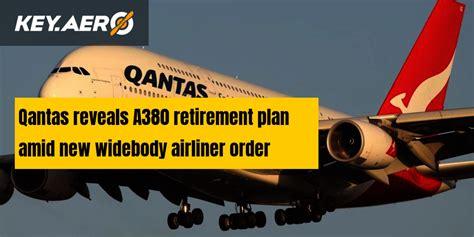
Yet there was a revealing contradiction hidden inside that decision. Qantas was bringing its Superjumbos back because it needed them, not because it had suddenly decided they represented the future. Four years later, the airline has announced that the A380 will begin leaving the fleet from calendar year 2028, moving the retirement timetable forward from the early 2030s. What initially looked like a revival has therefore become the final chapter of the type’s Qantas career.
The timing is particularly significant because Qantas has now gained greater confidence in the arrival of its Airbus A350-1000ULR Project Sunrise aircraft. The first of these specially configured aircraft are expected from April 2027, giving the airline a new generation of long-range widebodies just months before the first A380 retirements are scheduled to begin.
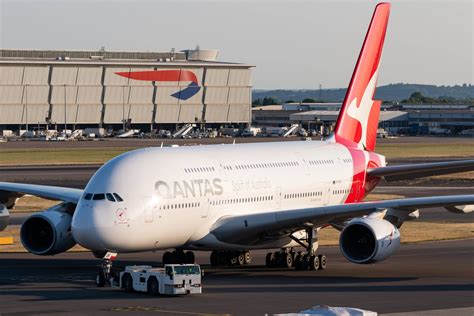
The Qantas A380 story is unusual because the aircraft has never simply been an unwanted airplane waiting for retirement. The type became an important part of the airline’s long-haul strategy, particularly on high-demand international routes. Qantas originally ordered 12 Airbus A380s, although two aircraft were eventually removed from the fleet, leaving 10 airframes that have returned to service.
Those aircraft were delivered between 2008 and December of the following period, meaning the surviving fleet is now roughly 15 to 19 years old. That is not particularly old for a widebody aircraft. Airbus designed the A380 for a service life of around 25 years, so Qantas is not retiring the type simply because its airframes have reached the end of their engineering lives.
Instead, the economics of operating a four-engine aircraft are increasingly difficult to justify when newer twin-engine aircraft can provide similar or greater range with substantially lower fuel consumption. That distinction is central to understanding why the 2028 decision matters.
The 2022 A380 Reactivation Was About Capacity, Not Long-Term Commitment
Qantas placed its entire A380 fleet into storage during the pandemic, when international travel collapsed and Australia’s strict border restrictions dramatically reduced the need for long-haul capacity. Some aircraft remained grounded for years, while the airline evaluated which parts of its fleet would ultimately be worth returning to service.
As international demand recovered, the situation changed quickly. Qantas needed large aircraft again, particularly for markets where passenger demand was strong enough to support substantial capacity. The A380 could provide that capacity immediately once the necessary maintenance, inspections, refurbishment and crew preparations were completed.
The reactivation program was therefore an important bridge between two generations of Qantas aircraft. The airline could not simply retire the A380s and immediately replace them with Project Sunrise A350s because those aircraft did not yet exist in operational form. Their deliveries were still several years away.
That timing explains one of the biggest apparent contradictions in Qantas’ recent fleet strategy. The airline spent significant resources bringing aircraft back from storage and refreshing their cabins, even though it now expects those same aircraft to begin disappearing from the fleet from 2028.
The final A380 to return was VH-OQC, named “Paul McGinness.” The aircraft had spent almost six years in storage, including a prolonged period in Abu Dhabi, before returning to Australia and eventually entering commercial service again. Its return completed the reactivation of Qantas’ remaining 10 A380s.
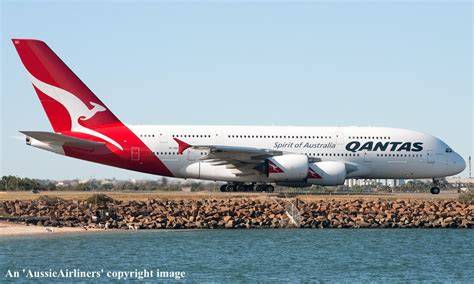
That effort was not necessarily wasted. An aircraft can remain financially useful for several years even when management already knows it has a limited future. Qantas needed the capacity during the recovery period, and the A380 provided it years before the new-generation aircraft could take over.
Why Qantas Is Moving the A380 Retirement Forward to 2028
Qantas previously expected its A380s to remain in service into the early 2030s. The revised plan means the first retirements will begin in 2028, approximately four years earlier than that broad timetable suggested.
The airline has pointed to its incoming next-generation fleet as a central reason. Qantas says the replacement aircraft can fly farther and operate all of the routes currently served by the A380 while also opening new markets. That is a major strategic difference.
The A380’s enormous capacity can be an advantage on heavily traveled routes, but the aircraft’s four engines also impose a significant fuel and maintenance burden. A modern twin-engine aircraft such as the A350-1000ULR can provide extraordinary range without carrying the same propulsion requirements.
Fuel prices make that difference even more important. When fuel costs are relatively low, the A380’s capacity can help offset its higher operating costs. When fuel becomes more expensive, the penalty associated with moving a very large, heavy aircraft through the sky becomes harder to ignore.
Qantas is also looking beyond simple fuel savings. The airline has said its fleet renewal should reduce operational complexity and improve earnings performance, with an operating margin target of 10% to 12% from fiscal 2032. The replacement aircraft are intended to generate stronger economics rather than merely reproduce the capacity of the aircraft they replace.
The A350-1000ULR Is the Aircraft That Changed the Calculation
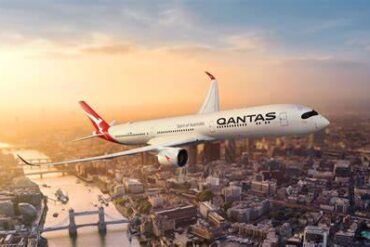
The most important aircraft behind the accelerated retirement is the Airbus A350-1000ULR. Qantas has ordered 12 examples specifically for Project Sunrise, its ambitious plan to connect Australia’s east coast with destinations such as London and New York without intermediate stops.
The aircraft are expected to begin arriving in April 2027. That date effectively creates the bridge Qantas has been waiting for. Once the first A350-1000ULRs enter the fleet, the airline will have an aircraft capable of doing something the A380 cannot do: combining very long range with substantially greater operating efficiency.
The Qantas configuration is also designed around premium long-haul demand. Each aircraft is planned to have 238 seats, including six first-class suites, 52 business-class seats, 40 premium-economy seats and 140 economy seats.
That relatively high premium proportion is important. Qantas has indicated that the standard A350 configuration has a premium density exceeding 40%, compared with around 30% on the A380. For a carrier serving long international routes, selling more premium seats can be as important as carrying more passengers.
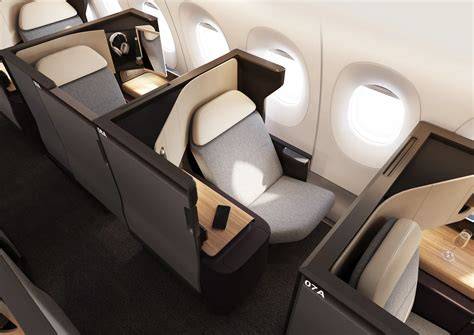
The A350-1000ULR is therefore not simply a smaller replacement for the Superjumbo. It represents a different business model. Instead of concentrating enormous numbers of passengers on selected high-volume routes, Qantas can use a highly efficient aircraft to connect its Australian network directly with major global destinations.
The aircraft’s advertised range of around 9,700 nautical miles gives Qantas the capability required for some of the world’s longest commercial passenger flights. That opens strategic possibilities that the A380 could never provide, even though the A380 remains the larger aircraft.
Sydney–London Shows Why the A380’s Role Is Changing
The difference becomes especially clear when looking at Qantas’ Sydney–London operation. The A380 has traditionally served the route through Singapore, providing a large amount of capacity while allowing passengers to break the journey.
Project Sunrise changes that equation. Qantas plans to begin nonstop Sydney–London flights in October 2027, with tickets expected to go on sale earlier in the year. Once the A350-1000ULR is available, Qantas no longer needs the A380 to provide the capacity and long-haul capability required for this market in the same way.
The aircraft can also create new nonstop opportunities. Sydney–New York, for example, currently involves a stop in Auckland when operated by Qantas’ 787-9. The A350-1000ULR is intended to make such ultra-long-haul operations possible without that intermediate stop.
This is why the 2022 A380 reactivation can be interpreted as a temporary bridge. Qantas needed the aircraft during a period when demand returned faster than new aircraft could arrive. The airline now appears confident that the bridge has served its purpose.
Qantas Has Already Invested Heavily in the Next Generation
The A380 retirement does not happen in isolation. Qantas is carrying out a much broader widebody fleet transformation.
The airline has 24 A350-1000s on order in total, including 12 Project Sunrise A350-1000ULRs and 12 standard A350-1000s. The standard aircraft are expected to begin arriving in fiscal 2029 and will help replace older Airbus A330s.
Qantas also has 787 Dreamliners in its fleet and additional aircraft on order. The Boeing 787-9 is already playing a role in replacing older-generation widebodies, while future 787-10s are expected to contribute further capacity from fiscal 2031.
The economic case for this transition is becoming clearer. Qantas has said that moving an A330 route to a 787 increased contribution margin by 20%, with higher premium density playing an important role. The airline also says customers prefer the 787 on those markets.
That provides a useful indication of why the A380 is vulnerable. Fleet decisions are not based solely on whether an aircraft can still fly safely or attract passengers. Airlines must also consider how much revenue each aircraft can generate relative to its fuel, maintenance, staffing and operational costs.
The Four-Year Warning Was Hidden in Plain Sight
The strange part of the Qantas A380 story is that the aircraft’s retirement was arguably visible years before the airline formally moved the date forward.
The 2022 reactivation program showed that Qantas still needed the Superjumbo. But the simultaneous development of Project Sunrise showed that the airline was already building the aircraft that would eventually make the A380 unnecessary.
The pandemic created an unusual situation in which replacement delays extended the A380’s usefulness. Qantas could not bring the future fleet into service quickly enough, while international demand returned strongly enough to require additional widebody capacity.
The same pattern has affected other A380 operators. Airlines including Qatar Airways and Korean Air have faced pressure to keep their Superjumbos available while waiting for replacement aircraft. Delays surrounding new-generation widebodies, including the Boeing 777-9, have complicated retirement schedules across the industry.
Qantas is now reaching the point where that constraint is easing. The A350-1000ULR has a defined production program, deliveries are approaching, and Project Sunrise is moving toward commercial operations. That gives Qantas considerably more confidence in its fleet replacement timetable.
The A380’s Final Years Could Look Very Different
Qantas has not said that every A380 will disappear immediately in 2028. The wording indicates a gradual phase-out, meaning individual aircraft can continue flying for several years after the first retirement takes place.
That matters because the youngest aircraft may still have considerable useful life remaining. VH-OQC, for example, only returned to commercial service in late 2025 after its long storage period. It would make little economic sense to assume that every aircraft will follow an identical retirement schedule.
Qantas has also said the transition should unlock approximately AUD 300 million in net cash flow benefits between fiscal 2028 and fiscal 2031. That figure highlights the financial significance of the decision. The A380 is not merely being replaced because a newer airplane looks more modern. The fleet transition is expected to have a measurable effect on the airline’s finances.
The irony is that Qantas’ passengers may remember the A380 differently. The aircraft remains one of the most recognizable and popular widebodies ever built, and its spacious cabin, quiet ride and enormous upper deck have made it particularly memorable for travelers.
But airlines have to make decisions based on economics rather than nostalgia.
Qantas’ A380 Era Is Entering Its Final Chapter
The 2028 Qantas A380 retirement is therefore more than an aircraft replacement schedule. It marks the point at which the airline’s post-pandemic recovery strategy finally gives way to its next-generation international fleet.
The four-year-old decision to reactivate the Superjumbos was never necessarily a reversal of Qantas’ long-term direction. It was a practical response to a temporary gap between recovering demand and delayed aircraft deliveries. The A380 returned because Qantas needed its capacity, while the A350-1000ULR program quietly prepared the airline for a radically different long-haul future.
From 2027 onward, the balance changes. The arrival of Project Sunrise aircraft gives Qantas the range to operate nonstop services that the A380 could not provide, while the A350’s twin-engine efficiency and premium-heavy configuration offer a different economic proposition.
By the time the first Qantas A380 leaves the fleet in 2028, the Superjumbo will still be capable of doing what it has always done: carrying large numbers of passengers across long distances. The question will simply be whether it remains the most economically useful way for Qantas to do so.
For the Australian flag carrier, the answer now appears to be changing. The A380 was brought back because Qantas needed yesterday’s capacity. It will begin leaving because tomorrow’s aircraft have finally arrived.