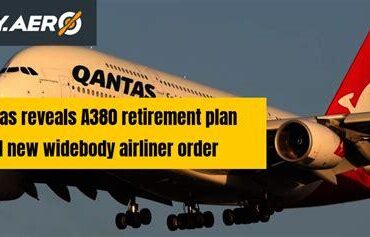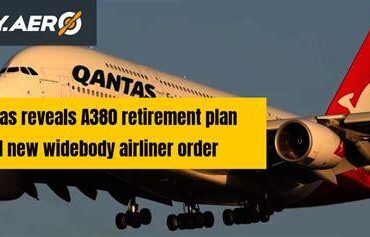
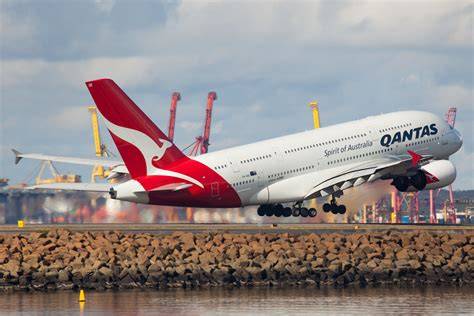
Qantas has brought forward the retirement of its Airbus A380 fleet by about four years, confirming that its remaining superjumbos will begin leaving the fleet from mid-2028. The Australian flag carrier had previously expected to begin replacing the A380 from around 2032, but rising maintenance costs, supply-chain pressures and the arrival of more efficient widebody aircraft have changed the economics of keeping the giant four-engine jets in service.
The decision comes as Qantas navigates a difficult combination of strong international travel demand and sharply higher operating costs. The airline reported a 13.8% decline in full-year underlying pre-tax profit to A$2.06 billion, with the Middle East conflict contributing substantially to higher fuel expenses. Qantas said it expects the A380 retirement to improve capital efficiency while preserving network reach as newer aircraft enter service.
Qantas currently operates 10 A380s, with the first aircraft entering service in 2008. The type has become one of the most recognizable aircraft in the airline’s history, combining a full-length double-deck cabin with enormous passenger capacity and premium seating. Yet the same characteristics that once made the A380 attractive for high-demand trunk routes have become increasingly difficult to justify as airlines favor smaller, long-range twin-engine aircraft capable of operating more routes with lower fuel and maintenance costs.
Why Qantas Is Retiring Its A380 Fleet Four Years Early
The accelerated retirement is not simply a reaction to fuel prices. Maintenance and operational complexity are becoming increasingly important factors because Airbus ended A380 production in 2021. As the global fleet shrinks, sourcing components, maintaining specialist expertise and managing unexpected technical events can become more difficult and expensive. Qantas executives have acknowledged that those costs are expected to increase as the aircraft ages.
Qantas Group CEO Vanessa Hudson described the A380 as an aircraft that has delivered substantial value to the airline and its customers, but emphasized that its age means maintenance and disruption costs will continue to rise. That calculation is particularly significant when compared with the capabilities of modern twin-engine widebodies. The Airbus A350-1000 and Boeing 787 can provide long-range performance without requiring four engines or the enormous capacity of an A380, giving Qantas greater flexibility when matching aircraft to demand.
The timing also reflects Qantas’ broader fleet renewal strategy. The airline has already committed to new-generation aircraft and is now negotiating with Airbus and Boeing to convert around 20 existing purchase options into firm orders. Those additional aircraft are intended to help replace retiring widebodies and prevent the A380 withdrawal from creating an excessive capacity shortfall.
A350 and Boeing 787 Become Central to Qantas Fleet Renewal
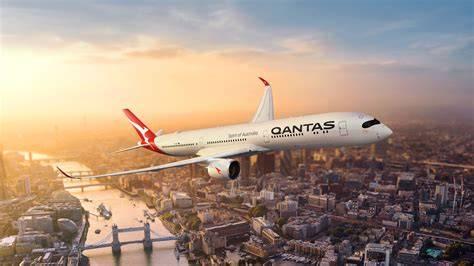
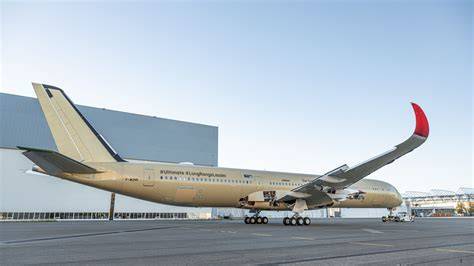
The Airbus A350-1000 is expected to play a major role in replacing the A380, although the transition is not a simple one-for-one substitution. Qantas has firm orders for A350s and Boeing 787s, while another 12 specially configured A350-1000ULRs are being prepared for Project Sunrise.
Project Sunrise is particularly important because its aircraft are designed for ultra-long-haul missions linking Sydney with destinations including London and New York. The first Project Sunrise A350-1000ULR is expected to arrive in April 2027, creating a major new chapter in Qantas’ international network. These aircraft, however, are configured specifically for the ultra-long-range program and therefore cannot simply be redirected to every route currently served by the A380.
The airline’s wider fleet plan therefore depends on deliveries arriving at the right pace. Qantas said that 17 new aircraft joined the group during fiscal 2026, with up to 31 more expected over the following year. Additional A350 and 787 deliveries will gradually increase the proportion of next-generation aircraft across the international network, giving the carrier more opportunities to replace older and less flexible aircraft.
The Capacity Challenge Behind the A380 Retirement
The biggest challenge is capacity. An A380 can carry substantially more passengers than a typical modern twin-engine widebody, making it particularly useful on routes where demand is concentrated into a small number of daily departures. Replacing it with smaller aircraft can mean adding frequencies, reallocating aircraft or accepting fewer available seats.
That issue is especially relevant for Qantas because the airline continues to see strong demand for international travel. A newer aircraft may be more economical per flight, but it cannot automatically reproduce the capacity of an A380. Qantas will therefore need to balance fuel efficiency, aircraft availability, route frequency and passenger demand as the retirement progresses.
The carrier has already indicated that international revenue per available seat kilometer is expected to increase by roughly 8% to 10%, highlighting the broader pricing pressure facing the airline. Higher operating costs combined with constrained aircraft availability could make international tickets more expensive, particularly on routes where the A380 previously supplied large amounts of capacity.
What the End of the A380 Means for Qantas
Qantas’ decision represents more than the retirement of an aging aircraft. It signals a fundamental change in the airline’s long-haul strategy. The A380 was designed around the idea that airlines would concentrate huge numbers of passengers at major hubs and move them between those hubs aboard exceptionally large aircraft. Modern aircraft such as the A350 and 787 instead allow carriers to operate longer routes with smaller aircraft and greater scheduling flexibility.
For passengers, the change will eventually mean fewer opportunities to experience Qantas’ iconic double-deck flagship. For the airline, however, the transition offers a chance to simplify its fleet, reduce exposure to aging-aircraft maintenance costs and build an international network around aircraft better suited to today’s economics.
Qantas has not yet provided a precise final retirement date for every A380. The current plan is for the fleet to be progressively phased out from 2028, with flexibility depending on replacement aircraft deliveries and network requirements.
The first Qantas A380 entered service in 2008, making the type an important part of the airline’s modern history. Its accelerated departure now shows just how quickly the economics of commercial aviation can change. The superjumbo may remain a passenger favorite, but for Qantas, the future increasingly belongs to efficient twin-engine widebodies, ultra-long-range capability and a more flexible international fleet.