China has established a vast permanent no-fly zone around Beijing following the June crash of a small light-sport aircraft into the capital’s tallest skyscraper. The new Special Restricted Area covers approximately 280,000 square kilometers, or more than 108,000 square miles, an area roughly comparable to Italy. The restriction took effect on September 20 and represents one of the largest permanent airspace controls imposed over a major urban region anywhere in the world.
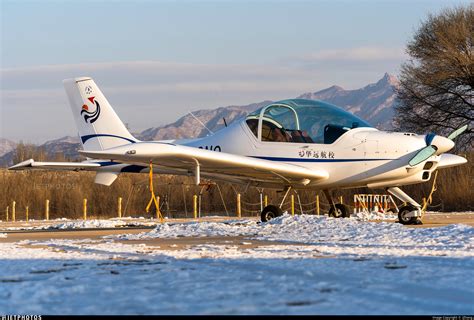
The measure follows the June 26 crash involving a Sunward SA60L Aurora, a two-seat, single-engine light-sport aircraft. The aircraft struck the CITIC Tower, also known as China Zun, in Beijing’s central business district at approximately 5:55 p.m. local time. Chinese authorities later said the 66-year-old pilot was killed and 13 people on the ground were injured.
CITIC Tower Crash Exposed Beijing Airspace Concerns
The aircraft departed from a general aviation airport in Beijing’s Pinggu District, roughly 50 kilometers from the city center. Flight-tracking information showed the aircraft moving west toward central Beijing before its track ended near the East Third Ring Road. The incident was particularly striking because Beijing maintains exceptionally restrictive airspace controls, especially around sensitive government and military locations.
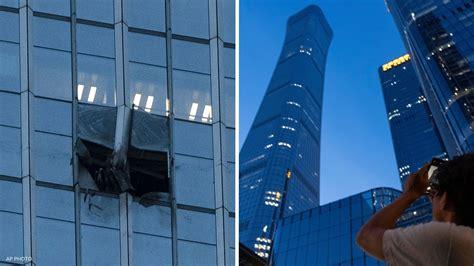
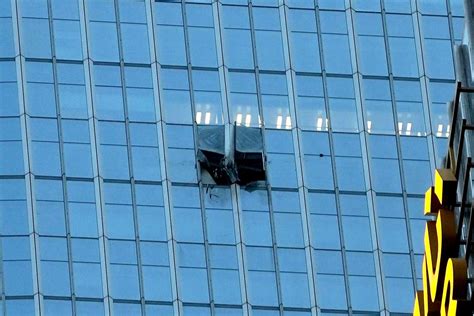
CITIC Tower, with a height of 528 meters and 109 floors, is the tallest building in Beijing. The aircraft struck the tower’s glass exterior, damaging several panels and creating a visible opening in the facade. Falling debris prompted an emergency response, while the building was evacuated. The crash also generated widespread attention because the tower stands in one of the capital’s busiest commercial districts and relatively close to highly protected government facilities.
The initial circumstances remained unclear, but Chinese authorities subsequently concluded that the pilot had deviated from the designated flight area and lost contact with the airport. Authorities later attributed the crash to the pilot’s personal actions, saying investigators had found references to suicide in his diary. The official account therefore shifted the incident from an unexplained aviation accident toward a case involving deliberate endangerment, although the physical security implications remained the same: a small civilian aircraft had reached central Beijing despite the city’s extensive airspace restrictions.
What Beijing’s New 108,000-Square-Mile Restricted Area Covers
The newly expanded restricted area extends across Beijing, Tianjin and large portions of Hebei, while also reaching parts of several surrounding regions and the Bohai Sea. It affects an enormous area containing major population centers, airports, industrial facilities and strategically important infrastructure. Reuters reported that the restricted airspace covers roughly 280,000 square kilometers, placing it on a scale rarely associated with a permanent urban airspace restriction.
The rules do not simply shut down aviation across the entire region. Commercial airline operations can continue, while approved business aviation, military, police and emergency flights may also operate under authorization. However, aircraft permitted to enter the area face significantly tighter operating requirements than ordinary general aviation flights.
Every authorized flight must follow a pre-approved flight plan and report potential deviations. Pilots are required to maintain continuous two-way communication with air traffic control, while aircraft must carry surveillance and identification equipment that allows authorities to monitor their movements. This creates several layers of control rather than relying on a single restriction.
Why the New Beijing No-Fly Zone Is So Large
The size of the zone reflects more than the location of the crash itself. A restriction limited to the immediate area around CITIC Tower would not address the broader problem revealed by an aircraft traveling from the outskirts toward the capital. Authorities are instead creating a large controlled airspace environment designed to prevent unauthorized general aviation aircraft from approaching central Beijing in the first place.
The policy also reflects the unique security requirements of China’s capital. Beijing contains major government institutions, military facilities and critical infrastructure, meaning an unidentified aircraft can create a security concern long before it reaches a skyscraper. The June crash demonstrated how even a relatively small aircraft can become a serious incident when it enters a densely populated and highly protected urban area.
China already imposes extensive restrictions on drones in Beijing, and the new aviation measures extend that broader philosophy of controlled low-altitude airspace to conventional civilian aircraft. Other capitals, including Washington, Paris, New Delhi, Moscow and Wellington, also maintain significant aviation restrictions, but Beijing’s newly expanded permanent zone stands out for its geographic scale.
A New Era for General Aviation Around Beijing
For general aviation operators, the consequences are substantial. Scenic flights, pilot training, private aircraft operations and other recreational flying will face much tighter limits across the region. Operators that continue flying within the restricted area will need authorization, approved routes, reliable communications and equipment capable of supporting continuous identification and surveillance.
The crash itself lasted only moments, but its consequences for Beijing’s aviation system are far broader. The 108,000-square-mile Special Restricted Area transforms the way civilian aircraft can approach one of the world’s most tightly controlled capitals. Rather than treating the CITIC Tower crash as an isolated location-specific event, Chinese authorities have responded by creating a much wider permanent barrier designed to prevent another unauthorized aircraft from reaching the heart of Beijing.