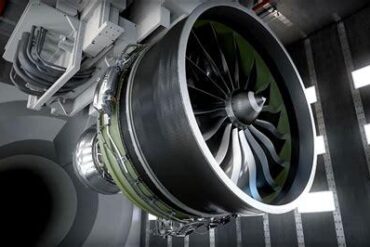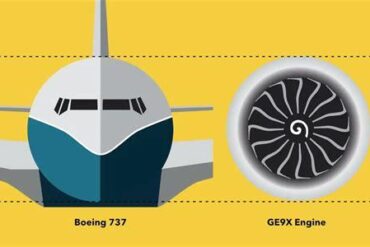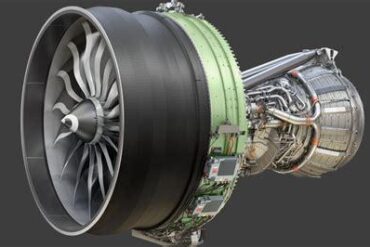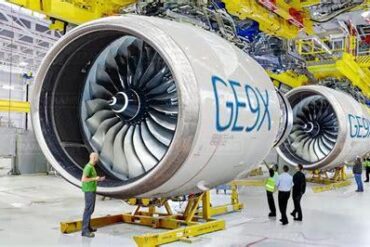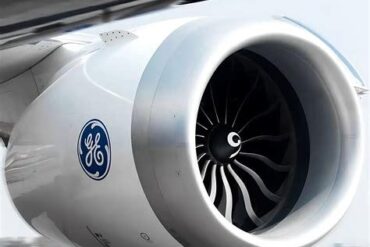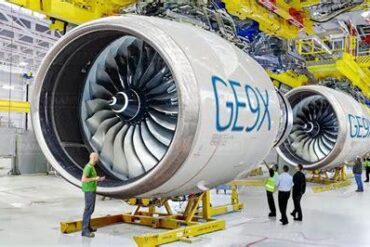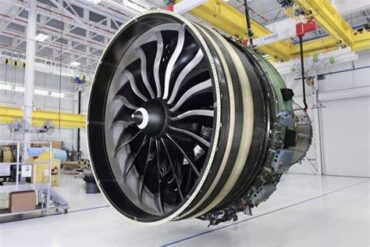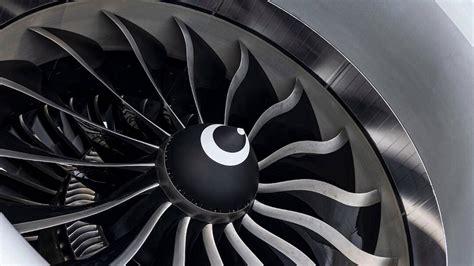
The GE9X was designed around an ambitious idea: make a modern widebody engine dramatically more efficient by moving an enormous amount of air with an exceptionally large fan. Its 134-inch (3.4-meter) fan is the largest ever installed on a commercial aircraft engine, and that scale is central to the engine’s efficiency gains. But the same feature that gives the GE9X its impressive performance also creates engineering challenges that become increasingly difficult to isolate as they travel deeper into the engine.
That became particularly clear after a crack was discovered in the GE9X mid-seal during an inspection in January 2026. A mid-seal may sound insignificant compared with the engine’s enormous fan, compressor, combustor, and turbine, but its condition provides a useful window into the forces operating throughout the powerplant. The issue demonstrates how a decision made at the front of the engine can influence pressure, temperature, mechanical loads, and component durability throughout the core.
The GE9X therefore represents more than another step in the evolution of high-bypass turbofans. It is an attempt to push several parameters simultaneously: fan diameter, bypass ratio, pressure ratio, thermal efficiency, materials capability, and fuel efficiency. When those parameters are pushed together, engineers encounter interactions that are difficult to reproduce perfectly on test benches or predict entirely through computer modeling. The mid-seal problem is one example of what happens when an engine operates so close to its intended limits that a relatively small component can become a major engineering concern.
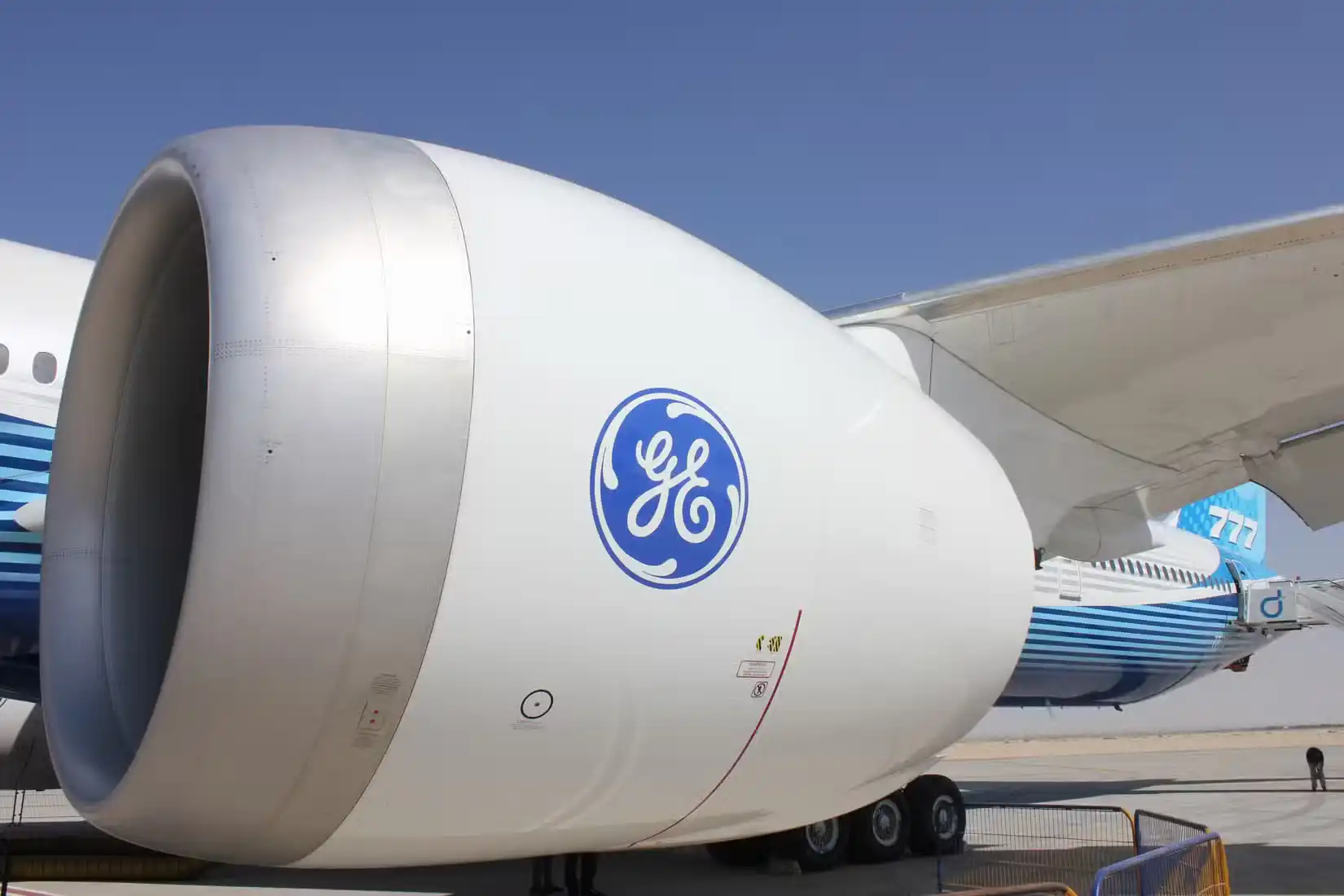
Why the GE9X Needs a 134-Inch Fan
The enormous fan is not simply an attempt to make the GE9X look bigger than the GE90. Its size serves a fundamental aerodynamic purpose. A larger fan can move substantially more air around the engine core, allowing the engine to achieve a very high bypass ratio. Instead of forcing all of the incoming air through the hot core, most of the airflow travels around it, generating thrust efficiently while reducing the amount of energy that must be extracted through combustion.
This approach is especially valuable on a large aircraft such as the Boeing 777X, where long-range efficiency is critical. According to the reference figures for the program, the GE9X offers roughly a 10% fuel-efficiency improvement compared with the GE90. The larger fan is an important part of achieving that improvement because it allows the engine to produce thrust by accelerating a much larger mass of air by a smaller amount.
But increasing fan diameter does not produce a simple proportional increase in performance. The aerodynamic loads grow, the fan structure becomes more demanding, and the mechanical system has to manage significantly greater rotational inertia. Every time the engine accelerates, decelerates, or experiences a rapid change in thrust, the huge rotating assembly imposes changing loads on shafts, bearings, gearless drive systems, and other components.
The GE9X has a rated thrust of approximately 110,000 pounds, while testing demonstrated thrust levels as high as 134,300 pounds. Those numbers illustrate the extraordinary forces involved. Although the fan is physically located at the front of the engine, its effects are transmitted through the complete propulsion system. The larger airflow requirement ultimately influences how much work the core must perform and how efficiently the turbines can extract energy to keep the fan turning.
A Bigger Fan Places Greater Demands on the Core
The most important point about the GE9X is that the fan cannot be considered independently from the core. A massive fan needs a core capable of supplying enough power to drive it. That means the engine’s compressors, combustor, turbines, shafts, and associated sealing systems must operate within an increasingly demanding environment.
Air entering the core is compressed to a high pressure before it reaches the combustor. The resulting high-energy gases then expand through the turbine, where their energy is extracted to drive the compressor and fan. Higher pressure ratios and temperatures can improve overall efficiency, but they also increase the mechanical and thermal demands placed on components.
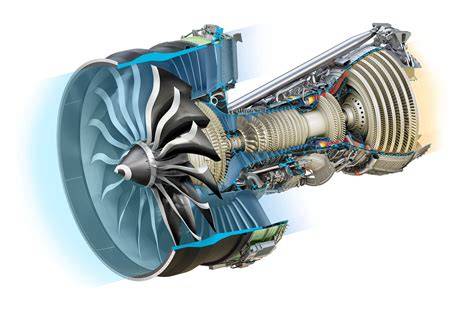
This creates an engineering balancing act. Engineers want the core to operate at high pressure and temperature because those conditions can contribute to better efficiency. At the same time, materials have physical limits, seals must tolerate pressure differences, and rotating components must survive repeated thermal expansion and contraction. Increasing one performance parameter can therefore create new stress somewhere else.
The 134-inch fan is especially important in this chain because it changes the scale of the airflow problem. More air must be moved, and enough power must be generated to maintain the required fan speed and thrust. The result is an engine in which components that appear unrelated to the fan are nevertheless affected by the fan’s size and operating requirements.
That is why the GE9X cannot simply be treated as a larger version of an existing turbofan. Scaling an engine changes its aerodynamic behavior, structural loads, thermal environment, and manufacturing requirements. A component that has performed reliably in a smaller engine can encounter a very different combination of forces when placed inside a much larger and more highly optimized powerplant.
What the GE9X Mid-Seal Actually Does
The mid-seal is located inside the engine core, where different pressure and temperature environments must be controlled. Seals are fundamental to turbine-engine operation because unwanted leakage between stages can reduce efficiency and disturb the carefully managed flow of air and gases through the engine.
A seal must therefore do more than simply block airflow. It must maintain its function while exposed to pressure differences, temperature gradients, vibration, mechanical movement, and repeated operating cycles. The geometry also has to remain within tight tolerances as components expand and contract during engine operation.
The January 2026 crack was significant because it appeared in precisely this demanding environment. General Electric identified the root cause and developed a redesigned component for production. That response indicates that the original design encountered operating conditions that required an engineering change rather than merely a conventional repair.
A crack in a relatively small component does not mean that the entire engine architecture is fundamentally defective. Modern turbine engines contain thousands of components, and certification programs are specifically designed to identify weaknesses, validate fixes, and establish maintenance requirements. What makes the GE9X interesting is the relationship between the issue and the engine’s unusually aggressive performance targets.
The mid-seal sits within a system where pressure, temperature, airflow, and mechanical loads interact continuously. A small change in one condition can influence another. When an engine is designed with tightly optimized margins, those interactions become particularly important because there is less room for unexpected behavior.
Why the 134-Inch Fan Changes the Engineering Equation
The unusual aspect of the GE9X is not that it has a large fan by itself. Other modern turbofans also use increasingly large fans to improve propulsive efficiency. The difference is the scale at which the GE9X combines fan diameter with a highly advanced core and the enormous thrust requirements of a 777X-class aircraft.
The fan creates the demand. The core must provide the power. The turbines must extract that power. The seals must keep pressure and airflow under control. The materials must tolerate the resulting environment. Each part is therefore connected to the others.
This is why a problem in a turbine-area seal can ultimately be linked conceptually to the design philosophy behind the fan. It would be incorrect to say that the 134-inch fan directly caused the mid-seal crack without the specific engineering evidence establishing such a causal chain. However, the fan’s scale is part of the broader set of requirements that led engineers to develop a core capable of delivering the necessary performance.
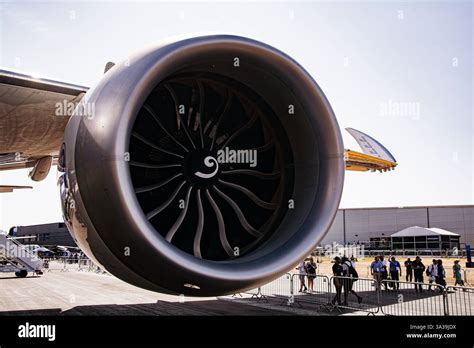
The GE9X consequently occupies a relatively unusual position in commercial aviation. It is simultaneously pursuing high bypass airflow, a high-performance core, advanced materials, and very large overall thrust. The combination produces operating conditions that do not have an unlimited historical database behind them.
That matters because aviation engineering relies heavily on experience. Engineers can model loads and temperatures, run component tests, conduct full-engine tests, and draw on decades of operational data. But when a design enters a new performance region, some real-world interactions can only become apparent after extensive testing.
GE9X Development Has Already Revealed Other Challenges
The mid-seal issue is also not the first technical challenge encountered during the GE9X program. Earlier development work included high-pressure compressor stator vane durability problems in 2019, a temperature-related alert that temporarily interrupted flight testing in 2022, and titanium thrust-link failures associated with a 2024 grounding event.
These incidents have different technical causes and should not automatically be treated as one continuous failure. However, together they demonstrate the difficulty of developing an engine that combines new materials, new manufacturing techniques, extremely high performance, and an unusually large fan.
The GE9X program has accumulated extensive testing in an effort to expose potential weaknesses before widespread airline operation. The engine has undergone more than 30,000 cycles and over 1,600 dust-ingestion tests according to the reference material. Such testing is intended to reproduce a wide range of operating conditions and identify problems that may not appear during ordinary laboratory development.
Advanced materials add another layer to the challenge. The GE9X incorporates ceramic matrix composites and additive-manufactured components, technologies that can provide benefits in temperature capability, weight, and component design. Yet introducing a new material or manufacturing process also means engineers must understand its behavior over thousands of cycles and under the combined effects of heat, pressure, vibration, and mechanical loading.
The Mid-Seal Redesign Does Not Mean the GE9X Has Failed
It is easy to interpret any component redesign as evidence that an engine program has gone wrong. In aerospace engineering, however, redesigns are part of the development process, particularly for engines operating at the frontier of performance.
The important question is how the manufacturer responds after a weakness is identified. In this case, GE Aerospace identified the root cause and introduced a redesigned mid-seal, while certification testing continued. The stated expectation was that the issue would not prevent the Boeing 777-9 from entering service in 2027.
The redesign also illustrates why certification is such a lengthy process. An engine does not become ready for airline service simply because it produces the required thrust during a test. Engineers must demonstrate durability, reliability, safety, environmental performance, and compliance across a huge range of operating conditions.
Potential retrofits are another normal part of the lifecycle of a sophisticated engine. If a redesigned component offers improved durability, maintenance programs can incorporate the new configuration as engines enter service or undergo major overhauls. The result is a propulsion system that can continue to evolve after certification rather than remaining permanently frozen at its original design configuration.
Why Other Jet Engines Do Not Face Exactly the Same Challenge
Other modern engines certainly face their own durability and reliability issues, so the GE9X should not be described as uniquely vulnerable to technical problems. What makes its situation unusual is the combination of scale and performance requirements.
A smaller fan generally moves less air and places different demands on the core. Its shafts, bearings, compressors, turbines, and structural components are designed around another set of loads and operating conditions. Even engines using similarly advanced materials may not experience exactly the same interaction between airflow, pressure ratio, temperature, and mechanical stress.
The GE9X pushes those relationships into an unusual region. Its massive fan requires a powerful and highly efficient core, while its core must operate at conditions capable of supporting the desired performance. The resulting system leaves engineers managing extremely tight relationships between components.
That is why lessons from the GE9X could prove valuable beyond the 777X itself. Future commercial engines will continue pursuing lower fuel burn and lower emissions, and one route toward greater efficiency is to move more air through increasingly efficient propulsion systems. Whether that means larger turbofans, open-fan concepts, new architectures, or more advanced materials, the same fundamental challenge remains: efficiency improvements must eventually be balanced against durability and maintainability.
The GE9X Shows the Price of Extreme Efficiency
The GE9X’s 134-inch fan is its most visually obvious innovation, but its real significance is deeper. The fan enables the engine to move enormous quantities of air efficiently, helping deliver the fuel-burn advantages required for the next generation of large widebody aircraft. Yet the consequences of that decision propagate through the entire engine.
The January 2026 mid-seal crack provides a particularly useful example. The seal itself is small compared with the enormous fan, but it operates inside a system shaped by the fan’s airflow requirements, the core’s pressure ratio, turbine temperatures, and the mechanical loads associated with producing more than 100,000 pounds of thrust.
That does not make the GE9X an unsuccessful engine. Instead, it shows what happens when commercial aviation pushes turbofan technology toward the edge of its established engineering envelope. Every efficiency gain has to be supported by materials, manufacturing methods, testing, maintenance procedures, and certification evidence capable of sustaining it.
The ultimate lesson of the GE9X may therefore have little to do with one cracked seal. Its importance lies in demonstrating that scaling an aircraft engine is never simply a matter of making every component larger. The aerodynamic benefits of a 134-inch fan create demands that reach deep into the core, where pressure, heat, rotation, and material behavior become increasingly difficult to manage.
As the Boeing 777X moves toward service, the redesigned mid-seal will be one small part of that much larger engineering story. The GE9X demonstrates just how interconnected a modern turbofan has become—and why the pursuit of greater efficiency can create engineering problems that simply did not exist at the same scale in earlier generations of jet engines.