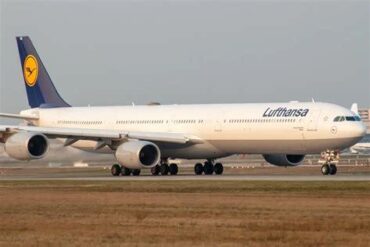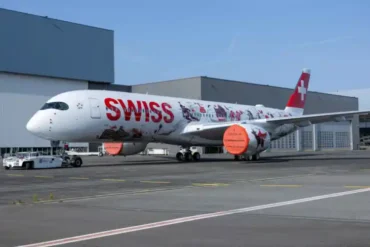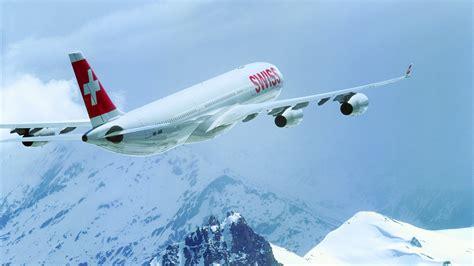
SWISS is approaching a quiet but significant turning point in its history. By the end of 2027, the airline plans to retire its final four Airbus A340-300s, bringing more than two decades of four-engine long-haul flying at Switzerland’s flag carrier to a close. There will be no dramatic farewell to an entire generation of aircraft. Instead, the A340 will gradually disappear from Zurich Airport as replacement aircraft arrive and individual routes move to newer twin-engine widebodies.
The change matters because the A340 is more than an aging aircraft type in the SWISS fleet. It became closely associated with the airline’s rebuilding after the collapse of Swissair and helped restore Switzerland’s intercontinental network during one of the most difficult periods in the country’s aviation history. The aircraft arrived at SWISS at a moment when the airline needed stability, capacity, and a modern long-haul platform. More than 20 years later, its retirement represents the completion of that transition.
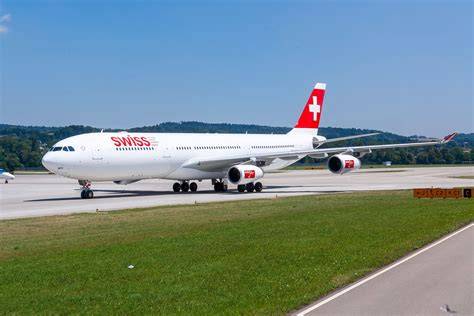
SWISS originally received nine A340-300s, beginning in 2004. By late 2026, only four remain. Their continued operation has largely been the result of delayed deliveries of replacement aircraft rather than a change in the airline’s long-term strategy. The original retirement target was 2024-2025, but supply-chain problems and delays affecting both Airbus A350-900 and Boeing 787-9 deliveries extended the A340’s career by several years.
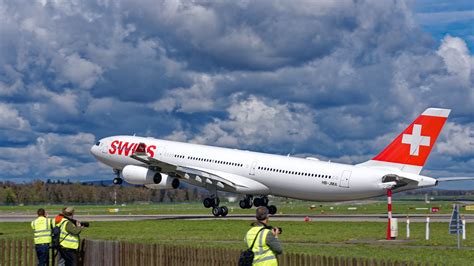
For aviation enthusiasts, that extension has created one final opportunity to experience a type that once formed the backbone of SWISS’s intercontinental operation. Routes to destinations such as Shanghai and Johannesburg remain among the last places where travelers can encounter the four-engine aircraft in scheduled SWISS service. Other former A340 destinations, including Calgary, Halifax, and Vancouver, have already moved to the A350-900. As additional A350s arrive, the remaining A340 routes will follow.
SWISS A340 Retirement Will End More Than Two Decades of Quadjet Flying
The final retirement date is expected to fall by the end of 2027, although the exact sequence of individual aircraft departures will depend on fleet availability and replacement deliveries. The four remaining A340-300s are now effectively operating in the final chapter of their SWISS careers.
That makes 2026 an especially important year for the type. The A340 is still a working aircraft rather than a museum piece, but its role has become increasingly limited. It no longer represents the standard long-haul solution for SWISS. Instead, it fills the remaining gaps until newer aircraft are available to take over.
This is a remarkable change from the aircraft’s earlier role. During the 2000s and much of the 2010s, the A340 was one of the defining aircraft at Zurich. Its four-engine configuration was familiar to passengers connecting through the Swiss hub, particularly on longer international flights. The aircraft connected Switzerland with cities across North America, South America, Africa, and Asia, giving SWISS the capacity and range it needed while the airline expanded and stabilized.
The A340’s longevity was helped by the fact that SWISS invested in its cabins even after the aircraft’s economic disadvantages became increasingly obvious. First and business class received upgrades before the COVID-19 pandemic, allowing the aircraft to remain commercially useful while newer aircraft gradually entered the fleet. The decision did not change the long-term economics of the type, but it helped SWISS extract additional value from an aircraft that had already become an established part of its operation.
From Swissair’s Collapse to SWISS: Why the A340 Mattered
To understand why the A340 has such a distinctive place in SWISS history, it is necessary to look back to Swissair’s collapse in 2001.
Swissair had been one of Europe’s most recognizable airlines, operating an extensive long-haul network from Zurich. Its aircraft included the McDonnell Douglas MD-11, a three-engine widebody that had become an important part of the airline’s intercontinental fleet. But years of financial problems and failed investments eventually produced a liquidity crisis that Swissair could not survive.
On October 2, 2001, Swissair was forced to ground its fleet after it could no longer secure the funds needed to purchase fuel. The event, remembered in Switzerland as “the Grounding,” effectively ended the airline’s independent operations and stranded thousands of passengers.
SWISS was established in 2002 as the successor to Swissair. The new carrier inherited important elements of the old airline’s network and infrastructure, including Zurich as its principal hub. But rebuilding an international network required aircraft capable of providing reliable long-haul service while delivering better economics than the aging MD-11.
The answer was the Airbus A340-300.
SWISS ordered nine examples, and the first aircraft, registered HB-JMH, arrived in early 2004. The aircraft represented more than a fleet decision. It provided a visible symbol of continuity after Swissair’s collapse while giving the new airline a modern platform for rebuilding its intercontinental schedule.
The A340 also offered an important economic improvement over the MD-11. Although four engines would eventually become a major disadvantage compared with modern twin-engine aircraft, the A340-300 was significantly more efficient than the three-engine aircraft it replaced when it entered service. At the time, its combination of range, capacity, and reliability made it a logical choice for SWISS.
Why the Airbus A340 Survived at SWISS for So Long
The A340’s survival into 2027 is partly a story about aircraft economics, but it is equally a story about replacement timing.
SWISS had already intended to remove the type years earlier. CEO Dieter Vranckx indicated in 2021 that the airline expected its A340 fleet to disappear around 2024-2025. The strategy was straightforward: introduce newer, more efficient twin-engine aircraft and retire the older four-engine jets.
The problem was that the replacement aircraft did not arrive quickly enough.
The Lufthansa Group’s Boeing 787-9 program experienced repeated delays connected with production and supply-chain problems. Airbus A350 deliveries were more dependable, but the number of aircraft arriving was still insufficient to allow SWISS to remove every A340 on the original schedule.
That created an unusual situation. SWISS knew that the A340 was expensive to operate, yet it continued flying the aircraft because the airline still needed the available widebody capacity. Retiring an aircraft without having its replacement ready could mean reducing frequencies, removing capacity from important markets, or disrupting the network.
The economics are increasingly difficult to justify. The A340-300 can consume approximately 25-30% more fuel per seat than an A350-900 on comparable missions. Its four CFM56-5C engines require significantly more fuel than the two Rolls-Royce Trent XWB engines powering the A350, despite the newer aircraft delivering similar long-haul capability with a more efficient airframe and propulsion system.
Every flight therefore carries a structural cost disadvantage. Across hundreds of long-haul departures, the difference becomes substantial.
Yet for several years, keeping the A340 flying could still make more sense than removing aircraft that the airline could not immediately replace. That is why the retirement date moved rather than disappearing altogether.
The A350-900 Is Replacing the SWISS A340
The Airbus A350-900 is now the central aircraft in SWISS’s A340 replacement strategy. It combines long-range capability with considerably better fuel efficiency and a modern passenger cabin.
The transition is already visible across the SWISS network. Calgary, Halifax, and Vancouver have moved from the A340 to the A350-900, demonstrating how the retirement process works in practice. As additional A350s arrive, more routes can be transferred, gradually reducing the number of missions requiring the older aircraft.
The passenger experience also changes with the fleet transition. The A350 provides a lower cabin altitude, higher humidity, larger windows, and a newer interior environment. These features do not necessarily make the A340 uncomfortable, especially after its cabin upgrades, but they highlight the technological gap between an aircraft introduced in the early 2000s and one designed for the current generation of long-haul operations.
SWISS is not relying on the A350 alone. Its Boeing 777-300ER fleet handles some of the airline’s highest-demand intercontinental routes, where a larger aircraft is justified. The A350-900, with a smaller typical capacity, can serve markets where demand does not require the approximately 340-seat capacity associated with the 777-300ER.
That gives SWISS a more flexible twin-engine long-haul fleet. Instead of using a four-engine aircraft across a broad range of missions, the airline can select between different twin-engine widebodies according to demand, distance, and available capacity.
The SWISS A340 Is Part of a Much Larger Lufthansa Group Exit
The retirement of SWISS’s four remaining A340s is not an isolated fleet change. It forms part of a much larger Lufthansa Group transition away from quadjets.
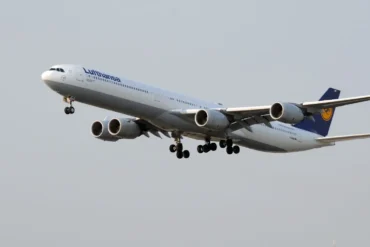
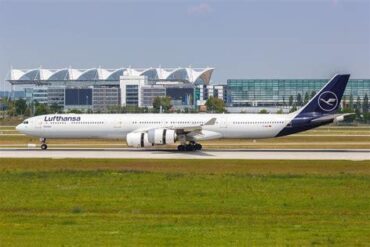
Lufthansa mainline is simultaneously reducing several four-engine fleets. Its A340-600s are scheduled to leave service in October 2026, while its Boeing 747-400s are planned for retirement in 2027. The airline’s remaining A340-300s are expected to disappear by 2028.
Edelweiss Air, the Lufthansa Group’s Swiss leisure carrier, is also replacing its five A340-300s with A350-900s. The first Edelweiss A340, HB-JMG, was moved to storage in Teruel, Spain, in October 2025, while A350 deliveries continue.
Taken together, approximately 25 A340s across SWISS, Edelweiss, and Lufthansa mainline are expected to leave service within roughly a two-year period. That makes the current transition one of the largest concentrated retirements of the A340 within a major airline group.
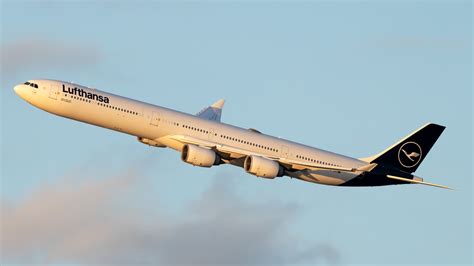
The transition is particularly notable because Lufthansa has historically been one of the world’s most important operators of large four-engine aircraft. Even after the A340 and 747-400 retirements, the group will not become completely quadjet-free.
Lufthansa’s Boeing 747-8 fleet is expected to remain active into the 2030s. The aircraft is being fitted with the airline’s new Allegris cabin, preserving a role for the four-engine 747 on selected long-haul routes.
The Airbus A380 is also staying because its enormous passenger capacity can still be valuable at airports where slots are scarce. London Heathrow is the clearest example. An A380 can transport a very large number of passengers in a single departure, something that would require additional frequencies and therefore additional airport slots if replaced entirely by smaller aircraft.
The result is not an overnight disappearance of four-engine aircraft. Instead, the quadjet era is contracting toward a small number of aircraft where capacity, airport constraints, or network requirements can still justify four engines.
What SWISS Will Look Like After the A340
Once the final SWISS A340 leaves service, the airline’s long-haul widebody fleet will be built around the A350-900, 777-300ER, and A330-300.
The A330 is also being modernized. SWISS has introduced its new “SWISS Senses” cabin concept, with aircraft undergoing extensive interior work. The first A330 associated with the new cabin program was sent to Hong Kong in July for a full retrofit.
That means the end of the A340 does not simply represent an aircraft retirement. It completes a broader restructuring of the airline’s intercontinental fleet around twin-engine aircraft.
The change also reflects how radically long-haul aviation has evolved since the A340 first arrived at SWISS. In 2004, four engines offered airlines a combination of range and operational confidence that was difficult to reproduce with twin-engine aircraft. Modern A350s and 787s have changed that calculation. Their engines, aerodynamics, structures, and operating economics allow airlines to fly long distances with two engines while carrying substantial passenger loads.
The commercial argument has therefore shifted decisively toward twinjets.
HB-JMH Will Preserve the SWISS A340 Story
There is, however, one fitting coda to the A340’s retirement. HB-JMH, the first A340 delivered to SWISS, is expected to be donated to the Swiss Museum of Transport in Lucerne.
That aircraft will have an unusually meaningful place in Swiss aviation history. At the museum, it will sit alongside a Swissair Convair 990 Coronado, creating a physical link between different generations of Swiss long-haul aviation.
The contrast will be striking. The Convair 990 represents the jet age of the 1960s, while HB-JMH represents the post-Swissair era that began after the traumatic events of 2001. Between them is a story of changing technology, airline economics, national aviation identity, and the extraordinary speed at which widebody aircraft have evolved.
For SWISS, the final A340 retirement is therefore about more than four engines disappearing from the fleet list. The aircraft helped carry the airline through its formative years, connected Zurich with major destinations around the world, and remained in service long after newer aircraft had made its original operating concept obsolete.
By the end of 2027, the last SWISS A340s should be gone from scheduled service. The quiet end of quadjet long-haul flying at Switzerland’s flag carrier will finally arrive—not with the abrupt disappearance that followed Swissair’s Grounding, but through a carefully managed transition from one generation of widebody aircraft to another. For passengers, the change will mean newer aircraft and more efficient operations. For aviation history, it will close one of the most distinctive chapters in modern Swiss long-haul flying.