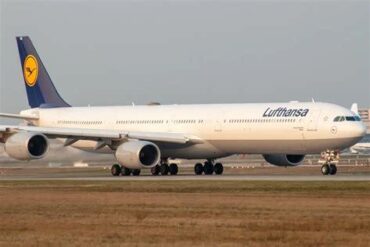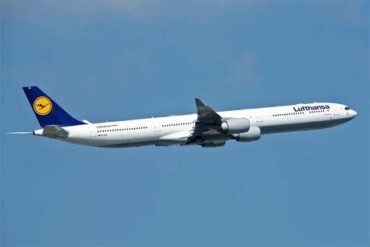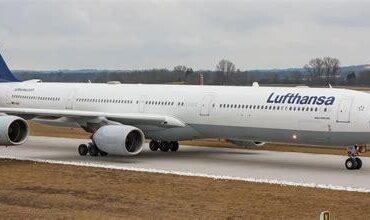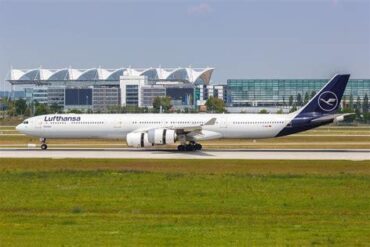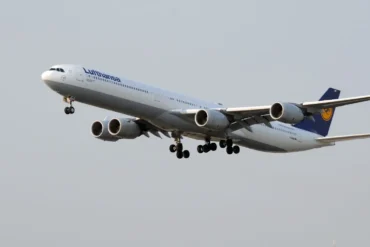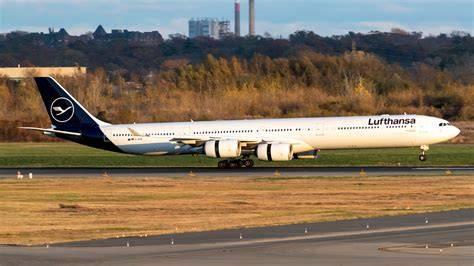
The countdown has begun for one of the most distinctive aircraft still flying scheduled passenger services in Europe. Lufthansa’s Airbus A340-600 fleet is approaching its final retirement, bringing an end to a 24-year chapter for a four-engine widebody that became closely associated with the German carrier’s long-haul network. Only four aircraft remain active, and their opportunities for regular commercial service are now concentrated on a handful of transatlantic flights from Frankfurt.
For aviation enthusiasts, that makes the final weeks particularly significant. The A340-600 is no longer an aircraft travelers can expect to encounter randomly across Lufthansa’s network. Instead, finding one requires monitoring specific routes, flight numbers, and aircraft registrations. Equipment changes can happen with little warning, but the remaining scheduled operations provide a narrow opportunity to photograph, track, or fly on Lufthansa’s longest passenger aircraft before the type disappears from the carrier’s fleet.
The A340-600 occupies a special place in modern commercial aviation because it represents an era when four-engine aircraft were still considered practical for long-haul operations. Its enormous fuselage, four Rolls-Royce Trent 500 engines, and unusual cabin configuration gave it a character that newer twin-engine aircraft cannot completely reproduce. Lufthansa’s final examples have survived longer than initially expected because their premium-heavy cabins remained useful on important North American routes.
Lufthansa Airbus A340-600: Just Two Transatlantic Destinations Remain
Lufthansa has concentrated its remaining A340-600 operations around Frankfurt Airport (FRA) and two major destinations in the United States. New York’s John F. Kennedy International Airport and Washington Dulles International Airport now represent the principal scheduled opportunities for passengers hoping to encounter the quadjet in regular service.
The Frankfurt–New York route operates under LH400 and LH401, covering approximately 3,856 miles (6,205 kilometers) across the North Atlantic. It is a particularly appropriate assignment for the A340-600 because New York remains one of Lufthansa’s most important premium markets. The aircraft’s spacious premium cabin allows Lufthansa to offer a substantial number of high-value seats on a route where corporate and international business traffic can support that capacity.
The second major opportunity is the Frankfurt–Washington Dulles route. Lufthansa uses flight numbers LH416/LH417 and LH418/LH419 on this city pair, with the distance reaching approximately 4,071 miles (6,552 kilometers). The route can also see Boeing 747-8 operations, which means passengers and aircraft spotters need to check the actual aircraft assignment rather than relying exclusively on the published schedule.
That distinction is important because the A340-600 is now a specialized fleet rather than a core part of Lufthansa’s daily scheduling strategy. A maintenance requirement, operational disruption, or fleet availability issue can result in an Airbus A350-900 or Boeing 747-8 replacing an A340-600. For anyone planning a trip specifically around the quadjet, a live aircraft tracker is therefore more useful than simply checking the timetable.
The Four Lufthansa A340-600 Registrations to Watch
The final four aircraft are registered D-AIHF, D-AIHX, D-AIHY, and D-AIHZ. These individual registration numbers are especially useful for enthusiasts because they allow specific aircraft to be followed as they move through Lufthansa’s remaining A340-600 rotations.
Each aircraft has a distinctive operational identity through its transponder information. Flight-tracking systems can use these signals to display an aircraft’s location, altitude, speed, and route while it is airborne. Creating a watchlist around the four registrations can therefore make it considerably easier to determine when one of the remaining aircraft is scheduled to cross the Atlantic.
This approach is particularly valuable because published flight information does not always tell the complete story. A flight may be scheduled for an A340-600 but eventually depart with another aircraft. Conversely, operational changes can place an aircraft on a route that was not originally expected. Monitoring the actual registration close to departure provides a much clearer picture of what will really operate.
Why the Airbus A340-600 Is So Easy to Recognize
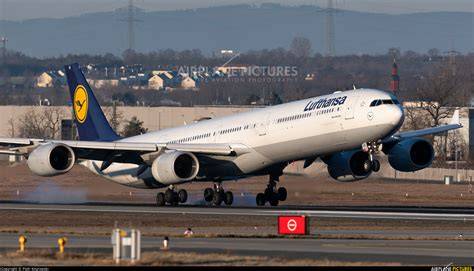
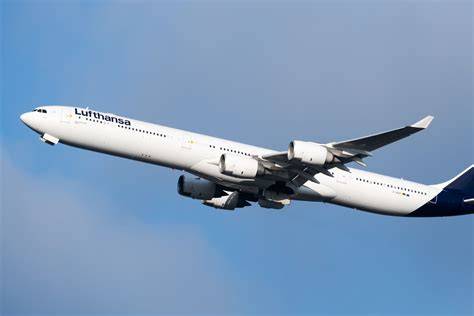
Few modern passenger aircraft have the physical presence of the A340-600. At approximately 247 feet (75.3 meters) long, it is an exceptionally large airliner and remains one of the longest passenger aircraft ever produced. Its 208-foot (63.4-meter) wingspan complements an extremely long fuselage, creating the stretched appearance that immediately separates the A340-600 from shorter A340 variants.
Four Rolls-Royce Trent 500 engines provide propulsion. Their configuration gives the aircraft an unmistakable appearance, but it also explains some of the operating economics that ultimately made the A340 family difficult to sustain against newer twin-engine aircraft.
The aircraft’s takeoff behavior is another reminder of its size. A fully loaded A340-600 requires substantial thrust and can produce a long takeoff roll followed by a comparatively gradual initial climb. For photographers standing near suitable airport observation areas, that combination can produce particularly dramatic departure images.
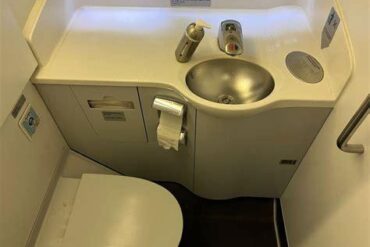
Inside, Lufthansa’s A340-600 contains another unusual feature. A dedicated staircase in the economy cabin leads down to five lower-deck lavatories installed within the forward cargo area. Moving those facilities below the main passenger deck creates additional usable cabin space while reducing some of the pressure on the main-deck lavatory areas.
Lufthansa also retained a premium-heavy configuration on its final aircraft. Each has eight First Class seats and 56 Business Class seats, giving the aircraft a significant premium footprint. That configuration became an important reason why these aircraft remained useful even as Lufthansa introduced newer and more fuel-efficient twinjets.
Why Lufthansa Kept Its A340-600s in Service
The survival of Lufthansa’s A340-600 fleet into 2026 was not simply a matter of nostalgia. It was closely connected to premium cabin capacity and fleet-delivery timing.
Lufthansa’s early Airbus A350-900s did not provide a First Class cabin, creating a problem on routes where premium demand was particularly strong. Moving entirely from A340-600s to three-class or differently configured twin-engine aircraft could reduce the number of premium seats available to customers willing to pay substantially higher fares.
At the same time, delays surrounding the arrival of newer aircraft extended the usefulness of the existing fleet. The Boeing 777-9 program and Airbus A350-1000 deliveries did not arrive quickly enough to provide an immediate replacement for every role occupied by the older quadjets. Consequently, keeping several A340-600s operational became a practical temporary solution.
The economics, however, increasingly favored modern twin-engine aircraft. New-generation A350s and 787s can provide comparable long-haul capability while using substantially less fuel than four-engine aircraft of the A340 generation. As fuel efficiency became increasingly important to airline fleet planning, the financial argument for retaining aging A340-600s became harder to sustain.
How Lufthansa Keeps a 20-Year-Old Quadjet Flying
Keeping an older widebody in commercial service requires much more than simply performing routine maintenance. Lufthansa’s A340-600s require extensive inspection and engineering attention, including major maintenance checks designed to detect structural fatigue and component deterioration.
The aircraft’s long aluminum fuselage and wing structures have accumulated many flight cycles over their careers. Areas around the wing roots, engine mounting structures, landing gear, and other high-load components require careful inspection as aircraft age.
Parts availability creates another challenge. The A340-600 is no longer in production, while suppliers increasingly concentrate their support networks around newer aircraft. Lufthansa can therefore benefit from maintaining inventories of usable components and recovering serviceable parts from aircraft that have already been withdrawn from operation.
This practice can include components such as actuators, avionics equipment, and other systems that remain technically suitable for continued use. Aircraft stored at locations such as Teruel Airport in Spain can consequently become valuable sources of parts for older widebodies that remain active.
The Best Places to Spot Lufthansa’s Final A340-600s
Frankfurt offers the most straightforward opportunity to photograph the aircraft because it is the home base for the remaining fleet. Outbound transatlantic departures generally fall within the airport’s busy late-morning departure period, creating opportunities for photographers positioned at recognized observation locations.
The Runway 18 West spotting area can provide a strong side-profile view of departing aircraft, while the Terminal 2 Visitor Terrace offers opportunities to photograph aircraft taxiing around the airport’s extensive apron system.
North American destinations provide another perspective. At New York JFK, arriving Lufthansa aircraft can offer opportunities around the airport’s established spotting areas, while Washington Dulles provides views of aircraft arriving and taxiing toward the terminal complex.
Timing remains critical. The A340-600’s published assignment should always be treated as an indication rather than an absolute guarantee. A mechanical issue or operational requirement can lead to a last-minute aircraft substitution, potentially turning an anticipated A340-600 flight into an A350 or 747-8 operation.
Lufthansa A340-600 Retirement Date
The final chapter is expected to arrive in October 2026. Lufthansa’s remaining four A340-600s are scheduled to leave passenger service as the airline continues its transition toward newer, more efficient aircraft.
The reported final scheduled flight is set for October 25, 2026, when an A340-600 operating from Riyadh is expected to bring the type’s Lufthansa career to a close. Once retired, the four remaining aircraft will join their previously withdrawn sister aircraft, with storage and dismantling activity expected at facilities including Teruel.
Their eventual fate illustrates the changing economics of commercial aviation. Engines, landing gear, avionics, and other valuable components can be removed and preserved for potential reuse, while aluminum and other materials can enter established aircraft recycling streams.
For passengers and aviation enthusiasts, however, the most important date is not the day the aircraft reaches storage. It is the period immediately before retirement, when these enormous four-engine aircraft can still be encountered in normal passenger service.
The Lufthansa Airbus A340-600 has survived far beyond the point at which many expected it to disappear. Its combination of four engines, a remarkably long fuselage, lower-deck lavatories, and unusually large premium cabin makes it one of the most distinctive aircraft remaining in Lufthansa’s fleet. With only four examples left, tracking D-AIHF, D-AIHX, D-AIHY, and D-AIHZ offers enthusiasts one of the final chances to experience a classic European quadjet before the type finally disappears from Lufthansa’s scheduled network.