Commercial aviation is about to get a meaningful boost at 14 smaller airports across the United States, after nearly $12 million in federal funding was awarded through the Small Community Air Service Development Program (SCASDP). The grants are designed to help communities protect existing routes, attract new nonstop flights, and reduce the financial risks airlines face when entering smaller markets.
The awards are particularly important for regional airports that cannot generate the same passenger volumes as major hubs. Without additional support, airlines may hesitate to launch service where demand is uncertain or operating costs are difficult to justify. Through SCASDP, local communities can use federal funding for tools including revenue guarantees, marketing programs, and air service studies, giving them more flexibility to develop solutions around their specific connectivity needs.
The US Department of Transportation received more than 60 applications from communities across 32 states and territories during the latest funding cycle. Four applications were deemed ineligible, leaving 56 eligible applicants competing for as much as $49 million. Ultimately, the DOT selected 14 projects with a combined value of $11.975 million, directing money toward airports where improved air service could have a significant regional impact.
How SCASDP Grants Help Small Regional Airports
For most of the 14 recipients, the central strategy involves revenue guarantees. Under such arrangements, a community can help protect an airline from some of the financial uncertainty associated with introducing a new route. If passenger demand does not initially reach expectations, the guarantee can reduce the carrier’s exposure and make a new service proposition more attractive.
This does not mean an airline is automatically required to launch a route. Instead, the funding gives airports and communities a stronger negotiating position when approaching carriers. The communities will enter grant agreements with the DOT and separately negotiate arrangements with airlines, while reimbursement-based funding means local governments or airport authorities generally have to cover eligible expenses before seeking reimbursement.
The program also provides flexibility over several years. Revenue guarantee funding can subsidize an airline for no more than three years, while communities can have up to five years to claim reimbursement. Marketing projects can remain eligible for up to four years, while studies can remain active for as long as three years. That extended window gives airports time to develop and test strategies rather than relying on a short-term promotional campaign.
The 14 Airports Receiving Federal Air Service Funding
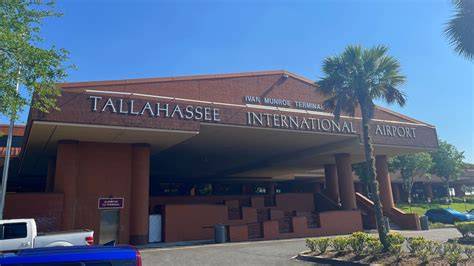
Tallahassee International Airport in Florida received the largest award, at $1.5 million. The community intends to use the money to support a revenue guarantee for a restored nonstop service to Houston George Bush Intercontinental Airport. The route disappeared in 2021, and the latest initiative is aimed at encouraging its return. United Airlines and SkyWest have already provided letters of support.
Cedar Rapids, Wichita, Baton Rouge, and Jackson each received $1 million, giving four additional regional markets substantial resources to pursue air service improvements. Grand Junction and Central Wisconsin each received $950,000, while Latrobe was awarded $850,000. Flagstaff and Augusta received $800,000 apiece, followed by Traverse City and New Bern at $750,000 each.
The remaining awards went to Dutch Harbor, Alaska, with $375,000, and Purdue University Airport in West Lafayette, Indiana, with $250,000. Purdue received the smallest grant, with its funding designated for marketing support for existing United Express service to Chicago O’Hare International Airport. United returned to the airport in 2024 after an absence of almost two decades.
New Routes and Restored Connections Are the Main Targets
Several communities have ambitious targets for their grants. Flagstaff Pulliam Airport plans to combine revenue guarantees and marketing support in an effort to establish service to either Denver International Airport or Salt Lake City International Airport. Both destinations would provide passengers with valuable connections into larger airline networks.
Traverse City is pursuing another major opportunity, seeking to attract United service to either Los Angeles International Airport or San Francisco International Airport. A nonstop link to either West Coast market would provide Northern Michigan travelers with a connection that currently requires more complicated itineraries.
Central Wisconsin Airport in Mosinee is focused on restoring service to Detroit Metropolitan Wayne County Airport. That route was lost in 2022, and SkyWest submitted a letter of support for the initiative. The grant could therefore help the airport and its airline partners revisit a market that previously formed part of the region’s scheduled network.
Why Federal Air Service Grants Matter
For smaller communities, air connectivity is more than a convenience. Reliable commercial service can influence business travel, tourism, workforce mobility, university access, and the ability of companies to maintain relationships outside their immediate region. When nonstop flights disappear, passengers may face longer journeys by road or inconvenient connections through distant hubs.
SCASDP grants provide communities with a mechanism to address that problem directly. Rather than waiting for an airline to assume all the risk of a new route, local stakeholders can share some of that risk through federal support. The ultimate goal is not simply to operate subsidized flights indefinitely, but to create conditions in which sustainable commercial service can develop.
The $11.975 million awarded to these 14 communities therefore represents a broader effort to strengthen the US regional aviation network. Whether every proposed route ultimately launches remains dependent on negotiations, airline economics, and passenger demand, but the funding gives these airports another opportunity to compete for service that might otherwise remain out of reach.