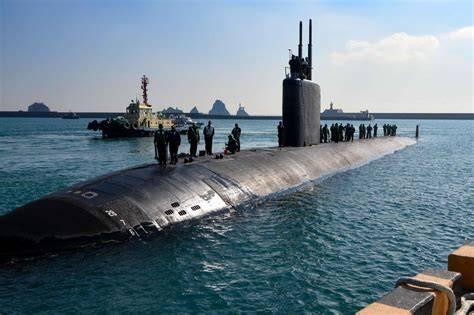
Nuclear-powered submarines are among the most difficult military platforms to detect, track, and attack. They can remain underwater for extraordinarily long periods, operate across enormous areas of ocean, and use stealth to avoid revealing their location. A modern U.S. nuclear submarine is also protected by layers of sensors, tactics, escorts, intelligence, and acoustic countermeasures. Yet none of that makes it invulnerable. The right weapon, used under the right circumstances, could still destroy a nuclear submarine.
The United States has operated nuclear-powered submarines since the commissioning of USS Nautilus in 1954. Since then, the technology has evolved dramatically. Modern attack submarines and ballistic-missile submarines bear little resemblance to the early nuclear boats, particularly in their quieting technology, sonar systems, weapons, and ability to operate beneath the surface without frequent exposure.
The U.S. Navy has nevertheless experienced two fatal losses involving nuclear-powered submarines. USS Thresher was lost in 1963 during deep-diving trials, while USS Scorpion disappeared in 1968. Neither submarine was sunk by an enemy weapon, but both tragedies demonstrated something fundamental about underwater warfare: the ocean itself can be an unforgiving environment, and even enormously sophisticated submarines operate within physical limits.
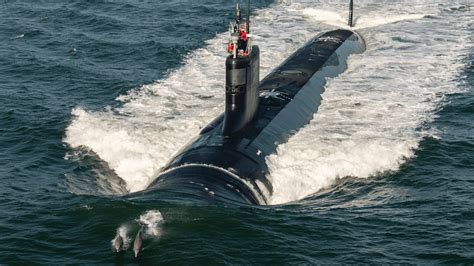
The weapons capable of defeating a nuclear submarine are therefore not necessarily exotic superweapons. Some are conventional systems specifically developed for anti-submarine warfare, while others are weapons designed for different missions but capable of producing catastrophic effects underwater. Their effectiveness depends heavily on detection, targeting, environmental conditions, submarine depth, defensive measures, and whether the attacking force can establish a sufficiently accurate firing solution.
Heavyweight Torpedoes Remain the Classic Submarine Killer
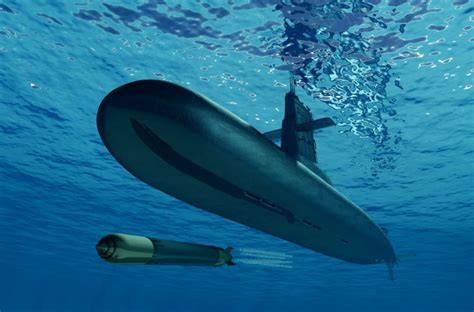
The heavyweight torpedo remains one of the most direct threats to a nuclear submarine. Unlike weapons intended primarily to attack surface ships, modern anti-submarine torpedoes are designed to locate and engage submerged targets, making them particularly relevant in an underwater engagement.
Modern torpedoes combine propulsion, sensors, guidance systems, and substantial warheads in a relatively compact package. Their effectiveness does not depend simply on explosive power. A submarine is difficult to hit in the first place, so the weapon must be able to search for a target, distinguish it from background noise, and continue pursuing it after launch.
That creates an especially dangerous situation for a submarine crew. A nuclear submarine may be able to maneuver aggressively, change depth, deploy countermeasures, and attempt to break an incoming weapon’s tracking solution, but a modern torpedo can also maneuver independently. The engagement therefore becomes a contest between the submarine’s ability to evade and the weapon’s ability to maintain contact.
Russia and China operate several heavyweight torpedo families designed for anti-submarine warfare. Russia’s Futlyar, also associated with the Fizik-2 designation, represents the continuing development of high-performance torpedoes, while China’s Yu-6 is another heavyweight weapon associated with modern Chinese submarine warfare.
Russia’s Poseidon is a particularly unusual case. Rather than being a conventional torpedo, it is a nuclear-powered, autonomous underwater vehicle designed to travel underwater over very long distances while carrying a payload. Its unconventional architecture makes direct comparisons with ordinary torpedoes difficult, but its existence illustrates how underwater weapons are moving beyond traditional torpedo designs.
For a U.S. nuclear submarine, the fundamental danger remains the same: a weapon that can detect, track, and reach a submerged target before the target can escape the engagement area can potentially produce a fatal hit.
Anti-Submarine Missiles and Rockets Put Distance Between Attacker and Target
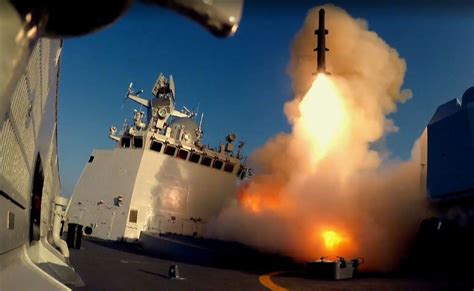
Anti-submarine missiles and rocket-assisted weapons change the geometry of an underwater attack. Instead of requiring a surface combatant or aircraft to deliver a torpedo directly from relatively close range, these systems can carry an anti-submarine weapon toward a designated area before releasing it into the water.
This distinction is extremely important because anti-submarine warfare is fundamentally a problem of finding the submarine before attacking it. A ship may have information indicating that an enemy submarine is somewhere within a large area, but firing a conventional torpedo blindly from a distant position would be inefficient. A rocket-assisted delivery system can cover the intervening distance much faster.
Russia’s 91R/91RT Otvet is an example of this approach. The system uses a rocket to deliver an anti-submarine weapon toward the vicinity of a suspected submerged target. Once the weapon reaches the appropriate area, the underwater portion of the attack can proceed using a torpedo-like payload.
China has developed similar concepts, including the Yu-8, which is associated with the delivery of a lightweight anti-submarine torpedo. Such weapons can be particularly useful when a surface warship has detected or received targeting information about a submarine but does not want to expose itself by moving close to the suspected position.
The advantage is not necessarily that the missile itself destroys the submarine. Instead, it compresses the time available for the submarine to react. A nuclear submarine that has been detected may have only a limited opportunity to understand where the attack is coming from, determine the incoming weapon’s trajectory, deploy countermeasures, and maneuver away.
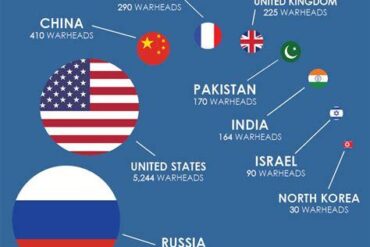
Nuclear Weapons Could Overwhelm Submarine Survivability
Nuclear weapons present a fundamentally different category of threat. Unlike conventional anti-submarine weapons, a nuclear detonation can affect a large volume of the surrounding environment through blast effects and intense pressure changes.
The outcome would depend heavily on the circumstances. A submarine operating far from a nuclear explosion would face a very different situation from one located close to the detonation. Whether the submarine was submerged or surfaced, its depth, the characteristics of the surrounding water, and the size and location of the explosion would all influence the result.
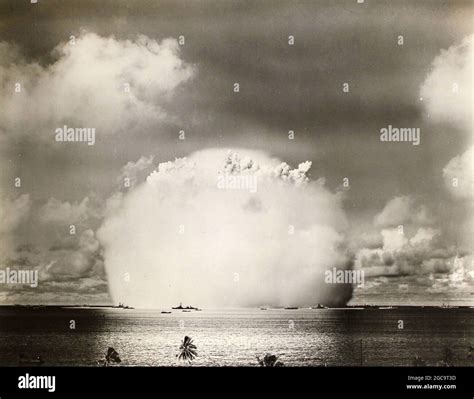
Historical nuclear testing demonstrated that naval vessels could be subjected to nuclear effects. During the Operation Crossroads tests at Bikini Atoll in 1946, the United States detonated nuclear weapons near a fleet of ships assembled for experimental purposes. The tests included submerged vessels and provided evidence of how nuclear explosions could affect naval platforms.
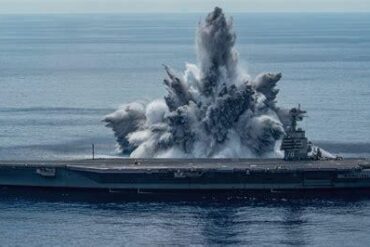
A nuclear submarine has one major advantage over a surface ship in such circumstances: water can provide substantial shielding from some effects of an explosion at the surface or in the atmosphere. That does not mean the submarine would automatically survive a nearby underwater nuclear detonation. An underwater explosion can transmit enormous pressure through the water, creating conditions that can be devastating to a submarine’s pressure hull and internal systems.
This is why nuclear weapons represent less a conventional anti-submarine engagement than an extreme area-effect threat. The submarine does not necessarily have to be struck directly. A sufficiently powerful explosion at sufficiently close range could create destructive forces throughout the surrounding water.
Modern Depth Charges Are More Than World War II Weapons
The phrase depth charge often evokes images of World War II destroyers dropping cylindrical explosives over the stern. Modern anti-submarine weapons are considerably more sophisticated, although the basic concept remains recognizable: place an explosive close enough to a submerged submarine that underwater pressure and fragmentation can damage or destroy it.
One example is Russia’s RBU-6000 Smerch-2, a rocket-assisted anti-submarine system that has remained in service decades after its introduction. Instead of simply rolling explosives from a ship’s deck, the system launches rocket-propelled projectiles toward a designated underwater area.
The continuing use of systems derived from this concept demonstrates an important feature of naval warfare: older technologies do not necessarily disappear when newer weapons arrive. They can remain useful when they provide a particular tactical capability at relatively modest cost.
Modern anti-submarine aircraft also add another dimension. China’s KQ-200, also known as the Y-8Q, is designed specifically for maritime patrol and anti-submarine operations. Aircraft can search enormous ocean areas much faster than surface ships and can deploy weapons once a submarine’s location has been established.
For a submarine, an aircraft attack can be particularly dangerous because the aircraft may approach from a direction that is difficult for the submarine to monitor. The submarine’s defensive advantage depends heavily on whether it detects the aircraft, understands its intentions, and receives enough warning to react.
Naval Mines Can Turn the Ocean Into a Hidden Hazard
Naval mines are among the oldest weapons in maritime warfare, but modern mines can incorporate sophisticated sensors that make them far more selective than their historical predecessors. Instead of simply exploding when something physically touches them, some modern mine concepts can respond to characteristics associated with passing vessels.
For submarines, mines create an unusual problem because stealth works both ways. A submarine relies on its ability to remain difficult to detect, but it also cannot easily know everything that has been placed on the seabed or suspended within the water column.
Mines are particularly relevant in confined or strategically important waters, including approaches to naval bases, straits, harbors, and coastal operating areas. A submarine attempting to pass through such an environment could encounter a minefield without necessarily knowing its exact boundaries.
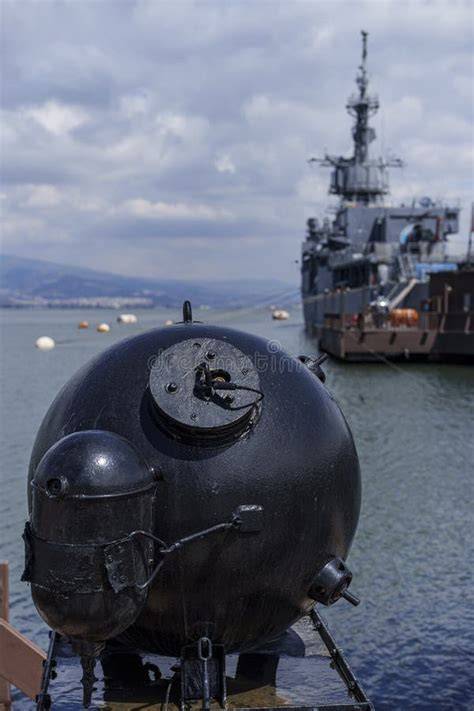
The threat becomes dramatically greater if a mine is specifically designed to attack submerged vessels. Russia and China possess extensive naval-mining capabilities, while various countries have studied increasingly sophisticated seabed and influence mines.
The most extreme theoretical example would be a nuclear-armed naval mine. Such weapons have been discussed in military analysis, but claims about specific modern systems should be treated carefully when reliable public evidence is unavailable. A nuclear mine would not need the same kind of precision as a conventional weapon because the explosive effects could cover a substantial area.
Why Sinking a U.S. Nuclear Submarine Is Still Extremely Difficult
Identifying weapons that could potentially sink a U.S. nuclear submarine is not the same thing as saying that these weapons could easily do so. The hardest part of anti-submarine warfare is usually finding and maintaining contact with the submarine in the first place.
Modern American submarines are engineered around stealth. Quiet propulsion machinery, acoustic isolation, careful operating procedures, advanced sonar, and sophisticated tactical doctrine all exist to make detection difficult. A submarine also does not operate in isolation from the wider military system. Intelligence, aircraft, surface ships, satellites, communications networks, and other submarines can contribute to its situational awareness.
Consequently, a weapon may have enormous destructive potential while still being ineffective if its operator cannot obtain a reliable target position. Conversely, once a submarine has been detected and tracked accurately, even a highly sophisticated boat faces a dangerous tactical problem.
The five categories examined here illustrate different approaches to that problem. Heavyweight torpedoes attack the submarine directly; anti-submarine missiles shorten the distance between detection and attack; nuclear weapons provide overwhelming area effects; modern depth-charge systems attack through underwater explosions; and naval mines threaten submarines by turning predictable underwater routes into hazardous zones.
No single weapon guarantees success. Environmental conditions, submarine depth, detection quality, crew response, countermeasures, weapon reliability, and the broader tactical situation all matter. But the underlying lesson of submarine warfare remains remarkably consistent: nuclear propulsion may give a submarine extraordinary endurance, yet it does not make the vessel physically indestructible.
The United States has invested enormous resources in making its nuclear submarines difficult to locate and defeat. That investment reflects the central reality of underwater warfare. The most dangerous weapon is not necessarily the one with the largest warhead or highest speed. It is the one that can first solve the far harder problem of finding a silent submarine somewhere beneath an enormous ocean—and then reaching it before the submarine disappears again.