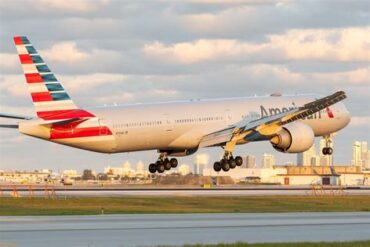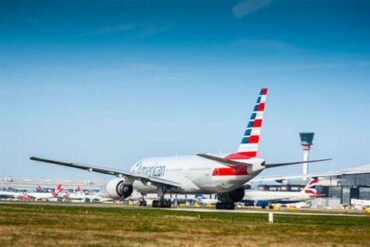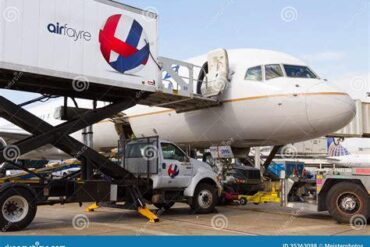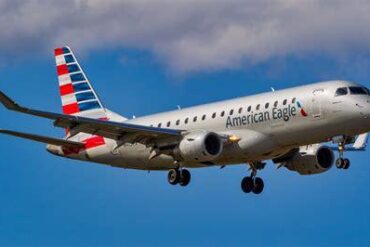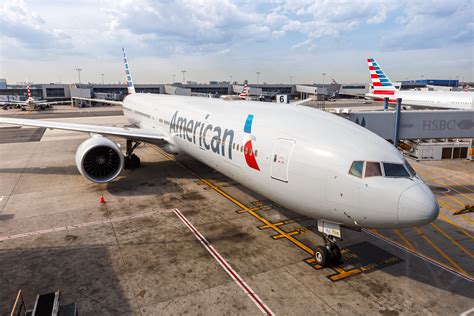
American Airlines has moved swiftly to contain an unexpected catering disruption at London Heathrow Airport (LHR), implementing a temporary but highly unusual operational adjustment: double-catering outbound flights from the United States. The measure ensures that return services departing London remain adequately provisioned, even as the Fort Worth-based carrier reassesses its local supplier arrangements at the UK’s busiest hub.
The decision was communicated internally through a Heathrow catering operations memo dated February 28. While the airline has not publicly detailed the precise cause, the adjustment followed a review of supplier performance and coordination with local teams. In aviation, supplier evaluations are routine. What is not routine is doubling meal loads across transatlantic services. That move alone signals the seriousness of the supply-chain challenge unfolding behind the scenes.
For passengers, the impact may be subtle but noticeable. For operations teams, however, it represents a tightly choreographed logistical maneuver spanning kitchens, warehouses, flight crews, and aircraft weight calculations. Catering is not merely about food; it is about timing, temperature control, regulatory compliance, and aircraft balance.
Why American Airlines Is Double-Catering Transatlantic Flights
Under the temporary arrangement, all outbound American Airlines flights from the United States to Heathrow began carrying twice the required catering provisions starting March 2. This means meals intended for the return sector are being loaded in advance at US departure airports rather than relying on Heathrow-based catering uplift.
In practice, that requires precision. Airlines normally load “downline” catering—items designated specifically for the subsequent flight segment. If crew members use those meals prematurely on the outbound leg, it could leave the return flight short of inventory. To prevent that, crews were explicitly briefed not to use downline items under any circumstances.
The operational complexity runs deeper than adding extra trays. Every additional meal increases aircraft weight. On long-haul routes such as New York (JFK) to London or Dallas/Fort Worth (DFW) to Heathrow, even marginal weight increases affect fuel planning, payload calculations, and potentially cargo capacity. Airlines operate within razor-thin performance margins; doubling food loads is not a casual decision.
That American Airlines chose this path indicates a clear priority: service continuity over short-term efficiency trade-offs.
Menu Adjustments and Passenger Impact
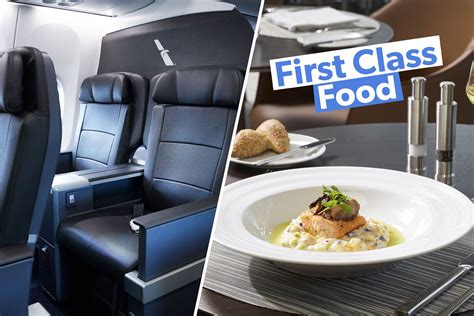
Passengers traveling between the United States and London may notice temporary changes to onboard menus. Customers who pre-ordered meals, particularly those with specific dietary requirements, are most likely to experience adjustments. According to internal communication, the inflight offering has been streamlined to two primary choices: a protein-based option and a vegetarian alternative.
Certain items have been removed entirely for safety and storage considerations. Seafood and ice cream, for instance, were excluded from the interim menu. These items require stricter temperature control and have shorter tolerance windows within the cook-chill system airlines rely upon.
To maintain food safety standards, airlines typically prepare meals on the ground to approximately 60–90% completion. The dishes are then rapidly chilled and stored under controlled conditions before being reheated onboard using convection ovens. This “cook-chill” process extends shelf life while maintaining quality. However, extended storage across multiple flight segments increases complexity, particularly when provisioning spans two intercontinental legs.
American Airlines has proactively contacted affected customers and provided flight crews with temporary menus to ensure clarity during service. The goal is to minimize confusion while maintaining compliance and food safety standards.
Heathrow’s Strategic Importance to American Airlines
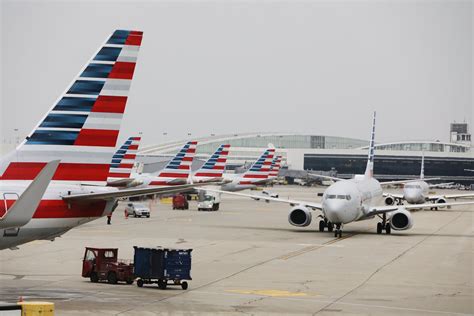
The catering disruption unfolds at one of the airline’s most strategically vital international gateways. Operating exclusively from Terminal 3 at London Heathrow, American Airlines serves up to ten destinations from LHR, either year-round or seasonally. These include:
- Boston (BOS)
- Charlotte (CLT)
- Chicago O’Hare (ORD)
- Dallas/Fort Worth (DFW)
- Los Angeles (LAX)
- Miami (MIA)
- New York (JFK)
- Philadelphia (PHL)
- Raleigh/Durham (RDU)
- Phoenix (PHX, seasonal)
Among these routes, London–New York JFK stands as one of the most competitive and heavily trafficked transatlantic corridors globally, with more than 3.2 million annual passengers. American competes directly with British Airways, Delta Air Lines, JetBlue, and Virgin Atlantic on that city pair alone.
Heathrow is not simply another international station. It is a high-yield, premium-heavy market central to American’s transatlantic joint business with British Airways under the oneworld alliance framework. Maintaining consistent service standards in this environment is essential to brand positioning and competitive differentiation.
Supply Chain Resilience in Modern Aviation
Airline catering often operates invisibly to passengers, yet it is one of the most complex elements of global airline logistics. Large hub airports such as Heathrow depend on specialized third-party providers responsible for preparing thousands of meals daily under strict regulatory oversight.
Supplier evaluations are part of routine quality assurance. However, when performance gaps emerge—whether related to consistency, compliance, or capacity—airlines must respond immediately. Unlike many supply chain sectors, aviation does not tolerate downtime. Aircraft turnarounds at Heathrow are measured in minutes, not hours.
By double-catering from US origins, American Airlines effectively shifts part of the supply chain upstream, reducing dependence on Heathrow provisioning while alternative arrangements are assessed. This is a temporary but decisive form of operational redundancy.
The move reflects a broader industry trend toward resilience planning. In recent years, airlines have faced disruptions ranging from staffing shortages to ground handling delays and global supply chain instability. Flexibility has become as valuable as efficiency.
Balancing Service Consistency With Operational Precision
The airline has emphasized that it is working closely with local teams and suppliers to restore normal catering operations in London as quickly as possible. In the interim, the objective remains clear: ensure that every flight departing Heathrow carries sufficient onboard inventory to deliver a complete service.
Doubling chicken and beef may sound simple in theory. In practice, it requires recalibrating logistics across continents while preserving food safety, aircraft performance margins, and customer expectations. That balancing act defines modern airline operations—where even a catering adjustment reverberates through fuel planning, cabin service design, and competitive positioning.
For passengers, the disruption may translate into fewer menu options. For American Airlines, it is a demonstration of rapid operational adaptation at one of the world’s most scrutinized aviation hubs.