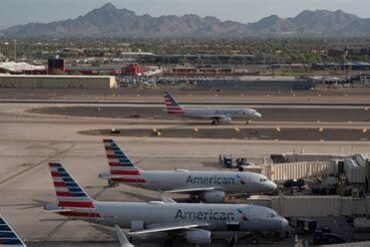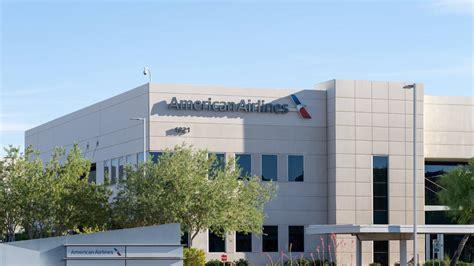
American Airlines has agreed to pay $200,000 to resolve a disability discrimination lawsuit brought by the U.S. Equal Employment Opportunity Commission (EEOC) after the airline terminated a blind employee who had sought accommodations that could have allowed her to continue working. The settlement, announced by the EEOC on August 28, 2026, also requires American to make significant changes to its software-development and employee accommodation practices.
The case involves an employee at American Airlines’ Fort Worth, Texas, location who developed cortical blindness during her employment. As her condition affected her ability to use the airline’s computer systems, she requested screen-reader technology capable of converting on-screen information into synthesized speech. According to the EEOC, the technology could have enabled her to continue carrying out the responsibilities of her existing position.
The dispute is particularly significant because the accommodation at issue was not a conventional physical workplace modification. In an airline environment that depends extensively on digital reservation platforms, internal applications, and computer-based operational systems, accessible software can be just as important as physical accessibility. The lawsuit illustrates how disability accommodation obligations can extend into the design and usability of workplace technology.
What Happened to the American Airlines Employee?
According to the EEOC’s lawsuit, the employee developed cortical blindness while working for American Airlines. She subsequently sought screen-reader software that would allow her to access information displayed on a computer through synthesized speech. Such technology is commonly used by blind and visually impaired computer users and could potentially have allowed the employee to continue performing her established duties.
The employee also reportedly asked American Airlines to consider a transfer to another position as an alternative accommodation. Rather than facilitating the requested technology or identifying another reasonable solution, however, the EEOC alleged that American kept her on unpaid, involuntary leave for almost four years before ultimately terminating her employment.
The EEOC’s Dallas District Office pursued the matter after efforts to resolve the dispute through the agency’s administrative conciliation process did not produce a resolution. The resulting federal lawsuit, U.S. EEOC v. American Airlines, Inc., Case No. 4:25-cv-01056-P, was filed in the U.S. District Court for the Northern District of Texas, Fort Worth Division.
Ronald L. Phillips, acting EEOC Dallas Regional Attorney, emphasized the broader employment implications of the case, stating that blind and visually impaired workers should have opportunities to apply their skills and knowledge in the workplace.
Americans with Disabilities Act Requirements
The lawsuit was brought under the Americans with Disabilities Act (ADA), a federal law that generally requires covered employers to provide reasonable accommodations for known disabilities unless doing so would create an undue hardship. The law also prohibits disability-based employment discrimination, including circumstances in which an employee is effectively pushed out of work because an employer fails to provide an appropriate accommodation.
The American Airlines case highlights the importance of the interactive process between an employer and an employee. When a worker identifies a disability affecting job performance, an employer may need to explore potential accommodations and determine whether a workable solution exists. That process can involve technology, reassignment, modifications to workplace practices, or other measures depending on the circumstances.

For technology-dependent employers, accessibility questions can become particularly complex. A workplace may be physically accessible while its software remains difficult or impossible for employees with visual, hearing, mobility, or other disabilities to use. The EEOC has pointed to resources including rehabilitation agencies, nonprofit organizations, technology consultants, and the Job Accommodation Network as potential sources of assistance when employers evaluate accommodation options.
American Airlines Agrees to Change Software Practices
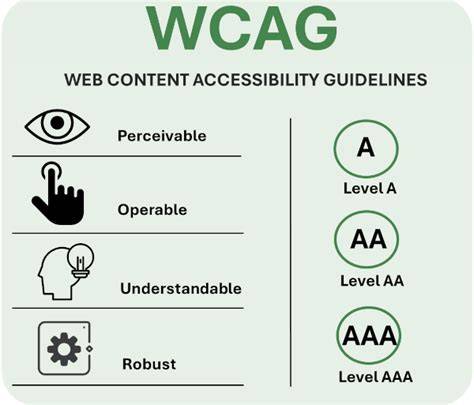
The $200,000 payment represents only one part of the settlement. Under a two-year consent decree, American Airlines has also agreed to incorporate the Web Content Accessibility Guidelines (WCAG) into the development of new reservation software.
The requirement is especially relevant because American expects its new reservation web application to launch in 2027. By incorporating accessibility considerations during development, rather than waiting until employees encounter barriers after implementation, the airline will be required to build accessibility into the system from an earlier stage.
Once the new application is implemented, American must have a trained specialist conduct an accessibility audit. The airline will also dedicate up to 120 hours of labor toward identifying and addressing accessibility barriers that remain for blind and visually impaired employee users.
The agreement additionally requires American to train human resources personnel responsible for handling reasonable accommodation requests. The airline must post an employee notice concerning disability discrimination and provide the EEOC with reports concerning relevant accommodation requests.
Together, these measures create obligations extending beyond the employee whose case triggered the lawsuit. They establish a framework intended to reduce the possibility that inaccessible technology or inadequate accommodation procedures will create similar barriers for other employees.
Settlement Has Broader Implications for Airline Workplaces
American Airlines confirmed that it remains committed to providing equal opportunities and reasonable accommodations to qualified team members with disabilities. The carrier also said it will continue working to ensure its policies and practices support an inclusive workplace.
The settlement arrives as airlines increasingly depend on sophisticated digital systems throughout their operations. Reservation platforms, employee portals, scheduling applications, training systems, and other software can become essential tools for employees across a large airline organization. As these systems evolve, accessibility can no longer be viewed solely as a matter of physical workplace design.
The American Airlines agreement therefore carries implications beyond the $200,000 settlement. Its software requirements, accessibility audits, HR training, and reporting obligations underscore the importance of identifying potential barriers before new technology becomes embedded throughout an organization.
For blind and visually impaired workers, the outcome also demonstrates why digital accessibility can be a crucial component of workplace inclusion. In this case, the dispute centered not simply on whether an employee could enter a workplace, but whether she could meaningfully access the technology required to work there.