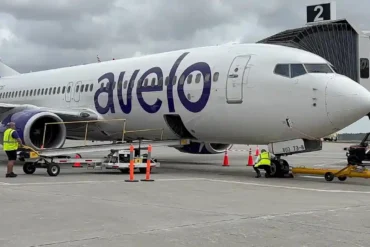
Avelo Airlines is dramatically reducing its Tuesday flight operations across the United States through mid-August, a move that underscores the mounting financial and operational pressures confronting America’s ultra-low-cost carriers. While the airline is not fully shutting down Tuesday flying, the near-elimination of departures across large portions of its network marks one of the clearest signs yet that even aggressively low-cost airlines are being forced to rethink how they deploy aircraft during weaker demand periods.
The decision affects roughly 50 routes compared with the same period last year and shifts Avelo’s summer strategy toward a far more concentrated operating model. Instead of spreading flights evenly across the week, the carrier is now prioritizing the days when leisure demand is strongest and aircraft are most likely to generate profitable yields.
For passengers, the changes may initially appear unusual. Airlines traditionally maintain daily frequencies to preserve schedule consistency and customer confidence. Yet for carriers operating on razor-thin margins, empty seats can quickly turn into a financial liability, particularly during midweek periods where demand softens significantly.
Avelo’s latest network adjustment reflects a broader reality emerging across the US domestic airline sector: growth alone is no longer enough. Efficiency, route discipline, and selective scheduling are increasingly becoming the defining survival tools for low-cost operators.
After several years of rapid expansion into underserved secondary airports, Avelo is now entering a new phase focused less on aggressive growth and more on operational consolidation.
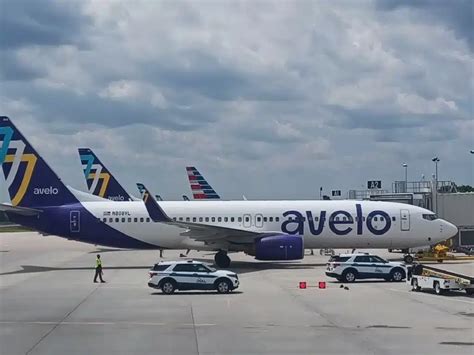
Why Tuesday Has Become Aviation’s Weakest Travel Day
The collapse of Tuesday demand is not unique to Avelo, but the airline’s decision to almost entirely remove flights on that day highlights how sharply travel patterns have shifted in recent years.
Leisure travelers — the backbone of Avelo’s customer base — overwhelmingly prefer departures close to weekends. Thursday and Friday flights feed weekend vacations, while Sunday returns remain among the busiest periods for domestic travel. Business travelers, meanwhile, typically concentrate departures on Monday mornings and return trips later in the week.
That leaves Tuesday trapped in an awkward middle position with limited natural demand drivers.
For traditional network carriers with premium cabins, corporate contracts, and international connections, weaker Tuesdays can often be absorbed across broader revenue streams. Ultra-low-cost carriers do not enjoy that flexibility. Their business models rely heavily on keeping aircraft full while maximizing aircraft utilization every day of the week.
When demand falls too low, airlines face a difficult choice: slash fares to stimulate bookings or reduce flying altogether. Avelo appears to have chosen the second option.
Rather than flooding the market with ultra-cheap tickets that dilute profitability, the airline is consolidating capacity around stronger travel windows where passengers are willing to pay higher fares. That strategy may ultimately produce fewer flights, but potentially healthier financial performance.
The approach also reduces operational complexity during the busy summer season, allowing the carrier to simplify crew scheduling, maintenance planning, and aircraft rotations.
Avelo Is Reshaping Its Network Around Core Bases
The Tuesday suspension is only one part of a much broader restructuring effort underway at Avelo Airlines.
Over the past year, the airline has quietly retreated from several markets that once formed key pillars of its expansion strategy. Its West Coast operations were closed, Boeing 737-700 aircraft were retired, and multiple operating bases were eliminated as management shifted toward a leaner and more centralized network structure.
Today, Avelo’s operations are increasingly concentrated around a smaller collection of strategic bases, including New Haven in Connecticut, Delaware’s Wilmington region, Concord near Charlotte, and Lakeland in Florida.
A fifth operating base at Dallas/McKinney Airport in Texas is still expected to launch later this year, signaling that the airline has not abandoned growth ambitions altogether. However, its expansion plans now appear considerably more selective and financially cautious than during its earlier years.
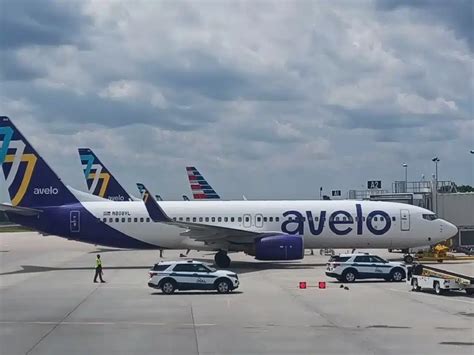
The airline has simultaneously withdrawn from markets including Mesa Gateway Airport in Arizona, Raleigh-Durham International Airport, and Wilmington International Airport in North Carolina.
Those exits reflect an increasingly common trend among US low-cost carriers: retreating from marginal routes and concentrating resources in markets with stronger demand consistency.
Industry analysts have noted that secondary airports — once considered ideal territory for low-cost carriers — are no longer guaranteed profit generators. While lower airport fees remain attractive, demand volatility has become harder to manage as travelers grow more price sensitive and competition intensifies.
Financial Pressure Across the US Airline Industry Is Growing
Avelo’s network cuts arrive during a difficult period for the broader US airline industry.
Although fuel prices eased during parts of 2025, airlines continued facing rising labor expenses, elevated maintenance costs, and weakening domestic fare performance. The result has been shrinking profitability across many domestic operators, particularly airlines heavily dependent on discretionary leisure traffic.
Budget airlines have been hit especially hard.
For years, ultra-low-cost carriers benefited from a major pricing advantage over legacy airlines. However, traditional carriers have increasingly adopted stripped-down basic economy products that directly compete with budget airlines on price while offering broader networks and stronger loyalty programs.
That competitive overlap has weakened one of the ultra-low-cost sector’s biggest historical advantages.
At the same time, lower-income travelers — a key demographic for budget airlines — have faced mounting economic pressure from inflation and higher living costs. As household budgets tighten, discretionary trips become easier to postpone or eliminate altogether.
Research from consulting firms including McKinsey & Company has pointed to these structural shifts as major threats to the long-term sustainability of the North American low-cost carrier model.
Against that backdrop, Avelo’s disappearing Tuesdays look less like a temporary scheduling quirk and more like a calculated response to changing economic realities.
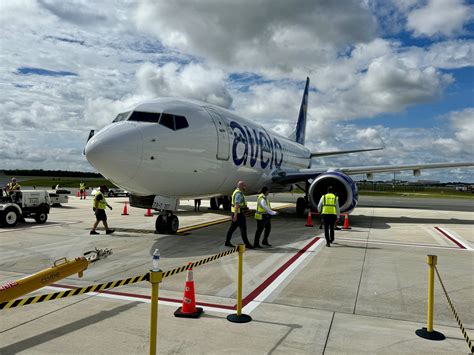
Avelo’s Future Still Includes Growth and Fleet Expansion
Despite the retrenchment, Avelo is continuing to position itself for long-term expansion.
The airline currently operates a fleet consisting primarily of Boeing 737-700 and 737-800 aircraft. Yet its most significant long-term move came in September 2025, when it placed a major order for 50 Embraer E195-E2 jets alongside purchase rights for an additional 50 aircraft.
Valued at roughly $4.4 billion, the deal represents a major strategic investment in fleet modernization and future growth.
The Embraer E195-E2 offers substantially improved fuel efficiency and lower operating costs compared with older narrowbody aircraft, potentially giving Avelo greater flexibility to serve thinner routes profitably. The aircraft could also help the airline rebuild frequency in markets where current economics make daily Boeing 737 operations difficult to sustain.
Deliveries are expected to begin in 2027, suggesting Avelo is pursuing a two-stage strategy: stabilize operations now, then return to expansion with a more efficient fleet later in the decade.

For now, however, the airline’s priority appears firmly centered on financial discipline. Suspending most Tuesday flights may seem dramatic, but the move reflects a growing recognition across the aviation industry that profitability matters more than maintaining the illusion of constant growth.
In an increasingly unforgiving airline market, fewer flights may ultimately become the price of survival.