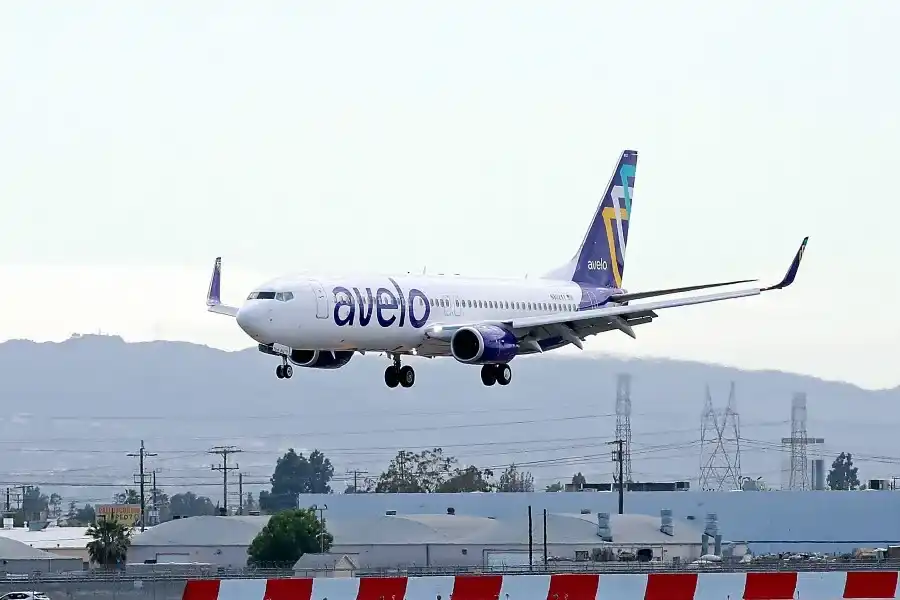
For decades, airlines have treated aircraft utilization as a sacred metric. Jets make money when they fly, and every hour sitting on the ground is traditionally viewed as wasted revenue potential. That logic explains why even lightly booked midweek flights often continue operating despite weak demand. Yet Avelo Airlines is taking a dramatically different approach in summer 2026, effectively erasing Tuesdays from its schedule altogether.
Between mid-May and mid-August, the ultra-low-cost carrier will operate virtually no Tuesday departures across its network. In the highly competitive US airline market, where carriers obsess over maximizing aircraft productivity, the decision stands out as one of the most unusual scheduling strategies seen in years.
Rather than chase marginal revenue through heavily discounted fares, Avelo appears to have concluded that some flights simply are not worth operating. The move reflects broader shifts occurring across the ultra-low-cost carrier sector, where profitability now matters more than growth at any cost.
The result is a startling reality: for much of the summer, one entire day of the week has effectively disappeared from Avelo’s operation.
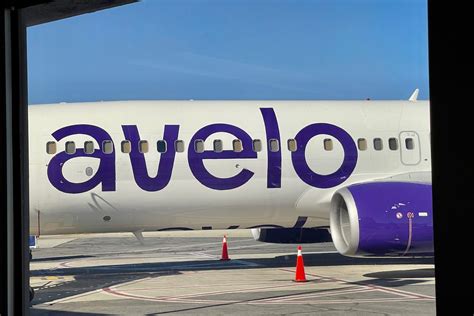
Why Tuesdays Became Avelo Airlines’ Weakest Day
Tuesday has long been considered the slowest day for domestic air travel in the United States. Business travelers usually depart on Monday mornings or Thursday evenings, while leisure travelers overwhelmingly prefer flying closer to weekends. That leaves Tuesdays stuck in an awkward middle ground with consistently weaker demand.
Industry data repeatedly confirms the trend. According to global aviation scheduling analysis from Aerospace Global News, Tuesday, January 28, 2025, recorded the lowest worldwide scheduled seat count of the year. Airlines understand this pattern intimately, which is why Tuesday airfare sales are often among the cheapest available.
For most carriers, however, weak demand merely leads to reduced capacity. Avelo has pushed the strategy much further by nearly eliminating the operating day entirely.
The airline’s published schedules show virtually no Tuesday departures during large portions of the summer season. The contrast becomes even more striking when compared against competitors operating similar leisure-focused business models.
During the sample week of June 7–13:
- Avelo schedules 0 Tuesday flights
- Breeze Airways schedules approximately 154
- Allegiant Air schedules roughly 98
Even carriers famous for unconventional scheduling still maintain meaningful Tuesday operations. Avelo alone appears willing to shut down almost completely.
That decision reveals how aggressively the airline is optimizing around demand concentration rather than network consistency.
Avelo’s Weekend-Heavy Strategy Prioritizes Profit Over Frequency
Avelo’s network structure helps explain why this approach may actually work financially.
Unlike major airlines that rely heavily on business travelers and connecting traffic, Avelo focuses primarily on leisure routes linking smaller cities with vacation destinations. These passengers are extraordinarily price-sensitive and tend to travel in concentrated bursts around weekends and holidays.
In practical terms, demand surges from Thursday through Sunday while collapsing during the middle of the week.
Instead of slashing ticket prices to fill sparsely occupied aircraft on Tuesdays, Avelo appears to prefer removing the flights entirely. That strategy protects average fares while reducing operational costs tied to fuel, airport fees, crews, and maintenance exposure.
The airline is essentially choosing margin over market presence.
This marks a sharp contrast from the post-pandemic growth frenzy that pushed many airlines to expand aggressively regardless of profitability. Investors and executives increasingly want sustainable economics rather than headline-grabbing expansion statistics.
For a smaller airline like Avelo, preserving cash and maintaining profitable flying patterns may matter far more than maintaining a seven-day schedule.
Older Aircraft Give Avelo More Scheduling Freedom
One overlooked factor behind Avelo’s unusual strategy is fleet economics.
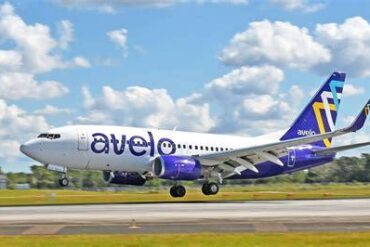
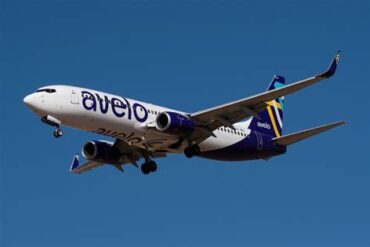
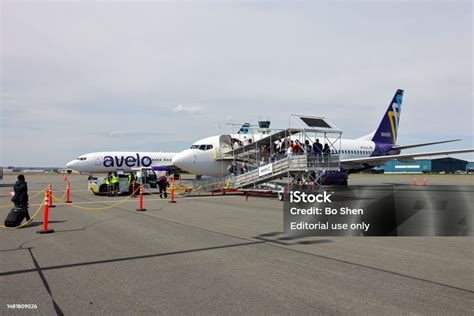
The carrier operates older Boeing 737 aircraft, which typically carry lower ownership and leasing costs compared to brand-new jets flown by larger airlines. That dramatically changes the utilization equation.
Airlines financing expensive next-generation aircraft often need those jets flying constantly to justify monthly payments. Grounding them for an entire day each week can quickly become financially painful.
Older aircraft create more flexibility.
Because Avelo’s ownership costs are lower, the airline can afford to park airplanes when demand weakens rather than forcing them into unprofitable flying. In some cases, keeping a jet idle may actually save more money than operating a deeply discounted route with thin passenger loads.
This represents a subtle but important evolution in ULCC economics. The traditional low-cost carrier model depended heavily on maximum utilization, rapid turnarounds, and relentless scheduling intensity. Avelo is demonstrating that reduced utilization can sometimes produce stronger financial results if capacity aligns more precisely with demand.
The strategy also carries operational advantages beyond ticket revenue.
Zero-Flight Tuesdays Simplify Maintenance And Crew Scheduling
Airline operations become dramatically easier when aircraft are already sitting idle.
By minimizing Tuesday flying, Avelo gains a built-in maintenance window across much of its fleet. Routine inspections, repairs, software updates, and cabin work can occur without disrupting high-demand schedules later in the week.
Crew scheduling also becomes simpler.
Pilots and flight attendants operate under strict federal duty regulations, and balancing legal rest requirements with fluctuating demand can become extraordinarily complex. A reduced Tuesday operation creates breathing room inside the system while lowering overtime pressures and minimizing disruption risk.
In effect, Avelo has transformed itself into a highly concentrated leisure airline operating primarily during peak demand windows.
The structure resembles vacation charter operations more than traditional scheduled airlines.
That may sound radical, but the broader airline industry has already been moving in this direction since the pandemic reshaped travel behavior.

The Post-Pandemic Airline Industry Is Becoming More Selective
Before 2020, airlines often prioritized network breadth and frequency above all else. Daily service carried prestige and reinforced passenger confidence, even when certain flights underperformed financially.
The pandemic changed that mindset.
Airlines emerged from the crisis with a sharper focus on profitability, demand forecasting, and operational resilience. Carriers became increasingly willing to cut weak routes, reduce frequencies, and tailor schedules more precisely to actual booking patterns.
Ultra-low-cost carriers embraced this flexibility fastest.
Allegiant Air has long operated routes only a few days per week, while Breeze Airways frequently adjusts schedules seasonally depending on demand fluctuations. Yet even among those airlines, eliminating an entire weekday across the network remains extraordinarily uncommon.
That is what makes Avelo’s move so significant.
It suggests that some smaller airlines no longer view traditional daily scheduling as necessary for survival. Instead, they see value in hyper-targeted flying patterns focused almost exclusively on periods of strongest demand.
The approach may frustrate travelers seeking flexibility, but it could strengthen financial performance in an industry where profitability remains notoriously fragile.
What Avelo Airlines’ Tuesday Shutdown Means For The Future Of Budget Flying
Avelo’s scheduling experiment may ultimately become a case study for the next phase of ultra-low-cost airline strategy.
If the model succeeds financially, other leisure-focused carriers could begin reducing operations on chronically weak travel days. That would represent a major philosophical shift in commercial aviation, where frequency has historically been treated as a competitive weapon.
Instead, airlines may increasingly concentrate flying around the most profitable windows while abandoning the idea that aircraft must remain airborne constantly.
For passengers, the implications are mixed.
Travelers may encounter fewer scheduling options during off-peak periods, especially on secondary leisure routes. At the same time, airlines could maintain healthier balance sheets and avoid some of the operational chaos caused by overextended networks.
What once would have been viewed as an operational failure is now being reframed as disciplined capacity management.
Avelo Airlines is not merely trimming flights. It is challenging one of aviation’s oldest assumptions: that airlines should operate every day simply because they can.
For one summer at least, Tuesday has become expendable.