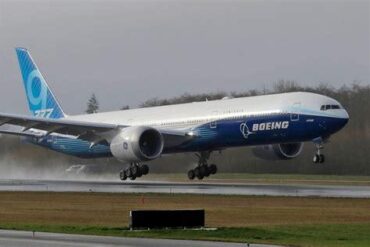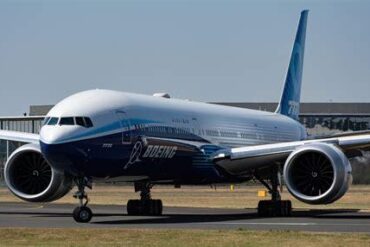
The Boeing 777X represents a defining moment in the evolution of wide-body aircraft. As the latest successor to Boeing’s highly successful 777 family, this next-generation aircraft integrates the most advanced aerodynamic features, engine technologies, and cabin innovations ever introduced on a commercial airliner. Designed to meet the twin pressures of fuel economy and passenger capacity, the 777X is poised to reshape long-haul travel and compete directly with Airbus’ A350 XWB series.
Launched in November 2013, the program aims to extend Boeing’s dominance in the long-range twin-engine segment. The 777X is not a mere evolution, but a bold reinvention, borrowing from the composite technology of the 787 while enhancing the proven 777 platform.
A Decade in the Making: Development Timeline of the Boeing 777X
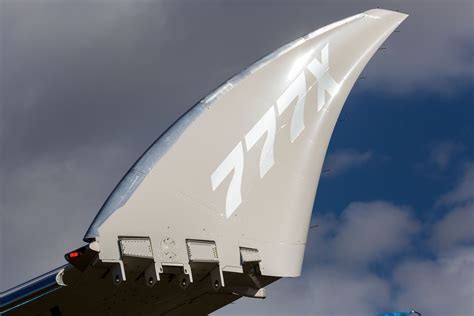
The genesis of the 777X began in the early 2010s as Boeing identified the need to respond to the Airbus A350 XWB, which was rapidly gaining attention. Between 2011 and 2015, Boeing engineers conceived multiple concepts based on stretching the fuselage of the existing 777 and refining its aerodynamics to improve fuel efficiency by 21% and lower operating costs by 16%. The biggest breakthrough came from extending the wingspan using carbon-fiber-reinforced plastic (CFRP) and pioneering folding wingtip technology to comply with airport gate limitations.
In March 2013, General Electric’s GE9X engine was selected over competing proposals from Rolls-Royce and Pratt & Whitney. The GE9X, featuring the largest fan diameter ever built for a jet engine, became the beating heart of the 777X, offering unmatched thrust with double-digit improvements in fuel efficiency.
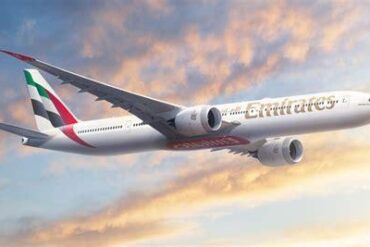
Officially launched at the 2013 Dubai Airshow, the aircraft received a staggering 259 orders—Emirates (150), Qatar Airways (50), and Etihad Airways (25)—amounting to a record-breaking $95 billion commitment. Lufthansa added another 34 aircraft as the launch customer, selecting the larger 777-9 variant.
Innovative Engineering and Advanced Technologies
The Boeing 777X is not just a larger 777. It features the most aerodynamically efficient wing ever built by Boeing, with an aspect ratio of 10:1. Measuring 235.5 feet across (when unfolded), the carbon-composite wings are 23 feet longer than the 777-300ER’s. To ensure airport compatibility, Boeing integrated 11-foot folding wingtips, making it the first commercial aircraft with such technology. These folding tips retract automatically on the ground, ensuring the 777X fits into the same ICAO Code E gates as its predecessor.
The 777X’s cockpit features digital wingtip control systems, ensuring safe operation and compliance with strict airworthiness regulations. This element alone required extensive flight testing and certification scrutiny by the FAA, contributing to the aircraft’s lengthy development timeline.
Cabin Design: Comfort Meets Capacity
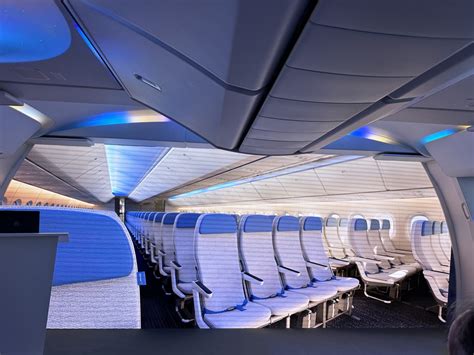
The interior of the 777X redefines passenger experience. Drawing inspiration from the 787 Dreamliner, Boeing implemented larger dimmable windows, higher ceilings, and improved cabin humidity. The cabin is 4 inches wider than the 777-300ER, allowing for more spacious seating arrangements and wider aisles.
Passengers will also benefit from advanced HEPA filtration, quieter cabins, and electrochromic window dimming systems. Boeing aims to offer a cabin experience on par with the best in the industry, reducing fatigue on long-haul journeys while increasing seat efficiency by 20% over the previous generation.
Variants: A Family for Every Mission
The 777X program currently includes two primary variants, with additional versions under development:
777-9
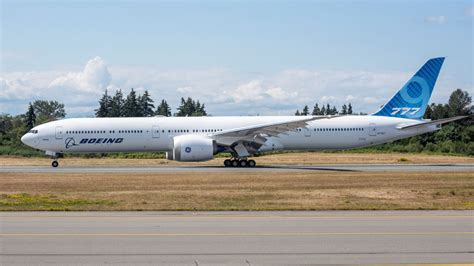
The flagship of the 777X series, the 777-9 is a 251.8 ft long aircraft seating up to 426 passengers in a typical two-class configuration. With a range of 7,285 nautical miles, it is designed to replace the 777-300ER while improving fuel burn by up to 13%. It completed its first flight on January 25, 2020, marking a pivotal milestone in Boeing’s wide-body strategy.
777-8
Shorter and more range-focused, the 777-8 is tailored for ultra-long-haul routes. With a cabin capacity of 395 seats and a maximum range of 8,745 nautical miles, it offers airlines the ability to connect virtually any two cities on the globe. However, its development has been delayed until at least 2023, with primary attention given to certifying the 777-9.
777-8F
Introduced in January 2022 with an initial order from Qatar Airways, the 777-8F is the cargo-optimized version of the 777-8. Scheduled for entry into service in 2027, it will become Boeing’s flagship freighter, complementing the 767F and replacing aging 747-400 freighters.
BBJ 777X
The BBJ (Boeing Business Jet) 777X includes business variants of the 777-8 and 777-9, offering ultra-long-range luxury travel. These jets feature expansive cabin configurations capable of flying over 11,000 nautical miles nonstop, making them attractive to governments and high-net-worth individuals.
Testing, Certification, and Production Challenges
Despite its promising design, the 777X program has faced numerous delays. Initial production activities ramped up in 2017, with wing assembly contributions from Subaru, Mitsubishi, and Kawasaki. Problems emerged in 2018 with GE9X engine actuator durability, delaying roll-out.
When the prototype finally emerged on March 13, 2019, engine anomalies pushed the maiden flight to early 2020. The aircraft passed structural testing but experienced minor failures in fuselage elements, triggering more detailed inspections.
Between 2020 and 2021, flight testing progressed slowly due to the COVID-19 pandemic and stringent FAA certification requirements. These delays pushed expected certification from 2023 to 2025, with further complications in August 2024, when Boeing grounded test aircraft due to cracks in the wing-engine strut fittings.
As of January 2025, flight testing has resumed, and entry into service is scheduled for 2026, with Lufthansa as the initial operator.
Economic and Operational Efficiency
The Boeing 777X delivers not just increased size but measurable efficiency gains. The GE9X engines, with a bypass ratio of 10:1 and fan diameters exceeding 134 inches, contribute to a 12–13% reduction in fuel consumption per trip.
With ten-abreast seating, airlines can spread costs over more passengers, enabling a 33% better cost-per-seat compared to the 747-400. Additionally, the aircraft offers greater cargo belly capacity, making it a profitable choice for mixed-passenger and freight operations.
Global Orders and Market Position
To date, Boeing has received 503 firm orders from 12 global customers. The largest commitments come from:
- Emirates Airline – 150 aircraft
- Qatar Airways – 50 aircraft
- Etihad Airways – 25 aircraft
- Lufthansa – 34 aircraft
Additional orders have been placed by ANA, Singapore Airlines, IAG, Air India, Cathay Pacific, Ethiopian Airlines, China Airlines, and Korean Air, reinforcing the 777X’s role as the cornerstone of future long-haul fleets.

Technical Specifications at a Glance
- Cockpit crew: 2 pilots
- Passenger capacity: 395 (777-8) to 426 (777-9)
- Engines: 2 × General Electric GE9X
- Maximum Takeoff Weight (MTOW): 775,000 to 805,000 lbs
- Wingspan: 212.9 ft (folded), 235.5 ft (extended)
- Length: 232.5 ft (777-8), 251.8 ft (777-9)
- Fuel capacity: Approx. 52,000 US gallons
- Range: 7,285 nmi (777-9) to 8,745 nmi (777-8)
Conclusion: A Vision of the Future
The Boeing 777X is more than an aircraft; it is a statement about the future of commercial aviation. With its monumental wings, ultra-efficient engines, and redesigned passenger experience, it will become the new flagship of long-haul operations for leading global airlines. Despite the challenges and delays, Boeing’s commitment to innovation ensures the 777X will soon join the skies as the most advanced twin-aisle aircraft in service.
As it nears certification, the 777X promises to deliver unmatched performance, cost efficiency, and environmental responsibility—traits that are critical for airlines navigating an evolving global aviation landscape.