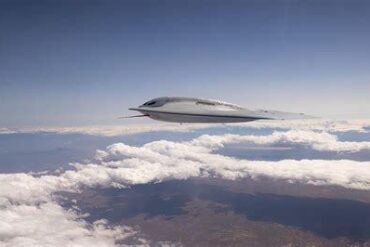
The Boeing 777-9 program has reached another important milestone as the manufacturer prepares to send its first production-standard aircraft on a demanding long-range test mission extending deep into the Arctic. The aircraft, registered N20080 and carrying Boeing designation WH128, is scheduled to depart from Snohomish County Airport (PAE) on a flight lasting approximately 11 hours and 14 minutes, with a route reaching as far north as 85 degrees latitude, placing it only about 300 nautical miles (556 kilometers) from the geographic North Pole.
The mission represents one of the most extensive flight profiles conducted by a production-configured member of the 777X family. While Boeing has already accumulated thousands of hours of testing using dedicated prototype aircraft, this particular flight carries additional significance because N20080 is not an experimental prototype. Instead, it is the first production-standard 777-9 built for Lufthansa, bringing the aircraft much closer to the configuration that airline passengers will eventually experience.
As Boeing continues advancing toward certification and commercial service entry, flights such as this provide valuable opportunities to validate systems, evaluate performance, and demonstrate operational readiness in some of the most challenging environments on Earth.
The aircraft recently completed its maiden flight and has now entered a broader series of certification and validation activities. Boeing has reported that the overall 777X flight-test fleet has accumulated more than 4,700 flight-test hours, while the program itself has secured over 620 orders from airlines worldwide. These figures underline the importance of the aircraft within Boeing’s future widebody strategy and the aviation industry’s long-term fleet planning.
High-Latitude Operations Push Aircraft Systems To Their Limits
Flying near the North Pole presents a unique set of challenges that differ significantly from traditional long-haul operations across populated regions. As aircraft move toward extreme northern latitudes, navigation, communications, and operational procedures become increasingly complex.
One of the primary challenges involves navigation. Conventional aircraft navigation often relies on magnetic references, but these references become progressively less reliable as aircraft approach the poles. This occurs because the Earth’s magnetic field lines converge near the polar regions, creating substantial magnetic variation and reducing the effectiveness of traditional magnetic heading calculations.
Modern airliners such as the Boeing 777-9 overcome these limitations through sophisticated inertial reference systems, advanced flight management computers, and true-heading navigation methods. These technologies enable precise positioning and route tracking even in regions where magnetic compasses become less dependable.
At 85° North latitude, an aircraft is operating in a remote environment where the geographic realities of polar flight become highly apparent. Such conditions offer Boeing engineers an opportunity to observe aircraft behavior under circumstances that many commercial airliners will eventually encounter during transpolar operations connecting major cities in North America, Europe, and Asia.
Communications infrastructure also changes dramatically in Arctic regions. Unlike heavily traveled corridors supported by dense ground-based networks, polar areas depend on alternative communications architectures and operational planning methods. Long-duration missions through these regions allow manufacturers to monitor system performance, connectivity reliability, and operational consistency over extended periods.
Why N20080 Is Different From Earlier 777X Test Aircraft
Although several Boeing 777X aircraft have participated in flight testing since the program’s launch, N20080 occupies a unique position within the certification campaign.
Unlike dedicated engineering prototypes, this aircraft was constructed to production standards and incorporates Lufthansa’s intended passenger cabin configuration. Rather than replacing commercial interiors with extensive test equipment, Boeing has retained a cabin layout that closely resembles what future passengers will encounter.
This distinction matters because certification programs evolve as they mature. Early developmental aircraft primarily focus on validating fundamental aerodynamic characteristics, structural integrity, flight controls, and system functionality. Production-standard aircraft, however, enable manufacturers to verify that final customer configurations perform as expected under real-world operating conditions.
The aircraft includes installed passenger seating, cabin systems, and inflight technologies that form part of the eventual airline product. Testing therefore expands beyond pure engineering objectives and increasingly evaluates passenger-facing systems, connectivity capabilities, cabin functionality, and operational readiness.
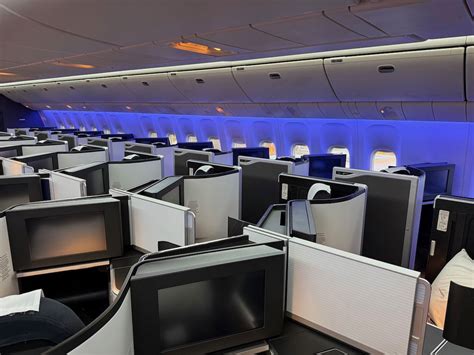
N20080 also holds the distinction of being the sixth 777-9 airframe to fly, but the first to do so in customer-delivery configuration. This transition is a common and critical phase within large commercial aircraft certification programs as manufacturers move closer to regulatory approval and airline handover.
Boeing Advances Through Critical Certification Stages
The 777-9 certification campaign has progressed steadily since the aircraft’s first flight in January 2020. The process encompasses extensive ground evaluations, flight testing, avionics verification, performance assessments, systems validation, and operational demonstrations required by regulators.
Recent developments indicate meaningful progress. Boeing confirmed that the program received approval for TIA Phase 4B, a major component of the certification process conducted under Federal Aviation Administration (FAA) oversight. Company executives have described this phase as one of the largest remaining portions of regulator-supervised testing.
Approval to proceed through these stages enables Boeing to continue gathering data necessary for certification while demonstrating compliance with increasingly detailed regulatory requirements.
The certification effort also includes ETOPS-related evaluations, a crucial requirement for long-haul twin-engine aircraft operating far from diversion airports. Given the 777-9’s intended role on ultra-long-haul international routes, successful completion of ETOPS testing remains an essential milestone before commercial service can begin.
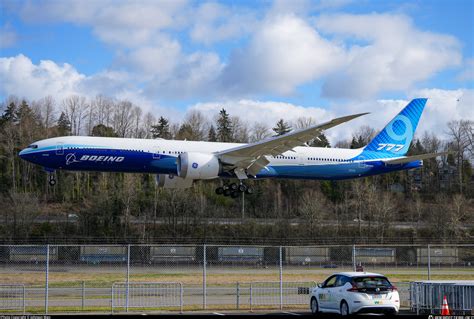
The Arctic Flight Signals Growing Momentum For The 777-9
The planned North Pole mission represents more than a routine test flight. It demonstrates Boeing’s increasing confidence in the maturity of the aircraft and highlights the growing role of production-standard airframes within the certification campaign.
By sending its first production-configured 777-9 deep into the Arctic on an 11-hour mission, Boeing gains valuable operational data while simultaneously validating systems that future airlines will depend upon during real-world service. The flight also illustrates how the program is transitioning from developmental testing toward final certification and customer readiness.
With Boeing continuing to target first deliveries in 2027, each successful milestone brings the world’s largest twin-engine passenger aircraft closer to commercial operations. For airlines awaiting deliveries and for aviation observers tracking the program’s progress, the journey of N20080 toward the North Pole serves as another significant step in the long path toward bringing the Boeing 777-9 into global service.