It is easy to imagine that an airline’s most loyal customers are identified simply by their frequent-flyer status. British Airways, however, appears to look deeper. A discovery by travel blogger Ben Schlappig of One Mile At A Time revealed that the airline has used a Corporate Individual Value (CIV) score to rank customers on a scale from 0 to 105, creating a hidden numerical profile that can influence how passengers are treated when operations become disrupted.
Airlines collect extensive information about how customers travel, what they buy, which cabins they choose, and how often they return. Loyalty programs turn those behaviors into customer profiles. British Airways’ CIV system appears to bring many of those considerations together.
According to Head for Points, cited in the discovery, British Airways has reportedly used CIV for about a decade. The score is separate from the British Airways Club status structure, which runs from Blue through Bronze, Silver, and Gold. Above Gold are Gold Guest List and Gold Premier.
How British Airways CIV Scores Work
The published breakdown shows how sharply the scale distinguishes different customer groups. Scores of 0 to 5 correspond to Club Blue, while 6 to 13 covers Bronze. Silver members fall between 14 and 35, and Gold members occupy 36 to 96. At 97, the profile reaches Gold Guest List territory. A score of 98 identifies key decision makers, while 99 represents a key decision maker who is also a Gold Guest List member.
The upper end is particularly revealing. A score of 100 is associated with Lifetime Gold Guest List and higher-tier Gold Guest List members. The maximum listed score, 105, belongs to Premier members, an invitation-only group described as people who control major corporate travel budgets. The highest values are therefore not simply a reward for flying frequently. They can reflect the commercial importance of the individual to British Airways.
Normal loyalty status already rewards activity. Passengers can earn status through qualifying BA-marketed flights, with 25 such flights moving a customer from Blue to Bronze and 50 reaching Silver under the system described in the source material. Customers can also earn points through vacation packages, cabin purchases, and spending on the airline’s branded American Express card. Lifetime Tier Points continue accumulating over the years.
When the Secret Passenger Score Matters
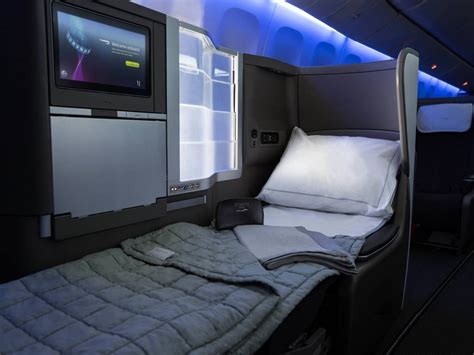
For an ordinary flight that departs and arrives as planned, CIV apparently does not transform the onboard experience. A Club World passenger with a low score still receives the same basic meal service, amenities, and bedding as a highly valuable passenger in the same cabin. The importance of CIV emerges when the airline has limited options and must decide how to respond to disruption.
Head for Points reported that the score can help British Airways determine whom to prioritize during cancellations, delays, and rebooking situations. When hundreds of passengers are affected by a cancellation, seats on alternative flights may be scarce.
The discovery also raises questions about upgrades. Comments responding to Schlappig’s report suggested that CIV can serve as a tiebreaker when multiple passengers are competing for an upgrade.

British Airways Is Not Alone in Tracking Customers
The wider lesson extends beyond British Airways. Modern airline websites and apps can monitor searches, abandoned bookings, previous purchases, loyalty activity, and other interactions. A traveler who searches for a flight without completing the purchase may later receive a reminder featuring the same route, dates, and fares.
British Airways’ CIV score illustrates how that data can become more than targeted advertising. It can potentially shape the airline’s operational priorities when irregular operations force difficult choices. The passenger may never see the score, yet the airline can use it behind the scenes.
There is also a transparency angle. Comments on Schlappig’s report pointed out that a CIV score may be obtainable under UK data-protection law, giving eligible customers a possible route to discover information held about them. It highlights an important principle: a profile that appears invisible to the traveler may still exist as personal data within a company’s systems.
What CIV Reveals About Airline Loyalty
British Airways’ hidden scoring system shows how airline loyalty has evolved beyond collecting points and reaching elite tiers. The airline may maintain internal measurements that assess the customer’s commercial value.
The result is a two-layer loyalty system: the visible program rewards customers with benefits, while internal data can help the airline manage scarce resources. CIV does not change the seat, meal, or bedding simply because the number is higher, according to the reporting, but it may become significant precisely when something goes wrong.
Airline loyalty programs are no longer only about earning miles or enjoying lounge access. Behind the membership card can sit a much more detailed picture of how an airline values a customer’s business—and that hidden number may matter most when a flight does not go according to plan.