A British Airways long-haul flight from London Heathrow (LHR) has sparked public outrage after a mother accused a male flight attendant of violating her privacy while she was breastfeeding her 7-month-old baby mid-flight. The incident, first reported via a viral Reddit post, has stirred a wider debate on crew conduct, breastfeeding rights, and passenger dignity aboard commercial flights.
The mother, traveling solo, was seated with her child and using a nursing cover for privacy. As the flight entered meal service, a male crew member approached her row. After she extended her hand from under the cover to decline the meal—indicating her engagement—he reportedly lifted the nursing cover without permission, fully exposing her chest to the cabin.
She stated that she had already informed the crew prior to takeoff that she might be breastfeeding during the flight. The unsolicited exposure left her feeling “violated,” “humiliated,” and stripped of her autonomy. Her post, shared with anonymity for safety, rapidly gained traction, leading to widespread condemnation across digital platforms.
British Airways Responds: Acknowledgement Without Action?
British Airways confirmed it had been made aware of the allegation. A spokesperson said the airline was “in contact with our customer and are looking into these allegations.” However, the woman noted that her first interaction with customer service yielded only a generic, scripted reply, void of empathy or responsibility.
This lack of meaningful acknowledgment from British Airways has intensified public scrutiny. Critics argue that such an incident reflects not merely an individual’s misconduct but a broader institutional failure in crew training and passenger sensitivity.
The mother described the moment in harrowing detail: “I was lying down nursing with my head under the cover. The flight attendant touched my leg, lifted the cover, and asked if I wanted my meal. My entire chest was exposed. I felt completely violated.”
Online responses were swift and impassioned:
- “This is sexual harassment in my eyes,” wrote one user.
- “A breastfeeding mom is already in a vulnerable position. What happened was unacceptable,” another added.
Patterns of Misconduct: An Industry-Wide Issue
The British Airways incident is not isolated. Over the past few years, a growing number of breastfeeding-related complaints have been lodged against various international carriers, pointing to an industry-wide inconsistency in handling these situations.
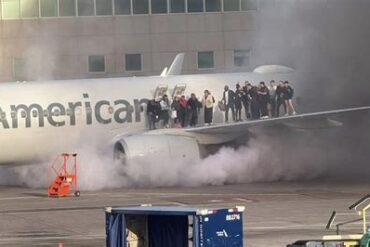
- American Airlines (2021): A mother on a Dallas-Fort Worth to Atlanta flight was allegedly called “disgusting” by a crew member for nursing her child. The same crew member reportedly threw a paper towel at the baby. An internal investigation ensued.
- KLM Royal Dutch Airlines: During a San Francisco to Amsterdam flight, a woman was told to cover up while breastfeeding to prevent making other passengers uncomfortable. Public backlash prompted the airline to reverse the policy.
- TUI Airways (2023): A woman was instructed to stop breastfeeding during takeoff. After initial confusion, the airline clarified that breastfeeding is indeed permitted at all times in-flight.
These recurring incidents suggest a systemic gap in training and policy enforcement, underscoring the urgency for the aviation industry to implement standardized guidelines.
The Legal and Ethical Dimensions of In-Flight Breastfeeding
International aviation protocols support a mother’s right to breastfeed on board. In most jurisdictions, including the UK and the US, breastfeeding is legally protected—even in public spaces. Airlines are expected to provide an environment that upholds this right without embarrassment, obstruction, or violation.
The law, however, does not automatically translate into crew competence. When staff are not properly trained to deal with intimate or culturally sensitive scenarios, they risk crossing boundaries that can inflict emotional and psychological harm.
The incident aboard British Airways thus raises not only questions about conduct but also deeper concerns regarding the power dynamic between crew and passengers. Who holds accountability when a boundary is crossed? Is an apology sufficient, or should disciplinary measures follow?
Failure of Communication and Consent
What makes the BA case especially troubling is the absence of consent. At no point did the mother signal discomfort or request assistance. On the contrary, she communicated—albeit non-verbally—that she was feeding and willing to skip the meal. The intentional act of lifting her cover is seen by many legal experts as a potential breach of personal space and bodily autonomy.
The physical act of touching her leg and removing a cloth that concealed her chest qualifies, by several legal standards, as non-consensual contact. In other settings, this might be investigated as assault.
Passengers, particularly nursing mothers, are entitled to physical privacy, and the right to refuse interaction while feeding should be recognized and respected.
Why This Incident Resonates Globally
The explosive public reaction stems not merely from the shock of the incident, but from its deep emotional relatability. For nursing mothers, air travel can already be a taxing experience, involving tight spaces, unpredictable schedules, and a lack of proper facilities.
When airlines fail to protect vulnerable passengers, it reflects a broader disregard for human dignity. The BA case cuts to the core of this issue, illustrating the gulf between policy and practice.
Additionally, this incident comes amid growing global conversations about bodily autonomy, gendered power dynamics, and the rights of mothers in public spaces. The outrage has therefore been not just vocal—but transformative, with calls for policy change reaching beyond the UK.
Demand for Reform: Training, Oversight, and Policy Enforcement
The aviation industry cannot afford to treat these incidents as isolated missteps. Public trust is contingent upon transparent accountability mechanisms. At the core of necessary reform lie three pillars:
- Enhanced Crew Sensitivity Training – Airlines must integrate modules on consent, bodily autonomy, and cultural awareness into standard training.
- Clear Breastfeeding Policies – These should be communicated during onboarding and pre-flight briefings. Visibility matters.
- Effective Complaint Redressal Systems – Victims should not have to go public to be heard. Airlines need dedicated escalation channels.
In the British Airways case, the mother’s experience reveals a gap in all three pillars. Her prior communication about nursing went unheeded. The crew acted contrary to expected conduct. The complaint received a cold, template response.
A Defining Moment for British Airways
British Airways now faces a critical test. Will it treat this allegation as a public relations inconvenience, or will it lead by example and implement robust changes that protect the dignity and rights of all passengers?
The flight attendant’s alleged action is being widely condemned as not just a personal violation but a systemic failure. For BA, this is an opportunity to go beyond reactive statements and demonstrate corporate responsibility. Meaningful reform is not just demanded—it is expected.
Until airlines prioritize empathy, enforce boundaries, and recognize breastfeeding not as a disruption but as a natural, legal act, such stories will continue to resurface, eroding passenger trust and tarnishing reputations.
The mother’s story is more than an incident—it is a mirror held up to an industry in dire need of reflection.