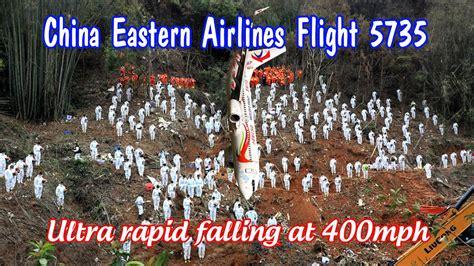
On March 21, 2022, China Eastern Airlines Flight 5735, operating a routine domestic flight from Kunming Changshui International Airport to Guangzhou Baiyun International Airport, abruptly vanished from radar before crashing in Teng County, near Wuzhou, Guangxi. The Boeing 737-89P, flying under tail number B-1791, plummeted from cruising altitude and crashed in a steep, nearly vertical descent, killing all 132 people on board — including 123 passengers and 9 crew.
This catastrophic incident stands as China’s third-deadliest aviation disaster, the worst in China Eastern Airlines’ history, and the deadliest global air crash in 2022.
The Aircraft and Flight Crew
The aircraft involved was a six-year-old Boeing 737-800, part of the widely used 737 Next Generation series, known for its strong safety record. It had two CFM56-7B26E turbofan engines and had first flown on June 5, 2015, before delivery to China Eastern Yunnan Airlines on June 25, 2015. With more than 7,000 units delivered worldwide, the 737-800 model had only experienced 11 prior fatal accidents — a testament to its overall reliability.
On the flight deck were three highly qualified pilots:
- Captain Yang Hongda, 32, with 6,709 flight hours
- First Officer Zhang Zhengping, 59, one of China’s most senior pilots with 31,769 flight hours and honored as a “Meritorious Pilot”
- Second Officer Ni Gongtao, 27, an observer pilot with 556 hours, present for training experience
A Routine Flight Turned Disaster
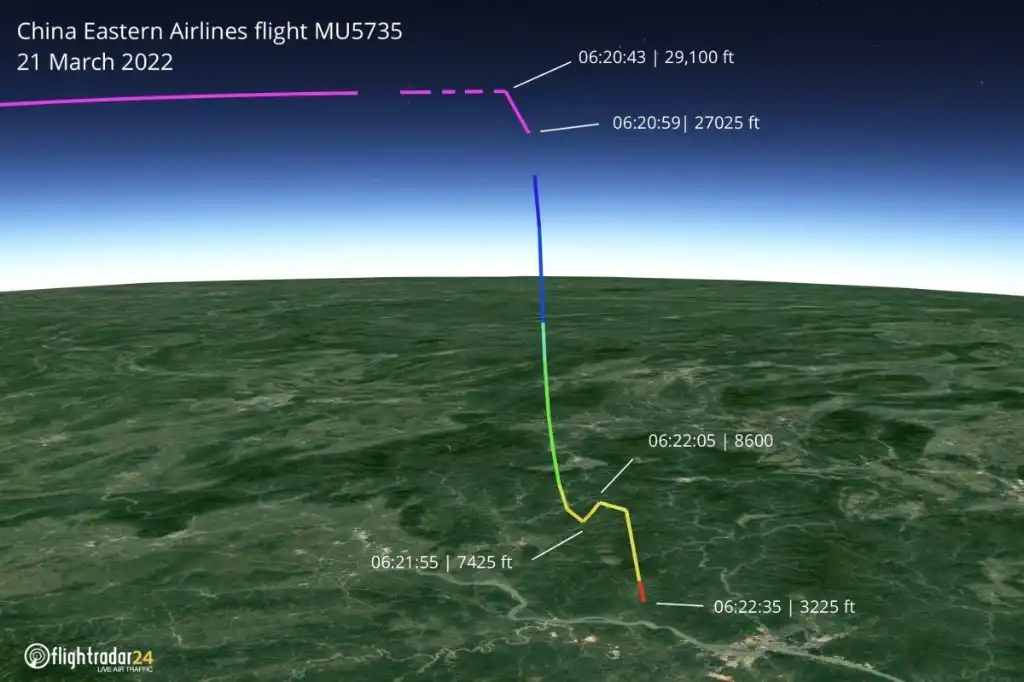
MU5735 departed Kunming at 13:15 local time and was scheduled to arrive in Guangzhou at 15:05. At 14:22, while cruising at 29,100 feet, the aircraft suddenly entered an abrupt and unexplained descent. It dropped to 7,400 feet, briefly climbed to 9,225 feet, and then fell again.
In under two minutes, it crashed into the mountains of Teng County. The final data point recorded the aircraft at 3,225 feet, descending at over 32,000 feet per minute, with airspeeds potentially exceeding 1,100 km/h — nearing the speed of sound.
There was no distress call, no communication with air traffic control during the descent. The plane simply vanished from radar, leaving authorities and families scrambling for answers.
Impact and Wreckage
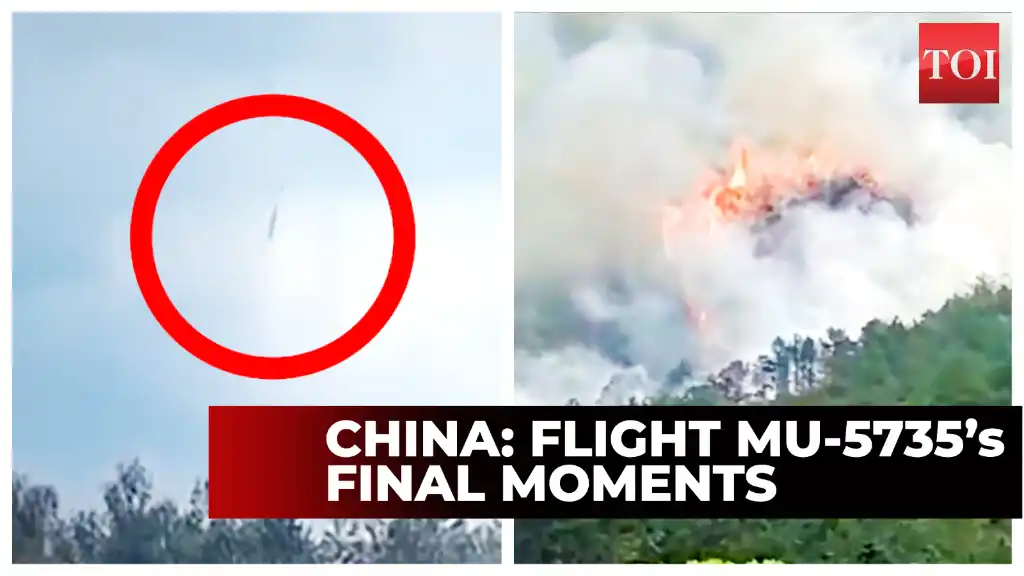
The impact created a crater 30 meters wide and 20 meters deep, with wreckage strewn across a vast area. A security camera from a local mining site captured the final moments — a chilling video of the aircraft in a near-vertical nosedive.
Villagers reported a thunderous explosion, followed by rising smoke. Scattered fragments of debris, some as small as a few centimeters, were found embedded in forested terrain, complicating recovery efforts.
Emergency Response and Recovery Efforts
The response was immediate. By 15:05, 450 firefighters had been dispatched. More followed from cities like Guilin, Beihai, and Hezhou. By evening, 117 rescuers were approaching the site on foot due to rough terrain.
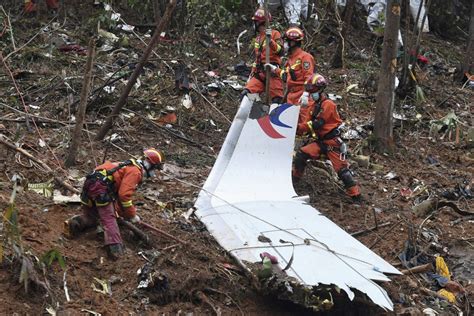
Rainfall and the risk of landslides hampered rescue operations. The impact crater flooded, requiring drainage. Rescue workers retrieved the cockpit voice recorder (CVR) on March 23 and the flight data recorder (FDR) on March 27, both damaged but largely intact.
Notably, a 1.3-meter fragment of the wing’s trailing edge was discovered 12 km from the crash site, prompting speculation about an in-air breakup, though later dismissed as a lightweight part likely displaced by wind during descent.
By March 29, all 132 victims were positively identified, and by March 31, over 49,000 pieces of wreckage had been recovered.
The Investigation: Searching for Answers
The Civil Aviation Administration of China (CAAC) took immediate charge, forming an emergency task force. Due to the aircraft being U.S.-manufactured, Boeing, the National Transportation Safety Board (NTSB), Federal Aviation Administration (FAA), and CFM International were brought in as technical advisers.
The CAAC’s preliminary report, released April 20, 2022, noted no irregularities in air traffic control communication, no hazardous weather, no dangerous cargo, and no signs of explosive devices. The aircraft and crew had met all regulatory requirements. Both flight recorders were severely damaged but sent to Washington, D.C. for analysis.
On March 20, 2023, CAAC issued a brief update, stating the accident was “very complicated and very rare.” A second interim report in 2024 found no anomalies in procedures or navigation systems. However, no report was released in 2025, despite international civil aviation rules mandating annual updates.
On May 19, 2025, CAAC announced that it would not publish further findings, citing concerns that releasing the report could endanger national security and societal stability.
Theories and Speculation in Global Media
In May 2022, reports from The Wall Street Journal and ABC News cited U.S. government officials suggesting the crash was intentional, with flight controls manually pushed to initiate the dive. The lack of deployed landing gear and flaps further suggested no attempt was made for an emergency landing. There were no distress calls, and radio silence persisted throughout the descent.
These claims led to speculation that either a pilot deliberately crashed the plane, or someone had breached the cockpit — though China Eastern Airlines insisted cockpit breach was highly unlikely, as no emergency codes were transmitted.
The CAAC responded, asserting such reports misled the public and hindered the integrity of the investigation. Nonetheless, the theory of intentional human input remains central to many international analyses.
Domestic Response and Media Censorship
Chinese Premier Li Keqiang and President Xi Jinping called for full-scale rescue efforts and a thorough investigation. Over 1,000 psychologists were mobilized to support grieving families.
China Eastern grounded its entire 737-800 fleet temporarily, returning them to service in April 2022. On March 22, nearly 74% of China’s flights and 89% of China Eastern’s operations were cancelled, marking the highest cancellation rate in China that year.
Chinese state media focused heavily on rescue operations, showcasing teams’ efforts and government support. However, social media posts and articles questioning the cause of the crash or pointing to pilot error were swiftly censored. Even expressions of public grief that criticized the airline or investigation were deleted.
Human Stories Behind the Numbers
Among the passengers were families traveling together, teenage students, seasoned flight attendants, and a young woman who had changed her ticket to surprise her boyfriend. Her black ribbon hair bow, found at the site, became a symbol of profound loss. Her boyfriend, who later identified the bow, posted online: “Without you, how do I live in this world?”
The crew included a legendary pilot with four decades of flying experience and another who had trained over 100 captains. Their qualifications only deepened the mystery.
Recovery teams — muddy, soaked, and exhausted — paused to hold moments of silence when they uncovered only fragmented remnants of the aircraft, overwhelmed by the sheer devastation and emotional weight of the tragedy.
Global Aviation and Market Reaction
The crash triggered immediate global concern. Countries extended condolences. In India, the DGCA placed Boeing 737 fleets under enhanced surveillance. In the U.S. and Hong Kong, Boeing’s stock dropped by 7.8%, and China Eastern’s by 8.2%, reflecting shaken investor confidence.
Boeing expressed deep sympathy and assured full cooperation with Chinese and international investigators.
Conclusion: A Tragedy Without Closure
Three years since the crash, no definitive cause has been published. Families of the victims continue to seek answers, while the silence from the authorities has only deepened the public’s unease. The CAAC’s refusal to release its final findings stands in stark contrast to international aviation norms, sparking questions about transparency.
China Eastern Airlines Flight 5735 was more than an aviation disaster; it became a national tragedy and a symbol of grief, mystery, and unresolved sorrow. As time passes, the calls for truth grow louder. Until then, the crash remains an open wound in global aviation history — a painful reminder of the fragility of life and the imperative of accountability.