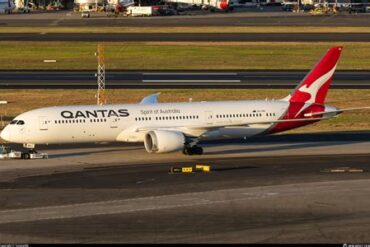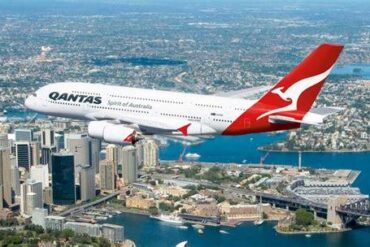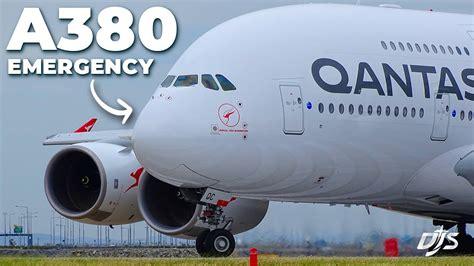
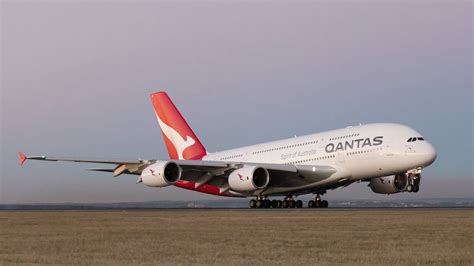
A Qantas Airbus A380, en route from London to Sydney via Singapore, was thrust into the aviation spotlight after making an unexpected emergency landing in Baku, Azerbaijan. The flight, designated QF2, departed from London Heathrow with over 400 passengers aboard on June 8, 2025, expecting a routine ultra-long-haul trip. But somewhere above Turkmenistan, the script changed abruptly. A medical emergency unfolded midair, forcing the crew to divert to the nearest viable international airport. That destination turned out to be a place most travelers on board had likely never heard of—Heydar Aliyev International Airport in Baku.
The Onboard Crisis That Forced a Change in Course
As the Qantas A380 cruised at 37,000 feet, tranquility quickly gave way to urgency. Details of the exact medical condition remain undisclosed due to passenger confidentiality, but the severity of the situation was clear. With lives at stake and time critical, the decision was swift: divert.
Baku was not just a random selection. In-flight emergencies require rapid, complex calculations involving airport capacity, runway length, medical access, and geopolitical stability. Heydar Aliyev International Airport, while not a frequent stop for Qantas, met all the crucial criteria. The aircraft, tail number VH-OQB, began its descent and landed safely on Azerbaijani soil, hours ahead of its originally planned stop in Singapore.
Stranded in Azerbaijan: A Night in the Unknown
Upon landing, a new set of challenges emerged. Aviation safety regulations, particularly concerning crew duty time limits, meant the flight couldn’t resume immediately. These global safety protocols are designed to prevent fatigue-related mishaps, and they left Qantas with no legal wiggle room.
With no replacement crew available in Azerbaijan, the aircraft and its occupants were grounded. Qantas arranged overnight hotel stays for the entire passenger cohort. For many, the detour offered an unexpected glimpse into Azerbaijani hospitality—a city at the crossroads of Europe and Asia, now cast as the unwitting backdrop to a high-stakes aviation drama.
Operational Shockwaves: From Flight Plan to Chaos Management
The logistics of supporting over 400 international travelers in a country outside Qantas’ regular operational footprint proved daunting. Still, local authorities and airport staff acted quickly. Baku’s airport infrastructure, bolstered in recent years due to its rising profile in regional air travel, managed to accommodate the influx.
The emotional toll, however, could not be so easily mitigated. Delays cost business travelers meetings. Families with children faced sleepless nights. Some passengers expressed confusion over inconsistent communication, while others praised the cabin crew for their composure and professionalism.

A 48-Hour Delay That Captivated the World
The aircraft remained in Baku for almost two full days. It wasn’t until Tuesday, June 10, that QF2 finally resumed its journey, taking off at 18:25 local time. The flight then continued to Singapore, before finally reaching Sydney on Wednesday, June 11 at 19:24 AEST.
While the timeline stretched far beyond original expectations, what mattered most—passenger safety—remained uncompromised. The emergency, while disruptive, ended without tragedy.
Aviation Industry Insight: Is the System Truly Ready for Emergencies?
This incident has sparked intense discussion within aviation circles. Midair medical emergencies, though statistically rare, present one of the most unpredictable challenges for long-haul flights. And as airlines like Qantas push the envelope with ever-longer routes, the stakes only increase.
Questions loom large:
- Are flight crews adequately trained and equipped for high-stakes medical scenarios?
- Should regulatory frameworks be adjusted to allow more flexibility in crew duty during unforeseen circumstances?
- What contingency protocols exist for diversions to regions outside the typical airline route map?
Qantas maintains a strong reputation for safety and operational precision. Yet even the best-prepared carriers find themselves tested by scenarios that outpace protocol.
The Passenger Perspective: More Than Just Delays
Social media lit up with reactions from stranded passengers. Many praised Qantas for providing lodging and food. Others expressed frustration over the lack of real-time updates or clarity about next steps. The event laid bare a critical aspect of airline crisis response—empathy and communication.
For modern travelers, especially in the post-pandemic era, contingency readiness is not a luxury. It’s a necessity. Airlines now compete not just on safety and pricing, but on their ability to navigate unpredictability with care and clarity.
Lessons Beyond the Runway
As global airlines reinvest in ultra-long-haul travel, the Qantas Baku diversion serves as a cautionary tale. When flights stretch 17, 18, even 20 hours, the margin for midair contingencies narrows. Aircraft may need to reroute to remote airports with limited infrastructure. Medical staff, customs officers, hotel providers—all must operate in sync to handle the fallout.
This incident reminds stakeholders at every level—from airline executives to airport authorities—that success lies not just in scheduling, but in the resilience of systems under pressure.
Final Descent: A Story That Ends in Safety, But Raises New Standards
Ultimately, QF2’s emergency landing in Baku is a success story. No lives were lost. Every passenger made it home. Yet it underscores how quickly a flight plan can unravel, and how vital it is for the aviation world to plan for the unplanned.
While passengers may eventually forget the delayed arrival, they are unlikely to forget how they were treated in Baku—how quickly help arrived, how clearly they were guided, how human their experience felt.
For an industry built on precision, the lesson is sobering: chaos is always one heartbeat away at 37,000 feet. And how we respond to it will define the future of air travel.