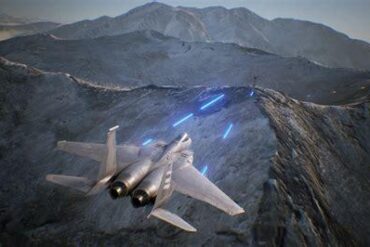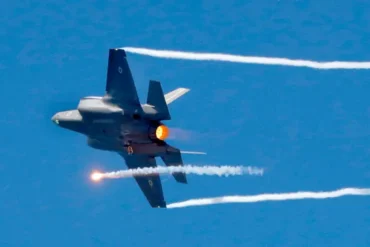
In a rare public disclosure of its military simulations, China recently broadcasted footage of a high-profile war game scenario pitting its most advanced multirole fighter—the J-16 Flanker derivative—against the formidable French-origin Dassault Rafale. This unprecedented reveal offers a lens into how Beijing assesses its aerial capabilities in the face of evolving regional threats and signals an increasing focus on real-world performance data against NATO-standard platforms.
China’s Simulated Dogfight: Rafales vs J-16 Fighters
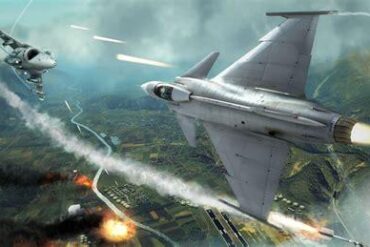
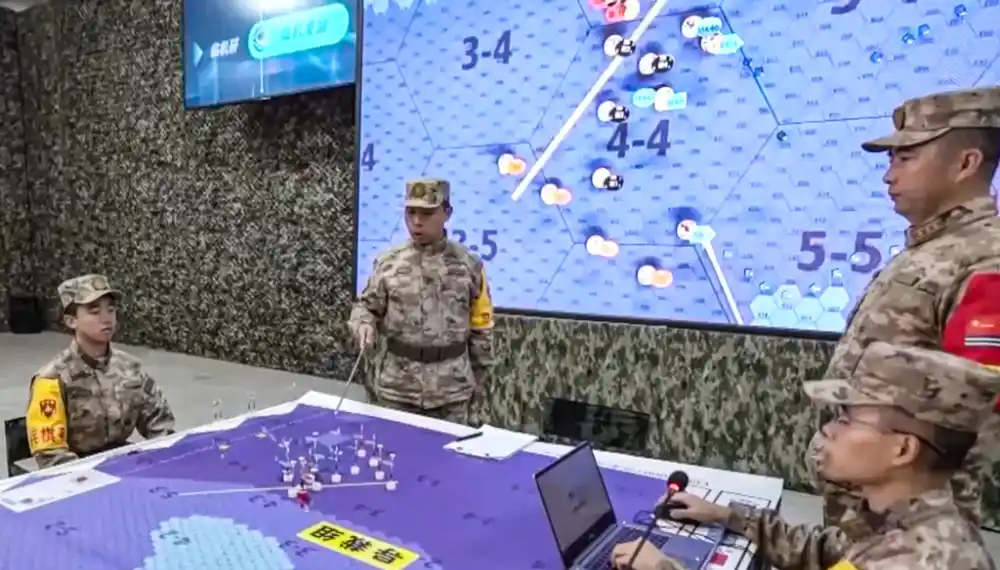
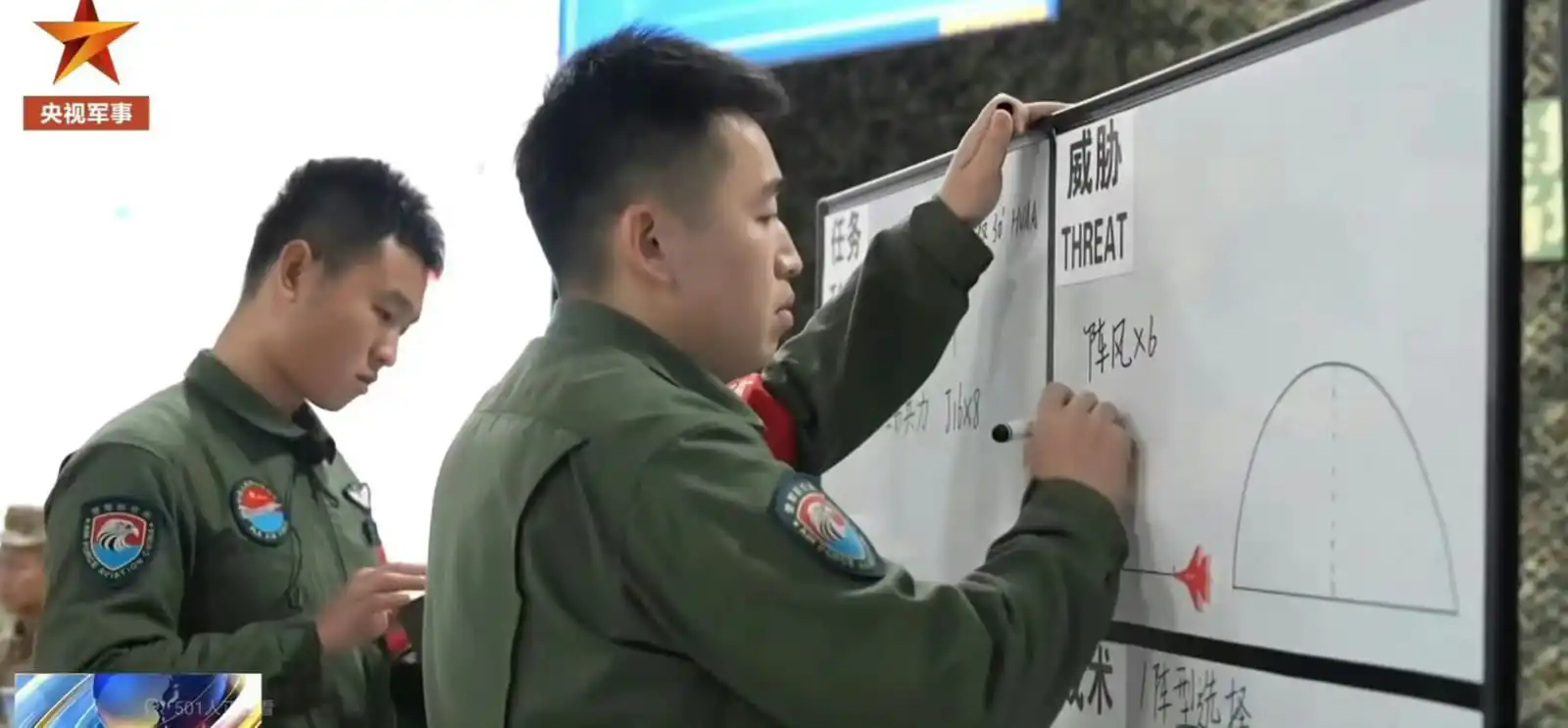
The simulation, conducted in Xuchang, Henan province, featured a digital confrontation between eight J-16 fighters and six Rafale jets. In a scene aired by state broadcaster CCTV, two PLA Air Force commanders examined a tactical board marked with “J16 x8” under the label “task” and “Rafales x6” under the category “threat.”
While simulation results were not disclosed, the public nature of this exercise is telling. Typically, People’s Liberation Army Air Force (PLAAF) operations remain highly classified. Yet, the decision to showcase this war game is widely interpreted as a response to the May 2025 Indo-Pakistan aerial conflict, where Pakistani J-10C jets—another Chinese product—clashed with Indian Rafales.
China’s apparent focus on the Rafale—rather than Russia’s Su-30MKI, which is closer to the J-16 lineage—highlights a strategic interest in countering India’s top-tier Western fighter. This includes understanding how its own jets may fare against a platform already combat-tested in multiple theatres.
J-16: The Chinese Flanker for the 21st Century
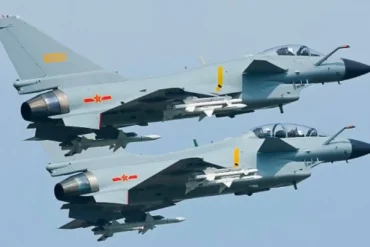
The Shenyang J-16 represents the apex of China’s Flanker development. Heavily modified from the Su-27/Su-30 designs, the J-16 is engineered for long-range, multirole operations, with the ability to conduct deep strikes, aerial interceptions, and electronic warfare.
Armed with PL-15 long-range air-to-air missiles, the J-16 benefits from:
- Indigenous AESA radar, with the ability to detect and track up to 20 targets within a range of 150–200 km.
- Infrared Search and Track (IRST) capability for passive detection up to 80 km.
- Electronic Countermeasures (ECM), missile approach warning systems (MAWS), and stealth-enhancing features including radar-absorbent coatings.
- A dedicated J-16D variant specialized in Suppression of Enemy Air Defenses (SEAD) missions.
This aircraft is designed to function not just as a stand-alone dogfighter but as part of a network-centric warfare ecosystem, including ground sensors, AEW&C platforms, and UAVs. It is a platform built for integration, capable of saturating airspace with firepower and data.
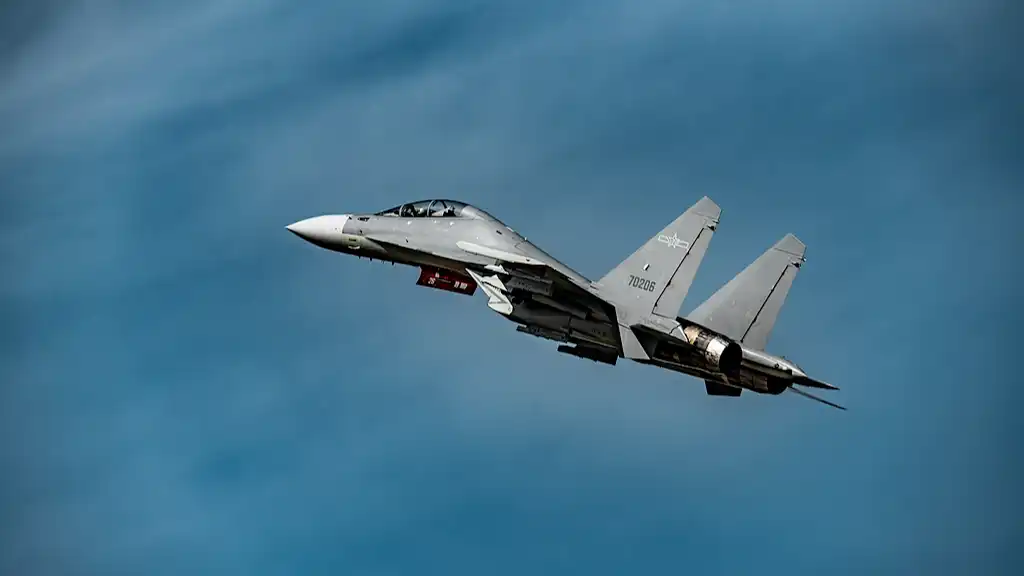
The dark grey livery, use of carbon composites, and RAM coatings hint at a stealth-concerned evolution, though it is still far from a true stealth platform like the Chengdu J-20. Nonetheless, the J-16 has already made headlines for aggressive intercepts over the South China Sea, showcasing its tactical flexibility.
Rafale: The Agile Workhorse of the West
In contrast, the Dassault Rafale is the product of decades of Western combat aviation evolution. Designed as a “omnirole” fighter, it is capable of performing air dominance, deep strike, close air support, nuclear deterrence, and carrier operations—all with minimal logistical dependence.
The Rafale’s combat record speaks volumes: successful sorties over Afghanistan, Libya, Mali, Syria, and Iraq, where it showed high survivability, multi-mission flexibility, and impressive maintenance uptime.
Key features include:
- RBE2-AA AESA radar by Thales: Tracks up to 40 targets, engages 8.
- SPECTRA EW suite: Provides threat detection, jamming, missile warning, and active countermeasures.
- OSF (Optronique Secteur Frontal): A long-range IRST system offering passive tracking.
- Canard-delta configuration: Grants high agility, energy maneuverability, and low-speed handling.
- Extensive use of composites and RAM, lowering radar visibility.
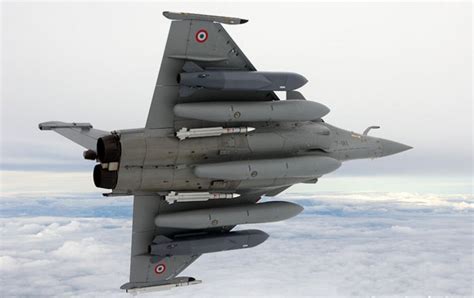
Unlike the J-16, the Rafale thrives on sensor fusion, offering the pilot a unified picture via its glass cockpit. This, combined with helmet-mounted display (HMD) and modular weapon integration, allows for rapid mission transitions without returning to base.
The Rafale-J-16 Indo-Pak Trigger: May 2025 Showdown
Tensions in South Asia ignited interest in this simulation. During the May 2025 Indo-Pak conflict, Pakistan claimed that its Chinese-made J-10C fighters shot down multiple Indian Rafales using PL-15 missiles. While France acknowledged one Rafale loss, it attributed the cause to a high-altitude systems malfunction, denying enemy engagement.
The event raised questions about the effectiveness of Chinese air-to-air missiles and sensors versus battle-proven Western fighters. China, possibly aiming to validate its weapons performance and project regional power, initiated its own Rafale vs J-16 simulation, giving strategic context to the exercise.
Who Holds the Tactical Edge? Performance in the Air
From a capability standpoint, both jets bring distinctive advantages. The J-16 dominates in range, payload, and multirole versatility. It is ideal for extended patrols, saturation strikes, and operations tied to China’s Integrated Air Defense System (IADS).
However, the Rafale has a clear edge in agility, electronic warfare, and real-world combat history. Its superior man-machine interface, sensor fusion, and agility make it a deadly adversary in WVR (within-visual-range) and BVR (beyond-visual-range) engagements.
In terms of radar tech, both fighters use AESA systems, but Thales’ RBE2-AA radar has been battle-tested. The SPECTRA suite offers a comprehensive defense layer, while the J-16’s ECM and MAWS system are still largely unverified outside Chinese sources.
Strategic Implications: Beyond Technical Specs
This simulation is about more than airframe performance. It is a geopolitical message. As India moves toward procuring 26 naval Rafales and potentially 114 under the MRFA deal, China signals that it is adapting and preparing its own forces accordingly.
By choosing Rafale as a “threat archetype,” the PLA demonstrates that it is looking past platform similarities and focusing on real adversaries. This also suggests a possible future where Chinese defense planners see Indian Rafales as the greatest immediate airpower challenge, not Russian-origin Su-30MKIs.
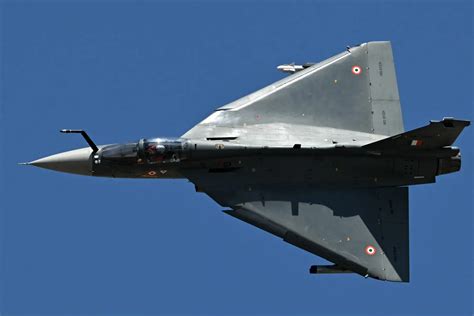
At the strategic level, the J-16 remains embedded within a broader Chinese ecosystem—linked to AEW&C aircraft, long-range sensors, and hypersonic missile platforms. The Rafale, however, is designed for expeditionary warfare—versatile, survivable, and often operating with minimal ground support.
Conclusion: An Uneven Match or Mutual Respect?
Though direct combat comparisons between the Rafale and J-16 are inherently speculative, this simulation underscores a growing Chinese interest in countering Western aircraft through enhanced systems training and war-gaming.
The J-16’s evolution reflects an ambition to compete in an arena long dominated by Western fighters. Yet, combat experience, electronic warfare prowess, and modular mission adaptability give the Rafale a unique edge, especially in the kind of dynamic, high-risk environments seen in real-world operations.
As Asia’s skies grow increasingly contested, these simulations provide not just tactical insights but reveal Beijing’s assessment of its most likely future aerial adversaries. In this unfolding chessboard of airpower, the J-16 vs Rafale match-up may be a preview of real-world engagements yet to come.