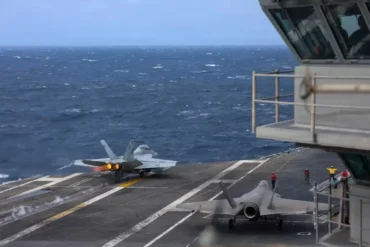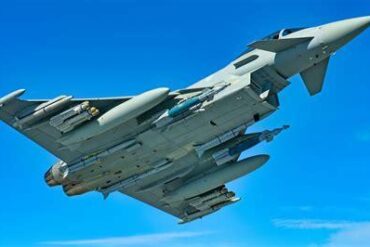
China’s ambitions for global influence and economic expansion have encountered a dangerous inflection point in Latin America. With the dramatic U.S. military operation in Venezuela leading to the capture of President Nicolás Maduro, Beijing’s $100 billion gamble on the resource-rich but politically volatile nation is now in serious jeopardy.
A Strategic Partnership Forged in Rebellion
The seeds of the China-Venezuela alliance were sown during the early 2000s, as Beijing’s industrial boom triggered a voracious appetite for energy. Venezuela, eager to reduce its dependence on the U.S., found in China a willing partner with deep pockets. The rise of Hugo Chávez, with his anti-American rhetoric and oil nationalization drive, dovetailed perfectly with China’s global strategy. As Washington imposed sanctions, Venezuela leaned further into China’s financial and geopolitical embrace.
Beijing viewed the alliance not just through an economic lens but as a calculated geopolitical maneuver. In response to American influence in East Asia—including military bases in South Korea, Japan, and arms sales to Taiwan—China sought to gain a foothold in the Western Hemisphere. Supporting the Venezuelan regime offered a means to project soft power and challenge U.S. dominance in its own backyard.
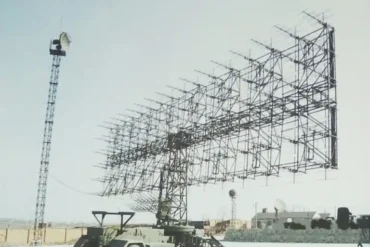
China supplied long-range radar systems to monitor U.S. naval movements and gained access to Venezuela’s massive natural resource base—from gold and diamonds to rare earths, iron ore, and oil. Under the Belt and Road Initiative, China flooded the country with investments in mining, infrastructure, and telecommunications.
China’s Oil Lifeline From Caracas
Central to China’s investment strategy was oil. Venezuela, sitting atop the world’s largest proven reserves, became Beijing’s primary crude supplier. Through a joint venture—PetroSinovensa—formed in 2008 between China National Petroleum Corporation (CNPC) and Venezuela’s PDVSA, China secured direct access to extra-heavy crude.
By 2026, nearly 90% of Venezuelan oil exports—some 800,000 barrels per day—were heading to China, according to Industrial Futures in Shanghai. This near-monopoly gave China leverage not only in energy supply but also in shaping Venezuela’s political trajectory.
Billions in loans were issued through complex oil-for-loan agreements. Caracas, at one point, owed Beijing over $105 billion, making Venezuela China’s largest debtor in Latin America. Chinese telecom giants like Huawei and ZTE also embedded themselves deeply into Venezuela’s infrastructure, from 4G fiber networks to the Homeland Card system used to track citizen data and control access to state aid.
U.S. Military Intervention: A Devastating Blow
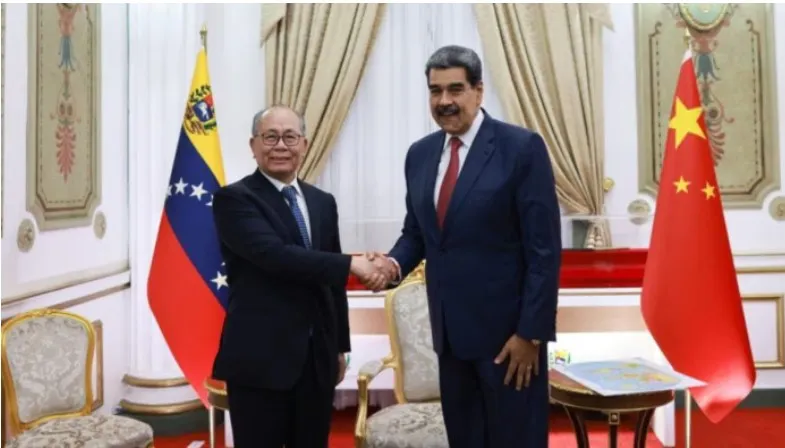
On January 3, 2026, the U.S. military struck. Hours after Maduro met China’s special envoy, Qiu Xiaoqi, he was captured in a surprise raid. The aftermath was swift. With Maduro out, the decades-long China-Venezuela alliance fractured overnight.
China’s once-safe investments are now entangled in the chaos of regime change and American occupation. Although Caracas has repaid much of its debts, experts estimate it still owes China $10–15 billion. But beyond the unpaid sums lies a more existential loss for China: its preferential status.
The U.S. has made its intentions clear. President Donald Trump seeks to take charge of Venezuela’s oil sector, but without fully alienating foreign investors. Publicly, he has suggested China will still be allowed to purchase oil, yet the days of privileged access are over.
According to Cui Shoujun of Renmin University, key joint ventures—such as PetroSinovensa—could be declared unconstitutional by the new U.S.-backed government. American energy titans like Chevron may step in as majority stakeholders, sidelining Chinese entities.
Losing the Monopoly on Critical Minerals
China’s interest in Venezuela extended far beyond oil. Venezuela holds Latin America’s largest gold reserves, as well as a treasure trove of rare earths like coltan, tungsten, titanium, and more. These are crucial to China’s high-tech industries.
Under Maduro, Chinese firms had near-exclusive rights to operate mines via state-run conglomerates like Corporacion Venezolana de Guayana. Now, as U.S. forces secure control, a complete overhaul of mining contracts is anticipated. Washington, determined to reduce its dependence on Chinese rare earths, is unlikely to let Beijing retain control.
Already, the U.S. has made pacts with Australia, Thailand, Malaysia, and Pakistan to diversify its rare earth supply chains. Venezuela now joins this strategic calculus. American companies are expected to be granted first access to Venezuelan mining projects, thereby ending Chinese dominance in the sector.

Telecommunications: A National Security Target
The digital battlefield is another area where China risks severe losses. Companies like Huawei and ZTE, long blacklisted in the U.S., were instrumental in building Venezuela’s telecom backbone. The Homeland Card, Venezuela’s citizen ID system developed by ZTE, and Huawei’s fiber optic networks are now seen as security threats by the new pro-U.S. administration.
Analysts like Xu Tianchen from the Economist Intelligence Unit predict a dismantling of Chinese telecom infrastructure. Given the global skepticism surrounding Huawei’s operations, it’s only a matter of time before core Chinese tech is removed from Venezuelan systems.
This not only deals an economic blow to Chinese firms but also undermines Beijing’s digital influence in Latin America, which it had painstakingly cultivated over the last two decades.
A Larger Geopolitical Defeat
Beyond financial repercussions, the U.S. intervention represents a strategic humiliation for China. Venezuela was meant to be a cornerstone of China’s Latin American ambitions—a showcase of the Belt and Road Initiative’s reach and a challenge to the Monroe Doctrine.
Now, with the reactivation of that very doctrine by Trump’s foreign policy team—including Secretary of State Marco Rubio—Beijing’s entire Latin American footprint is at risk.
Trump has signaled potential interventions in Panama, Colombia, Cuba, and Mexico—nations where China has also invested heavily. The message is unambiguous: the U.S. will no longer tolerate rival powers in the Western Hemisphere.
What Beijing Might Do Next
Faced with these setbacks, China’s response options are limited but consequential. It may choose to renegotiate its stakes under the new regime, leveraging its status as a vital customer of Venezuelan oil. Alternatively, Beijing may redirect its attention to other strategic partners in Africa or Central Asia, doubling down on energy and resource deals in less contested arenas.
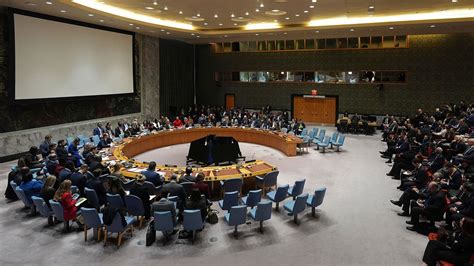
Another possibility is diplomatic escalation. China could challenge U.S. actions at the UN or mobilize regional allies to condemn the militarization of diplomacy. However, without a military presence or popular support in Venezuela, Beijing’s leverage is sharply diminished.
Conclusion: The Price of Overreach
China’s venture into Venezuela was bold, calculated, and for a time, remarkably successful. But in tying its fortunes to a regime as unstable as Maduro’s, Beijing ignored the inherent risks of authoritarian patronage. With Maduro ousted and the U.S. firmly entrenched, China’s long-term presence in Venezuela is unraveling.
From oil wells to telecom towers, from mines to highways, the infrastructure of China’s influence is being dismantled, diluted, or outright replaced. The geopolitical chessboard has shifted, and for the moment, Beijing appears to be the biggest loser in Washington’s renewed interventionism.
In the aftermath, China faces a sobering reality: even $100 billion is not enough to secure power in a hemisphere guarded by the eagle.