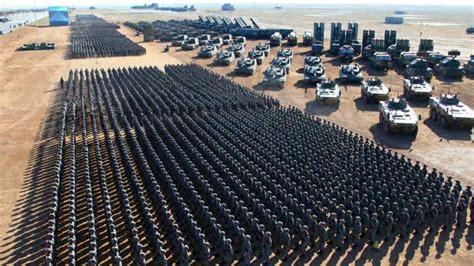
The United States, despite commanding a $900 billion defense budget and boasting unmatched military prowess, finds itself perilously dependent on a decaying French samarium stockpile to keep its cutting-edge arsenal—from F-35 fighter jets to Tomahawk cruise missiles—operational. This astonishing vulnerability, rooted in decades of strategic oversight and outsourcing, has put the Pentagon’s high-tech warfare machinery at the mercy of a long-abandoned European factory.
The Silent Crisis: U.S. Defense Supply Chains in Jeopardy
For decades, America’s overwhelming dominance in global arms exports and the prestige of companies like Lockheed Martin, Raytheon, and Northrop Grumman masked a growing rot beneath the surface—dependency on foreign-sourced rare earths, especially samarium-cobalt (SmCo) magnets. These heavy rare earth magnets are essential for high-temperature, high-performance applications in advanced weapons and aerospace systems.
The modern battlefield, dominated by precision-guided missiles, stealth aircraft, and unmanned aerial systems, demands magnetic materials that can endure extreme environments. Samarium cobalt magnets, with their unparalleled resistance to demagnetization and thermal degradation, are irreplaceable. But almost overnight, China’s export restrictions on samarium brought the U.S. war machine to the brink.
How the U.S. Lost Control of Samarium Supply
Ironically, the U.S. was the birthplace of samarium cobalt magnet technology. In the 1960s, American scientists like Karl Strnat and Alden Ray developed SmCo magnets for defense use. Yet, by the late 1980s, the economic winds had shifted.
China’s vast rare earth reserves, state subsidies, and nonexistent environmental regulations enabled it to flood the global market, collapsing prices and driving Western competitors out of business. Over time, Beijing gained near-monopoly control, producing 60% of the world’s rare earths and 90% of rare earth magnets—including almost all samarium cobalt magnets.
This strategic blunder left America dangerously exposed. In April 2025, China tightened export rules, requiring licenses for samarium and six other critical minerals. The move came in retaliation to U.S. tariffs and exposed just how fragile the supply chain was. The U.S. Geological Survey responded by placing samarium at the top of its 2025 Critical Mineral List, calling it the No. 1 most vulnerable mineral to national security.
The French Factory That Saved the Day
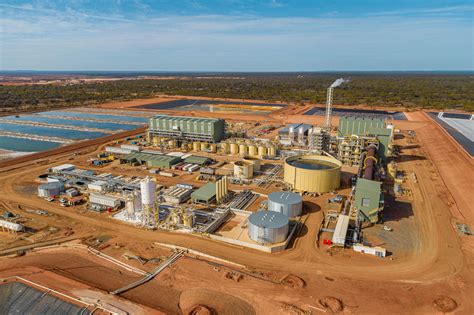
In an almost surreal twist, the lifeline for the U.S. defense sector came from a bankrupt French facility, mothballed for over two decades. This factory, previously owned by Belgian chemical conglomerate Solvay, had ceased rare-earth separation in the early 2000s due to economic unviability. Yet, buried within its infrastructure was an invaluable stash: approximately 200 tons of semi-processed samarium.
That stockpile, forgotten until recently, has become the last line of defense for the Pentagon’s rare earth needs. It was discovered and secured thanks to a desperate supply chain maneuver orchestrated by Arnold Magnetic Technologies, a New York-based manufacturer with international operations.

From French Soil to American Jets: The Supply Chain Resurrection
With Chinese exports restricted and inventories dwindling, Arnold reached out to Less Common Metals (LCM), one of the last rare-earth processors in the Western world. In turn, LCM contacted Solvay, which—though inactive—still had the know-how, equipment, and stock.
Solvay’s stockpile was transported to the UK, where LCM processed the samarium into usable metal. This material was then transformed into alloys and shipped to U.S. facilities for magnet production. These finished magnets would finally make their way into critical defense systems—from missile control surfaces to stealth jet engines.
This scramble to resurrect a broken supply chain is more than a logistical feat. It underscores the geostrategic vulnerability the U.S. faces and the lengths required to plug the gaps.
Lifeline for Now—But for How Long?
The samarium stash in France is finite—just enough to supply U.S. defense contractors for a year, according to Jack Lifton, co-chair of the Critical Minerals Institute. What happens beyond that window remains uncertain.
There are tentative hopes:
- China may ease restrictions under economic pressure or diplomatic negotiation.
- New samarium deposits might be developed, though this requires massive investment and time.
- Western firms may scale up domestic or allied-country processing.
But none of these are short-term fixes. For now, the U.S. must tread water with one hand on a crumbling supply line, and the other drafting emergency strategies.
Strategic Partnerships and Vertical Integration
In a significant strategic move, USA Rare Earth, an American mining company, acquired Less Common Metals on November 18, 2025. This acquisition wasn’t merely business expansion—it was a vertical integration maneuver designed to secure Western-origin magnet production.
Such partnerships represent a fundamental shift in U.S. defense policy: moving away from just-in-time globalized supply chains to secure, vertically aligned, domestic or allied networks. Solvay, LCM, Arnold Magnetic Technologies, and USA Rare Earth now form a Western chain of custody for samarium cobalt production.
Lessons from the Brink
The current crisis should serve as a profound wake-up call. The overreliance on a geopolitical rival for essential military inputs was not just a market failure—it was a strategic oversight of historic proportions.
China’s dominance is not accidental. It is the product of decades of strategic investment, regulatory manipulation, and calculated market suppression. Beijing’s ability to weaponize trade dependencies should have been anticipated.
The U.S. must now:
- Invest aggressively in domestic rare earth mining and processing, even if it’s not immediately profitable.
- Stockpile critical minerals, just as it does with petroleum and munitions.
- Forge resilient international partnerships with trusted allies who can share the burden.
- Enforce environmental regulations without crippling industrial competitiveness.
A New Era of Strategic Mineral Security
While the abandoned French factory provided an eleventh-hour reprieve, it is no substitute for a sustainable supply chain. The U.S. is now acutely aware that future military dominance depends not just on innovation, but on raw material sovereignty.
This new era will require unprecedented cooperation between governments, miners, processors, and defense contractors. It is an industrial renaissance with geopolitical stakes—where geology, diplomacy, and engineering converge.
As of today, the engines of the F-35 continue to roar and the guidance systems of Tomahawks remain online—but only because of a forgotten warehouse in Europe. The question now is whether America has the will, vision, and discipline to prevent history from repeating itself.