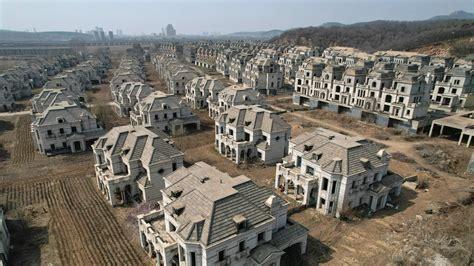
Amid China’s rapidly changing cities, a new subculture is emerging—one that delves deeply into the forgotten corners of urban life. Equipped only with cameras and curiosity, these urban explorers venture into long-neglected, crumbling edifices that were once monuments to China’s booming real estate industry. Today, these buildings tell a different story, one of stalled progress and a deepening property crisis. Xu Pengcheng, a 29-year-old tech worker from Qingdao, stands out among this community. In recent years, Xu and his crew have garnered a substantial following on social media, sharing haunting images of empty schools, abandoned cinemas, and half-finished high-rises. What began as a personal hobby has evolved into a movement, attracting many who seek to uncover these eerie remnants of China’s urban development.
“Images are very fresh, very fascinating for people when they see them,” Xu remarked in an interview. “It’s interesting that they have so many abandoned buildings—and that they can photograph so beautifully.” These photographs serve not merely as art; they act as windows into China’s constantly evolving urban landscape. Xu’s fascination with these neglected structures mirrors a broader cultural and social shift occurring in China. The nation has a rich history of rapid urbanization, where entire cities seemed to rise overnight. However, for several years now, the property industry has faced significant challenges, leaving behind countless unfinished or abandoned projects. These ‘dead buildings’ symbolize an industry that appeared invincible, offering urban explorers a unique way to connect with a fleeting aspect of a nation’s narrative.
The Rise of Urban Exploration
Urban exploration, often referred to as ‘urbex,’ has been a popular pastime in Western nations for decades. Yet, it is only recently that it has started gaining traction in China. As the country grapples with a profound property crisis, there is a growing curiosity about these overlooked spaces. Individuals are increasingly driven to document an urban environment in flux, discovering what lies beneath the surface of their cities. The downturn in China’s real estate market has left cities littered with half-completed projects that were once symbols of economic prosperity. Now, these ghost cities serve as stark reminders of the once-desired concept of rapid growth. From vacant apartment complexes in Chengdu to deserted malls in Shanghai, these sites become the playgrounds of urban explorers, who meticulously capture the essence of the buildings before they vanish, either through decay or demolition.
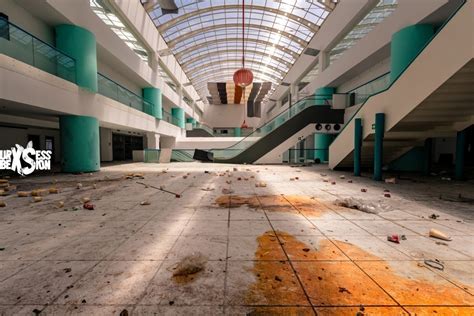
Among the most notable locations for urban explorers is the Pentagon Mall in Shanghai’s Pudong district. Construction of the mall commenced in 2009 but was halted before completion due to a lack of investment. Today, its uncured floors, shattered tiles, and faded maps create a surreal environment, making it a prime destination for those eager to document China’s abandoned urban endeavors. The mall is not merely in disrepair; its walls are adorned with messages from past explorers, serving as a form of urban graffiti that adds a layer of history to an otherwise desolate space. Sean, another Shanghai-based urban explorer, believes that the ability of these sites to narrate the tale of China’s swift modernization makes them particularly captivating. “In impossible conditions, such as in Shanghai, people always find a way to do something with these buildings, even if they’re not fully built or fit for use,” he noted. For some, the thrill of discovery drives their passion, while for others, it is a means to tap into a narrative that remains unwritten.
Urban Exploration: Risky Business and the Legal Grey Area
While urban exploration is an exciting trend, it is fraught with risks. Many of the buildings that explorers visit are in various states of disrepair, presenting physical hazards and hidden dangers, including exposed nails and faulty wiring. Despite the thrill of discovery, there are tangible dangers associated with these explorations. Furthermore, the Chinese government has issued warnings regarding the safety of these abandoned sites, noting incidents where trespassers have sustained injuries while illegally entering private properties. Beyond the physical risks, urban exploration exists within a complex legal landscape in China. Some adventurers breach security to access buildings that are off-limits to the public. Although trespassing can result in fines, many explorers persist, guided by the ethos of “Take nothing, leave nothing.” Authorities have become increasingly vigilant, particularly in major cities like Beijing and Shanghai, where abandoned properties attract large crowds of explorers.
Despite these challenges, many in the exploration community, including Xu and his team, assert the value of their work. “We’re taking pictures not for fun,” Xu stated. “We’re capturing history and showing people what’s happening in these places.” By documenting these structures before they are lost to further decay or destruction, they believe they play a crucial role in preserving a chapter of China’s urban narrative that would otherwise fade away.
A Community of Urban Explorers
The urban exploration scene in China is characterized by a sense of community and shared purpose. Explorers often leave notes and messages for one another, ensuring newcomers can locate the best spots and learn from previous experiences. This camaraderie allows like-minded individuals to come together, share their passion for history and reconstruction, and forge connections that extend beyond the dilapidated walls of forgotten buildings. However, the trend of urban exploration is not without its drawbacks. Social media platforms, particularly Instagram, have begun issuing cautions regarding the dangers of venturing into these abandoned areas. Most of these sites are privately owned, prompting users to respect local laws concerning trespassing and photography, which may lead to fines or other penalties.
Undeterred by such warnings, the allure of exploring and chronicling abandoned places in China remains potent. The ongoing property crisis gives these explorers a unique perspective on the stories told by these spaces, intertwined with tales of decline and resilience. The enthusiasm for urban exploration stems not only from the thrill of uncovering hidden treasures but also from a collective understanding of what these sites represent—a documentation of a nation in transition.
Why We Still Love Urban Exploration
As China continues to navigate its property meltdown, the appeal of these abandoned spaces lies not just in their decay but also in the narratives they convey about the country’s rapid ascent, economic tribulations, and uncertain future. For individuals like Xu Pengcheng and his companions, these deserted buildings serve as more than mere escapes from the urban chaos; they represent an archive of history waiting to be unearthed, containing memories of what once existed. As China grapples with the complexities of its development, the urban explorer community offers a distinctive lens through which to view how the nation negotiates space, growth, and loss amid unprecedented urbanization.
The striking images captured by these explorers reflect the disappearing remnants of a world that has dramatically transformed, allowing future generations to appreciate the era when these buildings stood as testaments to ambition and progress. Urban exploration, with all its inherent risks and exhilarating discoveries, serves as a silent witness to China’s rapid modernization, preserving stories that might otherwise be lost to time.