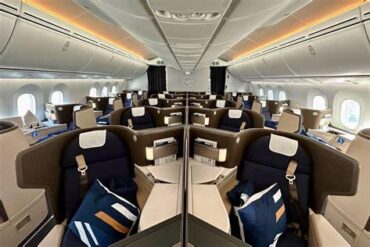
Comedian Jim Breuer has ignited a national debate over airline priorities after claiming American Airlines removed him from his paid first class seat to accommodate a commuting pilot. The incident, which reportedly occurred on a flight from Honolulu to Phoenix, quickly escalated from a personal frustration into a viral controversy, raising uncomfortable questions about passenger rights, crew logistics, and the fragile balance between operational necessity and premium customer expectations.
Breuer, known for his outspoken personality and decades-long comedy career, did not keep the experience private. In a candid social media video, he described being informed shortly before departure that his first class seat would be reassigned to a pilot who needed to travel for work purposes. Breuer said he and his family had purchased first class tickets specifically for the long-haul journey from Hawaii to the mainland, expecting the comfort and space typically associated with premium cabins. Instead, he found himself reassigned to row 18 in the main cabin.
The comedian did not mince words. He labeled the move “theft,” arguing that the airline effectively took something he had already paid for without offering an equivalent replacement. His frustration resonated with thousands of viewers who flooded comment sections with support, criticism, and broader complaints about airline practices.
How a Paid First Class Seat Was Reassigned
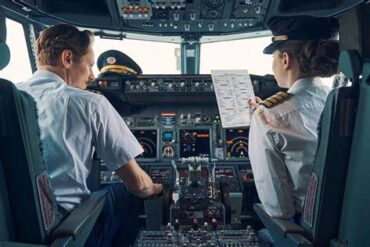
According to Breuer’s account, the downgrade happened shortly before takeoff. There was no alternative first class seat available, and the explanation given centered on the airline’s need to transport a pilot to another destination. In airline terminology, this practice is known as deadheading—when crew members travel as passengers to position themselves for future flights.
Deadheading is not rare. In fact, it is a critical component of airline operations. Pilots and flight attendants frequently need to be repositioned across a network to ensure subsequent flights operate on schedule. Without proper positioning, an entire chain of departures can unravel. One misplaced pilot can trigger cascading delays affecting hundreds—or even thousands—of travelers.
However, what transformed this routine operational decision into controversy was the displacement of a full-fare premium passenger. While airlines often seat commuting crew in available premium cabins, removing a paying first class traveler is far more sensitive. Premium fares can cost several multiples of economy tickets, and customers purchasing them expect not just comfort, but certainty.
Breuer reportedly received a $500 travel voucher as compensation. For a Hawaii–mainland first class fare, which can run well into four figures depending on demand and timing, many observers questioned whether that amount adequately addressed the downgrade.
The Operational Logic Behind Crew Repositioning
To understand the airline’s likely rationale, it is essential to examine the mechanics of crew scheduling. Major carriers like American Airlines operate vast route networks with tightly interconnected schedules. Pilots are assigned rotations that may begin in one city and end in another, sometimes across multiple days. When irregularities occur—weather disruptions, sick calls, maintenance issues—crew positioning becomes a high-stakes logistical puzzle.
Union contracts often govern how pilots must be accommodated during deadheading. On longer routes, particularly those spanning oceans or significant distances such as Hawaii to the continental United States, agreements may require that pilots be seated in premium cabins to ensure proper rest before operating subsequent flights. These provisions are designed to protect safety standards. A fatigued pilot is not a risk airlines are willing to take.
From a purely operational perspective, ensuring that a pilot reaches their assigned aircraft may prevent widespread network disruption. A single cancellation can create a domino effect of missed connections, displaced crews, and significant financial loss. In that context, prioritizing a pilot’s transport may be viewed internally as damage control.
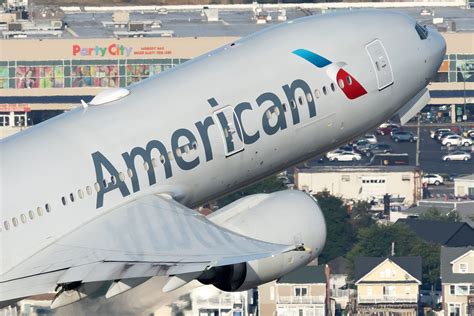
Yet operational logic does not automatically translate into customer acceptance. For the passenger removed from a premium seat, the broader network calculus offers little comfort.
Premium Cabin Expectations and the Value of Certainty
When travelers purchase first class tickets, they are not merely buying extra legroom. They are purchasing predictability, priority, and a premium experience that extends beyond the seat itself. Lounge access, priority boarding, enhanced service, and a quieter environment are all part of the perceived value equation.
An involuntary downgrade strikes at the heart of that expectation. Even if compensation is offered, the emotional impact can be significant. Passengers may interpret the move as a breach of contract—especially when the downgrade appears to benefit an airline employee rather than resolve an emergency.
The U.S. Department of Transportation has clear rules governing denied boarding due to oversales, but cabin downgrades fall into a more nuanced area. Airlines typically refund the fare difference or provide travel credits as a goodwill gesture. However, there is no standardized formula guaranteeing compensation proportional to perceived inconvenience.
In Breuer’s case, the public framing of the situation as “theft” reflects a broader frustration many travelers feel: that airline contracts of carriage grant carriers substantial discretion while passengers bear most of the uncertainty.
Social Media Amplification and Reputational Risk
Incidents that might once have been resolved quietly at a gate counter now unfold in front of millions. Breuer’s celebrity status amplified the story instantly. Aviation blogs picked up the narrative, and mainstream outlets followed. The episode became not merely a customer service dispute but a reputational challenge.
Airlines today operate in an era where viral moments can shape brand perception as much as operational performance. A single reassigned seat can trigger national headlines if the passenger has a platform. The stakes are no longer confined to one cabin; they extend to investor confidence, customer loyalty, and competitive positioning.
For American Airlines, the episode arrives amid broader industry pressures. Post-pandemic recovery has brought surging demand alongside staffing constraints. Pilot supply remains tight, and schedule resilience is a top priority. In that environment, crew positioning becomes even more critical—and potentially more contentious.
Operational Necessity or Customer Service Failure?
The central tension in this controversy lies between two legitimate priorities: maintaining operational integrity and honoring premium customer commitments. Airlines cannot function without effective crew logistics. At the same time, premium customers represent a disproportionately large share of revenue.
Could alternative solutions have been explored? In theory, airlines might offer volunteers compensation to move cabins, rebook the crew on another flight, or adjust scheduling. In practice, last-minute constraints often limit options. Aircraft loads, crew duty time regulations, and connection timing can narrow flexibility to near zero.
The perception of fairness frequently hinges on communication. Clear explanations, transparent compensation, and empathetic handling can significantly alter how passengers interpret disruptive decisions. When communication feels abrupt or transactional, dissatisfaction intensifies.
Breuer’s public reaction underscores how deeply travelers associate premium purchases with guaranteed treatment. The idea that a paid first class seat can be reassigned—even for operational necessity—challenges assumptions about hierarchy within the cabin.
A Broader Industry Reckoning
This episode reflects a larger conversation in commercial aviation: who ultimately holds priority when operational needs collide with customer promises? Contracts may favor airlines in specific scenarios, but public sentiment often favors the paying passenger.
Airlines face a delicate calculus. Prioritize crew and risk alienating high-value customers, or prioritize customers and risk cascading operational failures. There is no frictionless solution. The industry’s future may depend less on eliminating such conflicts—which may be impossible—and more on managing them with transparency, proportional compensation, and proactive communication.
A single seat reassignment on a Hawaii flight has evolved into a case study in modern airline economics. It reveals how tightly interwoven logistics, labor agreements, passenger rights, and public perception truly are. In an era where every disruption can become a headline, the margin for error is narrower than ever—and the cost of a misplaced seat extends far beyond the cabin door.