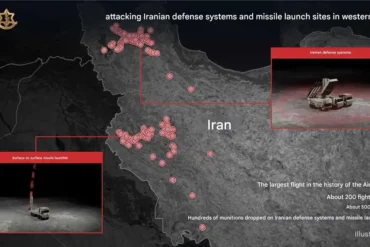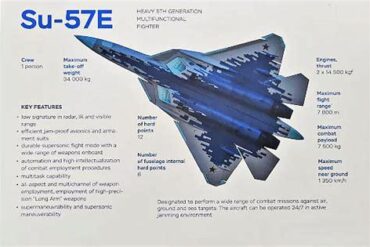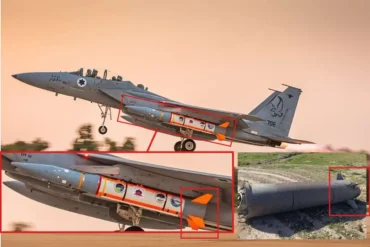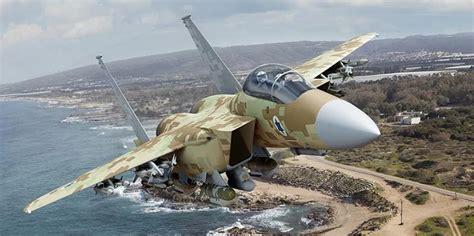
On June 13, Israel executed a bold and unprecedented air assault against Iran, deploying an estimated 200 fighter aircraft in a coordinated strike that crippled Iranian uranium enrichment facilities, destroyed air defense systems, and eliminated key military leadership. The operation also included a covert wave of drones sent ahead of the fighter sweep to neutralize surface-to-air missiles and radar installations, clearing a path for the jets.
The attack drew global attention not only for its precision and scope but also for raising a vital question: Could the United States Air Force (USAF) replicate such a strike, and at what cost? Experts agree it is possible, but the challenges are substantial and the risks, nontrivial.
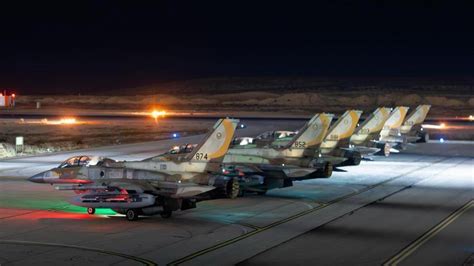
USAF Capacity vs. Israeli Execution: A Matter of Readiness, Not Resources
While the U.S. Air Force dwarfs Israel’s military aviation capabilities in size, firepower, and budget, executing a massive airstrike of similar magnitude would not be as straightforward as it seems on paper. According to John Venable, a senior fellow at the Mitchell Institute and a retired USAF colonel, such an operation is technically feasible but would require “global sourcing and a willingness to accept a significant amount of risk.”
Venable highlights that of the USAF’s 52 operational fighter squadrons, only 40 could be mobilized in a high-intensity conflict. The remaining 12 would be withheld for homeland defense and strategic deterrence against China or Russia. From those 40 squadrons, each expected to deploy about 12 aircraft, the total would reach around 480 deployable fighters.
However, readiness statistics complicate this estimate.
Fighter Readiness Rates Paint a Stark Picture
As of fiscal year 2024, mission capable (MC) rates for USAF fighters average around 60 percent, meaning that of the 480 deployable jets, only 288 might be ready for the initial wave. And that’s assuming they’ve already been deployed into theater. For a follow-up strike, factoring in attrition, maintenance, and sortie generation fatigue, the number could drop to just over 200 fighters—mirroring Israel’s force level but with far more effort and strain.
Some aircraft fare worse:
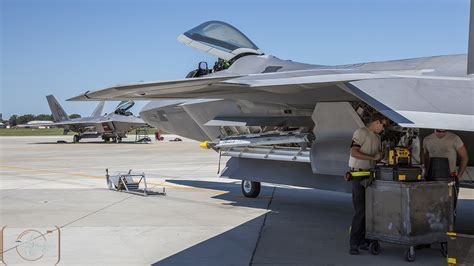
- F-22 Raptors, the USAF’s elite stealth fighters, have an MC rate of only 40 percent.
- The aging F-15C, nearing retirement, drops to 33 percent readiness.
These numbers are sobering and reflect years of deferred modernization, spare part shortages, and operational overreach.
Pilot Training Deficits: Echoes of Cold War-Era Struggles
Perhaps more alarming than the hardware is the human element. Today’s fighter pilots average 10–12 flight hours per month, a sharp decline from the 20+ hours logged during the 1980s and 1990s. This reduction leaves current squadrons ill-prepared for high-intensity operations, especially in contested airspace.
“There isn’t a single squadron in the Air Force that is mission ready,” Venable asserted. Lack of adequate training repetitions undermines confidence and effectiveness, and could significantly elevate accidental losses during complex operations such as in-flight refueling or recovery landings under combat stress.
Moreover, ground crew readiness is equally limited. Training on integrated combat turns—the rapid re-arming and refueling of aircraft between sorties—is sparse. Despite past capabilities in 1987 that allowed U.S. crews to refuel and rearm jets in 45 minutes, such standards are no longer universally maintained.
Contrast with Israel’s Highly Disciplined Force Readiness
Israel’s achievement is even more astonishing when viewed through the lens of proportionality. With a much smaller air force, Israel maintains peak readiness, routinely drills for high-tempo conflict, and optimizes aircraft for rapid, multi-sortie operations.
In essence, Israel delivers more with less, primarily due to intensive maintenance cycles, seasoned crews, and a relentless focus on operational readiness. For instance, Israeli jets likely flew multiple sorties in one day, a feat the USAF struggles to replicate without exhaustive planning and ideal conditions.
Historical Benchmark: Operation Desert Storm and the Readiness Surge
There is precedent for surging readiness. Retired Lt. Gen. David Deptula, who oversaw targeting in Operation Desert Storm, recalled that the deployed F-15C/Ds achieved a staggering 94 percent mission capable rate, significantly above peacetime norms. Similar results have been recently observed with F-35 units, especially when spare parts are prioritized for overseas operations.
This suggests that, given enough political will and logistical coordination, USAF can temporarily elevate its combat capabilities. However, such surges are unsustainable long-term and require months of preparation—something not always afforded in crisis scenarios.
Munitions Inventory: A Rare Advantage
Unlike personnel or airframe readiness, the U.S. maintains solid inventories of key precision-guided munitions, including:
- Joint Direct Attack Munitions (JDAMs)
- Small Diameter Bombs (SDBs)
- GBU-57 Massive Ordnance Penetrators
- GBU-72 Advanced Penetrator Weapon Systems
These specialized bombs give the U.S. a unique edge in targeting deeply-buried nuclear sites—capabilities Israel likely lacks. According to Leon Panetta, former U.S. Secretary of Defense, Israel may not possess the munitions to strike Iran’s most hardened facilities, but the U.S. unequivocally does.
The Stealth Factor: B-2s and Strategic Flexibility
Should a similar strike be ordered, the U.S. could deploy B-2 Spirit stealth bombers, capable of long-range penetration missions while carrying nuclear or bunker-busting ordnance. These aircraft offer unmatched flexibility and survivability, particularly in anti-access/area-denial (A2/AD) environments like Iran’s western desert and mountain redoubts.
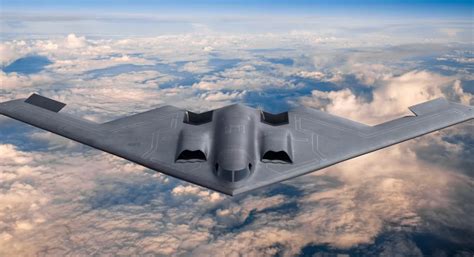
In conjunction with electronic warfare assets, aerial refueling tankers, and real-time ISR (Intelligence, Surveillance, and Reconnaissance) feeds, the USAF could design a more complex, multi-vector strike than Israel, albeit at the cost of higher logistical strain.
Global Commitments and Strategic Risk Management
There’s a broader strategic calculus as well. Venable warns that pivoting U.S. focus to the Middle East may create opportunity windows for other global adversaries. Russia’s ambitions in Ukraine, China’s threats to Taiwan, and North Korea’s provocations could escalate if American attention is fully absorbed by an Iran campaign.
This explains why the USAF reserves six squadrons for strategic contingencies even during crises. It’s a necessary insurance policy against simultaneous flashpoints—something Israel, with its regional focus, is less encumbered by.
Political Calculations and Operational Feasibility
While the White House denied involvement in Israel’s June 13 strike, it remains plausible that U.S. assets could be drawn into subsequent escalations. Air defense roles, counter-drone operations, or strikes on proxy forces in Iraq, Syria, or Yemen could fall within USAF’s scope, especially if Iranian retaliation intensifies.
President Biden’s options may include using stealth aircraft, cyber capabilities, or limited airstrikes in support of Israeli defense while avoiding direct escalation into a broader regional war.
Conclusion: A Calculated Capability, Shadowed by Readiness Concerns
Yes, the U.S. Air Force can match Israel’s 200-fighter operation, but the effort would come with considerable risks tied to readiness, training, and geopolitical distractions. While the arsenal and technological tools exist—including munitions for deeply buried targets—the current state of maintenance, pilot proficiency, and global posture would make such an operation a high-stakes endeavor, not a guaranteed success.
For now, Israel’s strike stands as a reminder that quality, preparation, and training often outmatch quantity, and that even the most powerful air force in the world must constantly re-evaluate its readiness to act decisively in a volatile world.