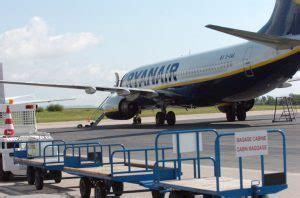
A routine turnaround at Austria’s Linz Airport turned into one of the aviation industry’s strangest enforcement actions when court bailiffs boarded a Ryanair aircraft and temporarily seized it over an unpaid passenger compensation claim. The unusual incident unfolded just minutes before departure, delaying a scheduled flight to London and drawing attention to the powerful legal mechanisms available under European passenger rights law.
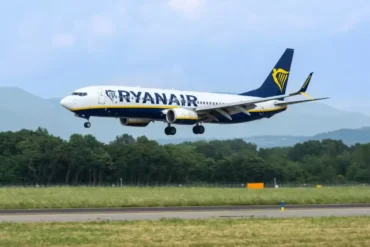
The aircraft, a Boeing 737-800 preparing to operate flight FR1694 from Linz to London Stansted, had already completed boarding procedures when officials arrived. Passengers expecting a quick departure instead witnessed an unexpected legal intervention as bailiffs stepped onto the aircraft to enforce a court ruling. The action stemmed from a relatively small but long-standing dispute—an unpaid €890 compensation claim related to a delayed flight from 2024.
For an airline that carries more than 180 million passengers annually and operates one of the largest fleets of narrow-body aircraft in Europe, the idea of a jetliner being seized over a debt smaller than the price of a transatlantic ticket seemed surreal. Yet European law allows precisely this kind of enforcement when a company refuses to comply with a court order.
Passenger Compensation Dispute That Sparked the Seizure
The dispute originated in 2024 when a passenger traveled on a flight from Linz to Palma de Mallorca that arrived more than 13 hours late. Under EU Regulation 261/2004—commonly known as EC261—passengers are entitled to compensation when flights are delayed by more than three hours and the disruption falls within the airline’s operational responsibility.
The passenger pursued the claim through legal channels after the airline refused to pay the compensation voluntarily. Eventually, an Austrian court ruled in the passenger’s favor and ordered the airline to cover the compensation, legal costs, and interest. The total amount came to €890, a relatively modest figure in aviation litigation but significant enough to trigger enforcement when it remained unpaid.
When the airline failed to comply with the ruling, the passenger’s legal representative requested official enforcement through Austrian authorities. The district court in Traun authorized bailiffs to execute the claim, giving them authority to seize company assets if necessary.
That authorization led directly to the extraordinary scene at Linz Airport when officers boarded the aircraft preparing for departure.
Bailiffs Board the Aircraft During Turnaround
The enforcement operation occurred on March 9 as the Boeing 737-800 registered EI-EXE was preparing for its afternoon departure to London. Scheduled pushback time was 3:55 p.m., but before the aircraft could leave the gate, airport officials escorted the bailiffs onto the jet.
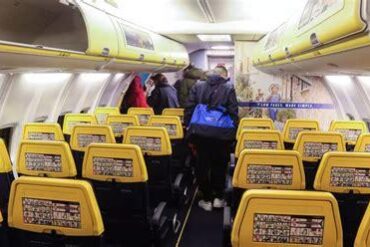
Inside the cabin, the officials carried out their legal duties by placing a “cuckoo sticker,” formally known in Austria as a Pfändungsmarke, onto the aircraft interior. This label signifies that the property has been legally seized under court authority.
In practical terms, the sticker marked the plane as collateral for the unpaid debt. The bailiffs also requested immediate payment from the crew in cash. However, the airline operates a fully cashless system, meaning onboard personnel had no way to pay the demanded amount directly.
As a result, the aircraft remained grounded while the legal process unfolded. Passengers remained onboard while officials completed their documentation and enforcement procedures.
The unexpected intervention delayed the flight significantly. According to flight tracking data, the aircraft eventually pushed back from Linz one hour and nineteen minutes late, departing at 5:14 p.m. instead of the scheduled 3:55 p.m.
The Aircraft at the Center of the Incident
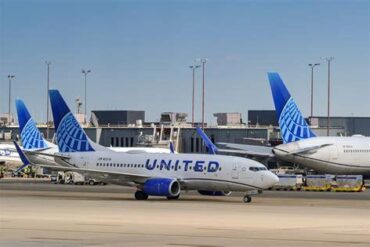
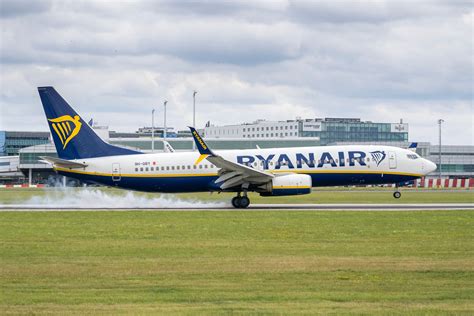
The jet involved in the incident was a 13-year-old Boeing 737-800, one of the most common aircraft types in the airline’s fleet. With 189 economy seats and a first flight in October 2012, the aircraft represents the backbone of many European low-cost carrier operations.
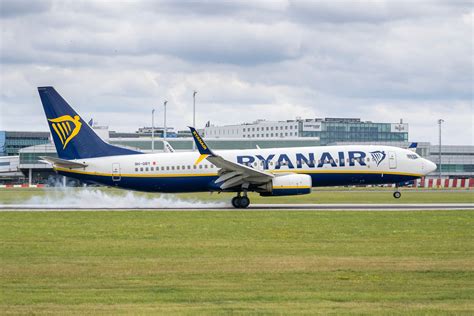
Despite the seizure sticker placed inside the cabin, the aircraft was still legally permitted to operate flights. The Pfändungsmarke indicates a claim on the asset rather than physically immobilizing it. In other words, the plane could continue flying, but the court retained the right to pursue further enforcement if the debt remained unpaid.
Once the legal process was completed at the airport, the flight continued normally. The journey to London lasted roughly 90 minutes, and the aircraft arrived at London Stansted 51 minutes behind schedule.
While passengers eventually reached their destination, the unusual delay quickly spread across aviation media and social networks.
Why the Plane Was Allowed to Depart
At first glance, the idea of a seized aircraft continuing to operate appears contradictory. However, Austrian enforcement law focuses on securing an asset rather than immediately removing it from service.
The Pfändungsmarke sticker effectively marks the property as legally seized and prevents the owner from selling or transferring it without resolving the claim. If the debt remains unpaid, courts can escalate enforcement measures, potentially leading to deeper asset recovery actions.
In this case, the sticker served as a warning that further legal steps could follow if the airline continued to ignore the court order.
Debt Finally Paid and Sticker Removed
Following the highly visible enforcement action, the airline settled the outstanding claim later in the week. The compensation and legal costs were paid, and the seizure sticker was subsequently removed from the aircraft.
The episode stands as a striking demonstration of how seriously European courts treat passenger rights enforcement. Even one of the continent’s largest airlines can find its aircraft temporarily seized if it fails to comply with legally binding rulings.
For passengers, the incident highlights the real power behind EU passenger protection laws. For airlines, it serves as a cautionary tale: sometimes ignoring a small compensation claim can lead to a very large public spectacle—especially when a court bailiff walks onto the airplane.