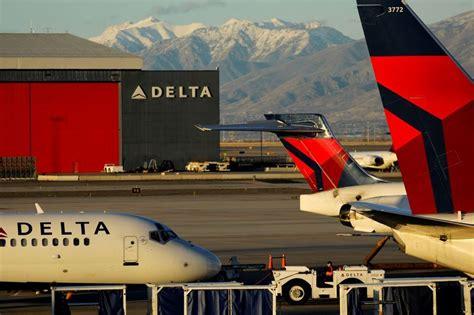
The commercial aviation landscape in mid-2025 is undergoing an unexpected correction. As the industry anticipated a surge in post-pandemic travel demand, the reality has turned out to be far more sobering. Delta Air Lines, one of the most recognized and reputable carriers in the United States, has made a strategic yet disappointing announcement that echoes broader trends in the airline sector: it will cut seven key domestic and international routes in response to sluggish demand.
This news arrives at a pivotal moment when airfare prices are decreasing but flight options are becoming increasingly limited. According to the Bureau of Labor Statistics, airfare costs dropped 5.3% in March compared to the same period last year. While this is a welcomed relief for consumers, the accompanying reduction in flight availability paints a less rosy picture for the industry’s long-term profitability and operational balance.
Delta’s Route Cuts: A Reflection of Weak Domestic Travel Trends
Delta’s decision to scale back operations is not occurring in isolation. It joins a growing list of airlines, including American Airlines, Southwest Airlines, and United Airlines, that are trimming capacity growth plans for the remainder of 2025. The move is a calculated response to underwhelming domestic travel numbers, despite early optimism at the start of the year.

The routes being discontinued span several strategic hubs and serve as a clear indicator of where demand is faltering. The following routes are scheduled for termination:
- Atlanta to Fresno, California
- Detroit to San Jose, California
- Minneapolis-St. Paul to Albuquerque, New Mexico
- Minneapolis-St. Paul to Buffalo, New York
- Minneapolis-St. Paul to Fairbanks, Alaska
- Minneapolis-St. Paul to Great Falls, Montana
- Salt Lake City to Toronto, Ontario
Of particular note is the Minneapolis-St. Paul hub, which bears the brunt of the changes, losing four of the seven affected routes. This pattern suggests a recalibration of Delta’s network, shifting focus away from lower-traffic regional destinations that have not rebounded as strongly as expected.
The Canada Conundrum: Cross-Border Travel Still Lags
The elimination of the Salt Lake City to Toronto route reflects a broader issue plaguing international air travel: muted demand between the U.S. and Canada. Despite eased border restrictions and pent-up travel interest, the resurgence of international movement has not met projections. Factors such as differing travel protocols, economic concerns, and shifting leisure priorities may be contributing to this softness.
The implications of this are significant. Canadian and U.S. carriers alike have been counting on transborder traffic to stabilize their balance sheets and support route expansions. The route cut by Delta signals a cautious retreat, at least temporarily, from overextended international offerings in the face of subdued bilateral demand.
Optimizing Network Strategy: Where Delta Is Investing Instead
While Delta’s route eliminations represent a setback, the airline is not adopting a wholesale reductionist approach. Instead, it is strategically redeploying resources to regions with stronger travel demand signals. As part of this repositioning, Delta has announced five new routes to launch later this year.
Among the most notable additions are:
- Salt Lake City to Little Rock, Arkansas (Daily service beginning September 8)
- Austin, Texas to Palm Springs, California (Seasonal Saturday service starting November 8)

These new connections aim to fill emerging demand corridors, particularly in leisure-focused markets. Little Rock, while a smaller destination, may serve as a valuable connector to Delta’s western operations, while Palm Springs remains a popular seasonal escape, especially in winter.
Focus on Orlando: Doubling Down on High-Yield Destinations
Delta is also intensifying its focus on Orlando, Florida, a perennial favorite among American travelers due to the presence of Walt Disney World Resorts and a suite of family-oriented entertainment options. According to reports, the airline has added seven new point-to-point routes to Orlando, signaling its confidence in the city’s ability to draw consistent and profitable passenger volumes.
Orlando’s resilience is a reflection of broader leisure trends. While business travel and some international markets struggle to regain momentum, family and leisure travel within the U.S. is proving durable, even amid broader economic uncertainty. Delta’s expansion here underscores a tactical pivot toward more predictable, high-traffic leisure markets that can offer better yield and load factors.
Industry-Wide Implications and Competitive Pressures
Delta’s announcement has ripple effects across the industry. By trimming routes and redirecting capacity, it sets the stage for a more competitive landscape on surviving routes and fewer options for consumers in secondary markets. It also prompts other carriers to reevaluate their own networks, either to capitalize on Delta’s exit or to avoid similar pitfalls.
This retrenchment also underscores a critical tension for all major airlines in 2025: balancing cost management with route profitability. As fuel costs remain volatile and labor expenses rise, airlines must be more disciplined in how they allocate aircraft and crew resources. Each route is now subjected to rigorous scrutiny, and only the most profitable or strategically important services survive the cut.
What This Means for Travelers: Lower Prices, Fewer Choices
The airline industry’s recalibration presents a mixed bag for consumers. On the one hand, airfare reductions provide welcome relief in an inflation-sensitive economy. For those with flexible schedules and destinations, the drop in prices may enable more frequent travel.
However, the shrinking route map means fewer direct flights, increased layovers, and potentially reduced service quality as airlines consolidate flights to maintain profitability. Regions losing routes—such as Buffalo, Great Falls, and Fairbanks—may find themselves further disconnected from national air networks.

For frequent flyers and business travelers, these adjustments may require retooling travel plans and loyalty strategies. Those who built routines around now-cancelled routes will need to adapt to new hubs or consider alternate carriers.
Conclusion: A Cautious Retrenchment, Not a Retreat
Delta’s disappointing announcement is, in essence, a strategic recalibration rather than a sign of weakness. The airline remains committed to long-term growth, but its current actions reflect a need to be agile in the face of evolving travel behaviors and economic uncertainties.
By trimming underperforming routes, investing in emerging ones, and doubling down on established markets like Orlando, Delta is signaling a pragmatic response to the market’s shifting tides. While travelers may bemoan fewer options in the short term, this measured approach may ultimately ensure the airline’s financial stability and operational reliability in a rapidly changing aviation environment.
The coming months will reveal whether this recalibration pays off—or whether Delta, like its competitors, will need to further revise its playbook for 2026 and beyond.