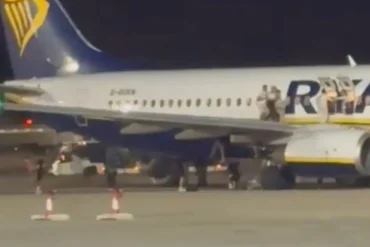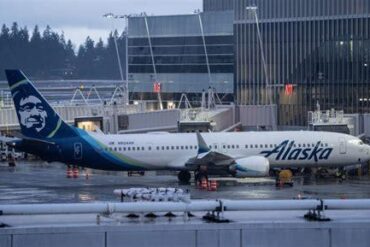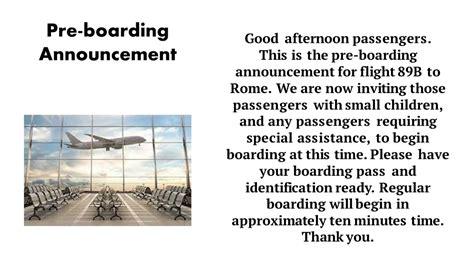
Flying should begin with anticipation, not adrenaline. Yet for many passengers in the United States, the boarding process feels less like an orderly transition into the air and more like a low-grade crisis simulation. Voices boom over the public address system, warnings escalate, and responsibility for an on-time departure is subtly, sometimes aggressively, shifted onto the people least equipped to control it. The question worth asking is not whether this atmosphere is unpleasant, but whether it actually works.
Aircraft boarding is a fragile choreography involving gate agents, flight attendants, ground crews, and passengers with wildly different levels of experience and urgency. In theory, announcements exist to guide that choreography. In practice, they often resemble verbal crowd control, leaning on pressure, exaggeration, and occasionally outright misinformation. The result is a curious contradiction: an environment that sounds urgent yet produces little measurable urgency.
Around the world, boarding cultures vary dramatically. On many Asian carriers, boarding unfolds with near-ritual calm. Soft music fills the cabin, instructions are sparse, and authority is conveyed through quiet confidence rather than volume. Passengers move steadily, intuitively aware of expectations. The absence of noise does not signal disorder; it signals trust.
In the United States, trust is in shorter supply. Boarding announcements frequently begin long before boarding does, warning of full flights, limited overhead space, and the looming threat of delays. By the time passengers step onto the aircraft, they have already been primed to feel anxious and defensive, clutching their carry-ons like survival gear.
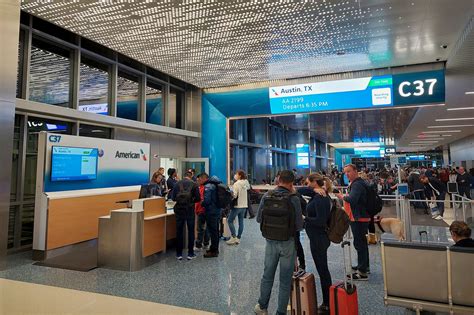
This difference is not accidental. U.S. airlines operate within a system that rewards early boarding, elite prioritization, and carry-on competition. Announcements become tools to manage a scarcity mindset created by policy choices, not by passenger behavior alone. When overhead bins are predictably insufficient, and checked bags come with fees, urgency is baked into the process before a single word is spoken.
What makes many announcements especially grating is their tone. Passengers are told that door close times have passed when they have not, that searching for bin space will delay the flight even though it is unavoidable, or that fellow travelers will miss international connections on routes where such connections barely exist. These statements are not merely dramatic; they are often factually inaccurate, and passengers know it.
Repeated exposure to exaggerated warnings produces desensitization. When every boarding feels like an emergency, none of them do. Behavioral psychology has a term for this: alarm fatigue. In hospitals, constant false alarms cause staff to respond more slowly to real ones. In aircraft cabins, constant verbal alarms cause passengers to tune out entirely.
The irony is that U.S. airlines already have some of the longest boarding times in the world. Complex boarding groups designed to reward loyalty and sell credit cards slow the flow. Oversized carry-ons clog aisles. Staffing shortages at gates and in cabins reduce hands-on assistance. None of these problems are solved by raising one’s voice.
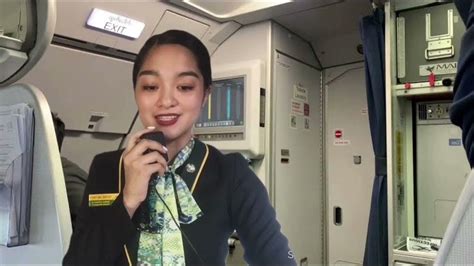
Flight attendants making frequent announcements are rarely acting out of malice. They are trained to value on-time departures and often believe that vocal pressure will accelerate compliance. Yet compliance with what, exactly, is often unclear. Telling passengers that a lack of bin space will cause delays offers no actionable solution. It merely adds stress to a moment where options are already limited.
Stress has measurable effects on human movement. Anxious people hesitate more, second-guess decisions, and become less spatially aware. Instead of speeding boarding, aggressive announcements may actually slow it by increasing cognitive load. Passengers pause to reassess, to listen, to worry about doing the wrong thing, creating micro-delays that ripple through the cabin.
Contrast this with environments where expectations are communicated once, clearly, and calmly. European airlines often favor scripted, welcoming announcements that set a tone rather than issue threats. Boarding feels cooperative rather than adversarial. Passengers are treated as participants in a shared process, not as potential saboteurs of punctuality.
There is also a cultural element at play. In the U.S., customer service has increasingly adopted language of liability and warning. Announcements mirror legal disclaimers, designed to assign responsibility rather than facilitate experience. When delays occur, the narrative has already been established: passengers were warned. Whether that narrative reflects reality is secondary.
Interestingly, despite dire predictions issued during boarding, many flights still depart early. This exposes the hollowness of the threats. When passengers repeatedly experience a disconnect between announcement and outcome, credibility erodes. The PA system becomes background noise, stripped of authority.
A compelling thought experiment is deceptively simple: remove most announcements during boarding. Allow visual cues, boarding passes, and natural flow to do the work. Reserve the PA for genuinely necessary information. The hypothesis is not that silence magically speeds things up, but that reduced stress prevents slowdowns caused by confusion and resistance.
Another option is standardization. Scripts exist for safety briefings because consistency matters. Boarding announcements could benefit from the same discipline. A friendly, factual script delivered once or twice is more effective than a stream of improvised warnings colored by individual frustration.
The deeper issue is philosophical. Do people move faster when they are talked down to? Evidence from workplaces, schools, and public spaces suggests the opposite. Respect fosters cooperation. Threats foster compliance only when consequences are immediate and credible, which boarding delays rarely are for individual passengers.
Air travel is already filled with unavoidable discomforts: cramped seats, security lines, weather disruptions. Boarding does not need to add psychological friction. Calm is not indulgence; it is efficiency’s quiet partner.
The persistent chaos of U.S. boarding announcements feels less like a solution and more like a habit, inherited and unquestioned. Breaking that habit requires airlines to accept that passengers are not the primary cause of boarding inefficiency. Systems are. Policies are. Design choices are.
When airlines stop treating boarding as a behavioral problem to be shouted into submission and start treating it as a logistical process to be optimized, announcements can return to their original purpose: guidance, not intimidation. Until then, the noise will continue, loud but largely ineffective, echoing through cabins that would move just as quickly, if not faster, without it.