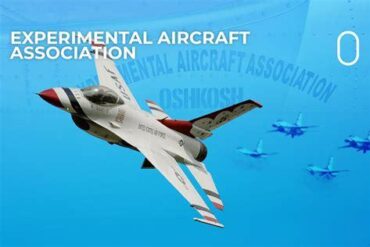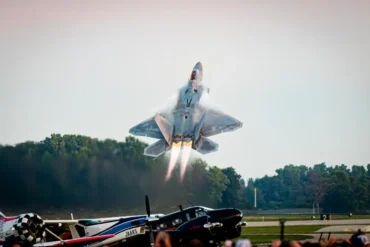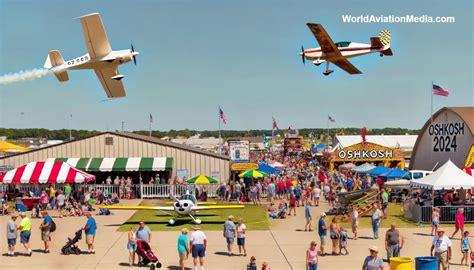
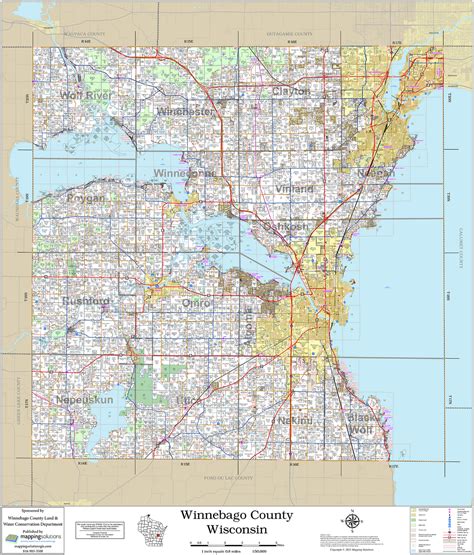
Each year in late July, EAA AirVenture Oshkosh transforms a quiet Wisconsin city into the vibrant epicenter of global aviation. Hosted at Wittman Regional Airport and adjacent Pioneer Airport, with its grounds extending into Nekimi and seaplane operations on Lake Winnebago, the event represents the very heartbeat of aviation innovation, history, and community. Organized by the Experimental Aircraft Association (EAA), AirVenture Oshkosh is more than an air show — it is a convergence of passion, legacy, and technical marvels that draws aviation lovers from across the world.
A Storied Past: From Basement Beginnings to Global Stage
AirVenture’s journey began modestly in 1953, in the basement of Paul Poberezny’s Milwaukee home. The original fly-in, part of the Milwaukee Air Pageant, attracted fewer than 150 visitors. As the gathering grew, the need for a dedicated space led to a relocation to Rockford, Illinois in 1959, and ultimately to Oshkosh in 1970 — a move that marked the beginning of an era.
Under the stewardship of Tom Poberezny, Paul’s son and an aerobatic world champion, the event expanded its scope and visibility. By 1977, Tom had become the chairman, and by 1998, the gathering was officially renamed EAA AirVenture Oshkosh. A significant turning point came in 1997, when EAA lifted its members-only access policy, opening the full grounds to all visitors. Despite a rare cancellation in 2020 due to the COVID-19 pandemic, the event has maintained its uninterrupted ascent in scale and significance.
A Launchpad for Innovation: Historic Aircraft Debuts
AirVenture Oshkosh has long been a proving ground for revolutionary aircraft. In 1972, Richard VanGrunsven unveiled the RV-3, a homebuilt aircraft that reshaped expectations in recreational flying. Its blend of performance and build quality paved the way for Van’s Aircraft to become the largest producer of kit planes in the world.
Burt Rutan’s debut of the VariEze in 1975 was another defining moment. Utilizing moldless glass-reinforced plastic construction, it became the forerunner to composite-based designs, influencing both homebuilt aircraft and commercial airliners. The innovations continued in 1978 with Frank Christensen’s Christen Eagle II, an aerobatic biplane that would become iconic.
The 1980s marked a period of rapid advancement. Tom Hamilton’s Glasair I emerged in 1980, followed by Lance Neibauer’s Lancair 200 in 1985 — both offering speed and sleek design. In 1987, the Klapmeier brothers introduced the Cirrus VK-30, a project that ultimately birthed the SR20 and SR22, among the first certified aircraft to integrate glass cockpits, composite construction, and ballistic parachutes.
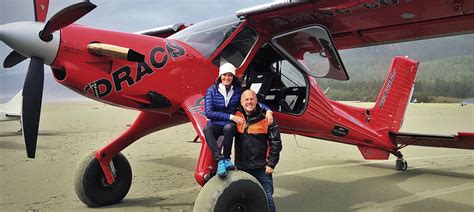
In 2018, attendees witnessed two standout unveilings: Jack Bally’s Bally Bomber, a stunning one-third scale replica of the B-17 Flying Fortress, and Mike Patey’s radical DRACO, a modified PZL-104 Wilga designed for STOL and bush flying.
Record-Breaking Attendance and Global Reach
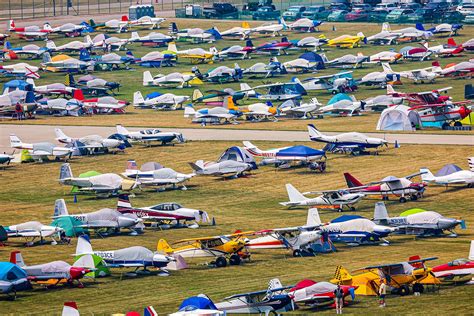
AirVenture’s scale is staggering. In 2006, estimated entries reached 625,000, but by 2021, the show recorded 608,000 unique attendees. In 2024, the event shattered records again with 686,000 visitors and 10,000 aircraft arrivals. This includes international participation, as in 2018, when over 2,700 guests from 87 countries registered.
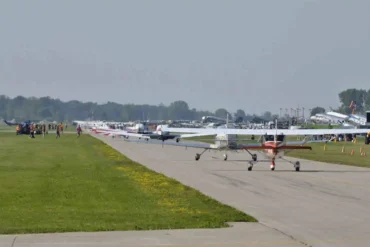
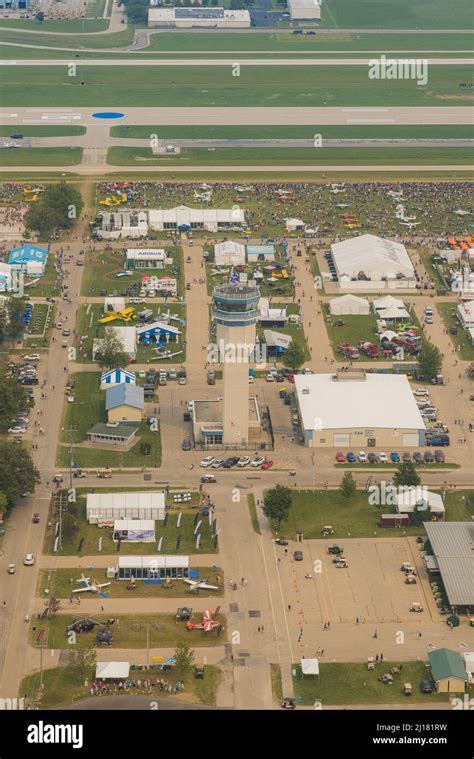
The airport’s control tower, designated frequency 118.5, becomes the busiest in the world during the event. To coordinate the intense flow of air traffic, a detailed NOTAM — extending up to 32 pages — outlines procedures. These carefully orchestrated arrivals and departures are managed by over 4,000 volunteers and FAA staff in bright pink shirts, who contribute more than 250,000 hours during the event cycle.
The Economic Lift: A Multimillion-Dollar Impact
The economic footprint of EAA AirVenture Oshkosh is substantial and growing. Early studies, such as a 1982 report, estimated the benefit to the region at between $21 million and $30 million (equivalent to $56.1M and $97.7M in 2023). By 1989, Winnebago County alone saw a return of $47 million.
A more comprehensive 2008 UW-Oshkosh study pegged the local impact at $110 million, which included 1,700 jobs and $39 million in labor income. The momentum continued, and by 2017, estimates placed the total regional economic value at over $170 million — underscoring the event’s pivotal role in Wisconsin’s tourism and commerce ecosystem.
Precision in the Skies: Air-Traffic Operations and Technical Mastery
From 10,000 aircraft movements in 1961 to over 31,000 in 1971, AirVenture’s operational complexity has grown exponentially. Today, over 10,000 airplanes take to the skies during the week, demanding unparalleled coordination. The FAA’s Central Terminal Service Area hosts a competitive selection process for controllers who manage the event.
In 2008, 172 FAA personnel from 56 facilities staffed Wittman Field, Fond du Lac, and Fisk — the latter being a critical VFR approach coordination point. The personnel’s visibility is ensured through signature pink attire, a tradition that helps ground crew and pilots identify them easily amid thousands.
Budgetary challenges in 2013 forced the EAA to enter a $447,000 cost-recovery agreement with the FAA after federal sequestration policies halted free support. Though controversial, the agreement ensured FAA participation for another nine years, cementing operational continuity.
Airports in Harmony: Coordinated Use of Aviation Infrastructure
The scale of AirVenture necessitates a broad network of airports:
- Wittman Regional Airport (OSH): Central hub for fixed-wing aircraft.
- Pioneer Airport (WS17): Dedicated to helicopters and airships.
- Vette/Blust Seaplane Base (96WI): On Lake Winnebago for floatplane arrivals.
- Fond du Lac County Airport (FLD) and Appleton International (ATW): Overflow and parking; ATW also handles international customs.
- Austin Straubel International Airport (GRB): Additional diversion capacity.
- Planeacres (2WN7): Emergency use during Fisk approach procedures.
Together, these facilities create a synchronized ballet of air movements unparalleled in global aviation events.
Behind the Scenes: Volunteers and Infrastructure
More than 4,000 volunteers form the backbone of AirVenture. Arriving weeks in advance, they take on tasks that include aircraft and car parking, painting structures, constructing stages, and preparing campgrounds like the sprawling Camp Scholler. In return, volunteers receive free meals, event passes, custom patches, and commemorative apparel.
Technical operations are equally vital. FAA technicians deploy mobile communication towers, install the Fisk VFR control station, and set up a temporary control tower at Fond du Lac. Their work ensures uninterrupted communication and safety for the thousands of daily flights.
Civil Air Patrol’s Role: National Blue Beret Cadet Program
Among the most disciplined and youthful contributors are the cadets from the Civil Air Patrol (CAP) through the National Blue Beret (NBB) program. Spanning two weeks, with the second week overlapping AirVenture, this national cadet special activity sees selected CAP members assist in critical roles.
Responsibilities range from flight marshaling and crowd management to emergency response coordination. It is both a service opportunity and a leadership development experience for the next generation of aviation stewards.
A Living Legacy of Aviation Passion
EAA AirVenture Oshkosh is not just an airshow; it is a living archive of aviation history, a launchpad for next-gen innovation, and a vibrant community grounded in shared passion. With every passing year, new milestones are etched into its legacy, drawing enthusiasts, innovators, historians, and dreamers into a week that redefines what is possible in the sky.