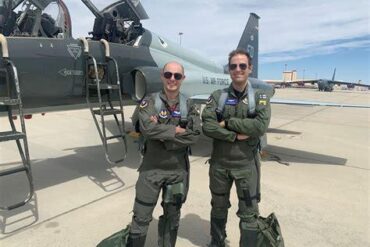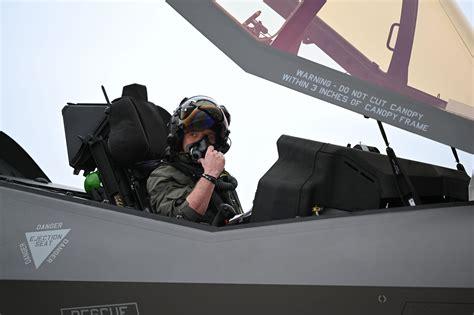
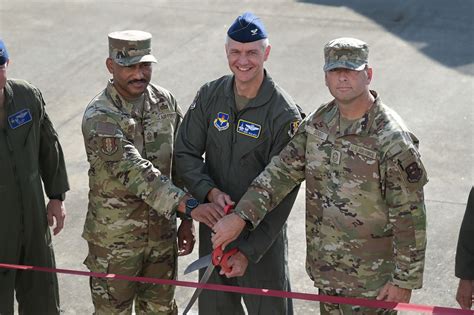
Ebbing Air National Guard Base (ANGB) in Fort Smith, Arkansas, reached a historic milestone on May 9 as it celebrated the graduation of its first international F-35 pilots under the Foreign Military Sales (FMS) training mission. The graduates, two skilled aviators from Poland, mark the beginning of a transformative era in international military aviation cooperation, spearheaded by the U.S. Air Force and its global partners.
The training program, designed to bolster international defense capabilities and foster deeper strategic alliances, positions Ebbing ANGB as a critical hub for fifth-generation fighter training. This pivotal moment not only underscores the evolving role of the U.S. Air National Guard but also signals a powerful deterrent message amid growing geopolitical tensions, especially in Eastern Europe.
Polish Pilots Reach Initial Operational Capability
The two Polish pilots, now certified at Initial Operational Capability (IOC), will proceed to additional training at Eglin Air Force Base in Florida before returning to Poland. Their homecoming carries far more weight than just national pride—it represents a new frontline in the collective defense against potential threats from Russia, elevating Poland’s role as a key NATO player equipped with next-gen air superiority.
Colonel Nicholas “Matrix” Ihde, commander of the 85th Fighter Group, which oversees the FMS training program, compared this graduation to a childhood milestone:
“These are the kindergarten years. We’ve learned to walk. We’re learning to fly, and now we’re producing graduates.”
His analogy is apt. What began as an ambitious concept has now materialized into a functioning, globally significant defense initiative. More Polish airmen are already undergoing training, and a wave of international pilots from Finland, Switzerland, Germany, Greece, and the Czech Republic is scheduled to follow, each preparing to master the F-35 at Ebbing.
A Global Training Mission Anchored in Fort Smith
The scope of this mission extends well beyond Poland. Pilots from Finland, a newly inducted NATO member, are next in line to train at Ebbing ANGB. Their participation, followed by aviators from Switzerland, Germany, Greece, and the Czech Republic, reflects the base’s growing reputation as a global training epicenter for fifth-generation fighters.
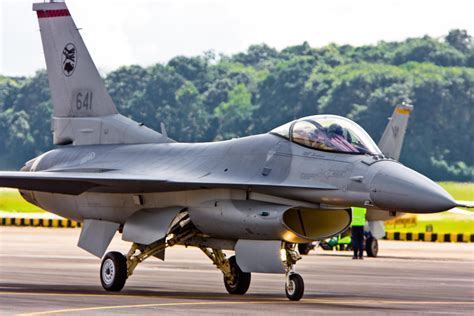
In addition to the F-35 program, Singaporean pilots will commence F-16 training at Ebbing, reviving a legacy that traces back to the 188th Fighter Wing, which last flew F-16s nearly 14 years ago. This renewed activity not only reinforces the strategic importance of the base but also enhances its operational versatility.
Scaling the Program: F-35 Presence to Quadruple by 2026
Currently, only two F-35s are stationed at Ebbing ANGB. However, this is merely the foundation. Plans are underway to increase the fleet to 16 aircraft by 2026, with a potential surge to 48 by 2028. These numbers reflect a long-term commitment to sustained pilot production and a high operational tempo, which will inevitably place Ebbing at the forefront of multinational air combat readiness.
The infrastructure expansion necessary to accommodate this growth is already in motion. New facilities, extended runways, and advanced simulation systems are being developed to support this influx. The training pipeline, designed for both U.S. and foreign pilots, is streamlined to accelerate mission readiness while maintaining the highest safety and proficiency standards.
Strategic Deterrence in a Time of Tension
The importance of this program cannot be overstated. By training allied pilots on U.S. soil with U.S. technology, the United States ensures interoperability among NATO and partner forces—a critical capability in the face of emerging global threats. The F-35, with its stealth features, sensor fusion, and network-centric warfare capability, offers a decisive edge.
Congressman Steve Womack, who attended the May 9 ceremony, emphasized the broader geopolitical and strategic relevance of the mission:
“This project has economic value, but more importantly, it supports the freedoms we all enjoy and sometimes take for granted. This aircraft will deter any nefarious actor who would dare challenge the United States.”
Womack’s remarks reflect not just optimism, but urgency. With Russian aggression reshaping security dynamics in Europe, this initiative ensures that U.S. allies are not only equipped but trained to respond decisively.
Why Ebbing? Ideal Conditions for World-Class Training
The decision to designate Ebbing ANGB as a training hub was not arbitrary. Its favorable flying conditions, open airspace, and low commercial air traffic provide a near-perfect environment for high-frequency, realistic training operations.
Colonel Ihde highlighted this unique advantage:
“This is ideal airspace. And it allows these partner nations to experience everything a fifth-generation fighter can do.”
Moreover, the Fort Smith and River Valley community has played a vital role in supporting the mission. From housing and education to healthcare and local business support, the base is tightly integrated into the community fabric. Organizations like the Chamber of Commerce and local leaders such as Mayor George McGill have been instrumental in building the infrastructure and goodwill necessary for such a complex mission to thrive.
Economic Impacts and Community Partnerships
While the mission is defense-focused, its economic impact on the region is undeniable. An influx of military families, international visitors, and federal funding has invigorated local economies. Real estate, retail, education, and healthcare sectors have all seen growth tied directly to the FMS mission.
Beyond economics, however, is the cultural exchange taking place. International airmen and their families bring with them diverse perspectives and foster bonds with the local community—an often overlooked benefit of international military collaboration. These soft power connections enhance long-term diplomatic relations and foster deeper mutual understanding.
Next Steps: Building a Global Training Pipeline
The successful graduation of the first Polish pilots is only the beginning. As more nations cycle through the program, Ebbing ANGB will evolve into a global center for F-35 and F-16 pilot development, acting as a vital conduit between American aerospace technology and allied military readiness.
The base’s growing fleet, training infrastructure, and experienced leadership ensure that it can scale in both quality and quantity. With the 85th Fighter Group at the helm and unwavering support from Air Education and Training Command (AETC), the pipeline is positioned for sustained success.
Conclusion: A Strategic Victory for U.S. and Allied Forces
The pilot graduation at Ebbing ANGB is more than a ceremonial checkpoint. It is a symbol of international unity, a strategic investment in global defense, and a reaffirmation of America’s commitment to its allies. By transforming Fort Smith into a world-class training hub, the U.S. ensures that partner nations are equipped and empowered to defend shared values and territories.
The mission will continue to evolve—but the foundation laid on May 9, 2025, will resonate for decades to come. Ebbing ANGB now stands not only as a bastion of American airpower but also as a beacon of allied strength and collaboration in the 21st century battlespace.