For generations, Pueblo, Colorado stood as the symbolic gateway to a career in US Air Force aviation. Its long-standing association with Initial Flight Training (IFT) earned it a near-mythical status among aspiring military aviators. Now, a monumental shift is underway. With the awarding of an $835 million contract to US Aviation Academy, the Air Force has initiated a sweeping reorganization of its pilot pipeline—one that effectively ends Pueblo’s unrivaled hold on this foundational phase of training.
A Historic Contract That Reshapes Tradition
The US Aviation Academy will now lead IFT operations under the new multi-state model. Training will be conducted not just in Pueblo, but also in Denton and San Marcos, Texas, and Peachtree City, Georgia. The contract, spanning several years, includes aircraft procurement, curriculum development, instructor staffing, and logistical support. This distributed approach reflects an evolving philosophy within the Air Force: a transition from centralized tradition to adaptable, scalable modernization.

By leveraging these new locations, the Air Force aims to mitigate the operational vulnerabilities inherent in a single-hub model. This geographic diversification brings several strategic advantages—greater throughput, reduced weather-related training delays, and year-round flight opportunities in sunbelt states. Moreover, it taps into local aviation ecosystems that already support civilian flight schools, bolstering the available talent pool of instructors and technicians.
Why Pueblo’s Era Is Coming to a Close
Pueblo’s reign as the “front door” to Air Force flight training was never accidental. It earned its place through a unique confluence of ideal flying conditions, uncongested airspace, and long-standing infrastructure investments. From Doss Aviation to CAE, the city supported thousands of officer candidates taking their first steps toward the cockpit. But its dominance came with constraints: weather disruptions, airfield capacity limits, and dependency on a single locale for a national training imperative.
Now, the Air Force is realigning its priorities. With a growing urgency to tackle pilot shortages, the need for flexible, year-round training solutions has become paramount. Texas and Georgia, with their warm climates, aviation resources, and access to military and civilian flight corridors, offer a compelling alternative.

Mike Sykes, CEO of US Aviation Academy, echoed this sentiment: “We are honored to support the United States Air Force in preparing the next generation of pilots.” His institution brings with it a proven track record of flight training across both civilian and defense domains. Their existing infrastructure allows rapid scaling to meet the demanding tempo of modern Air Force operations.
A Broader Strategy for Modern Military Aviation
This is more than just a logistical shift—it is part of a larger strategic transformation within the Department of the Air Force. For years, the service has grappled with not only pilot attrition but also the challenge of sustaining a training model built around Cold War-era assumptions. Today’s threat landscape requires a more resilient and flexible training apparatus, one capable of evolving alongside emerging technologies and operational doctrines.
By outsourcing IFT to a well-established civilian provider with a distributed network of facilities, the Air Force ensures cost predictability and operational efficiency. It also frees up internal resources to focus on advanced simulation, operational readiness, and fifth-generation airpower tactics. In other words, the foundational layer of pilot education is being retooled to better feed a rapidly changing ecosystem.
The shift also introduces new dynamics into the pilot experience. Trainees will now enter the pipeline in diverse environments that mirror the complexity of real-world flight conditions. This variation supports more comprehensive skill development, enhances situational adaptability, and potentially increases retention by improving training quality and pacing.
Implications for Pueblo—and the Pilots to Come
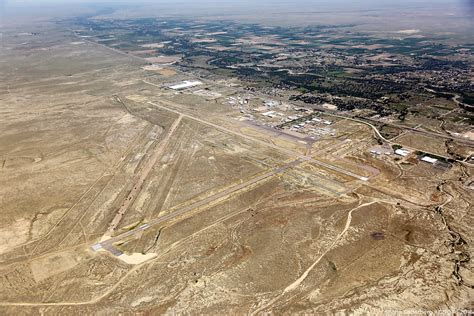
Despite remaining a part of the IFT ecosystem in the short term, Pueblo’s reduced role could have significant local impacts. For decades, military contracts brought consistent revenue to local businesses, maintained a healthy flow of aircraft operations, and supported hundreds of jobs in flight instruction, maintenance, and support services. A decreased Air Force presence threatens to undercut that stability, raising concerns about long-term economic sustainability for the region.
But for future Air Force pilots, the change signals something more optimistic: a faster, more resilient pathway into a demanding profession. By addressing delays, eliminating bottlenecks, and dispersing risk across multiple states, the new training model represents a bold step forward. It breaks free from the notion that quality must be tied to legacy geography, embracing instead a data-driven approach rooted in availability, efficiency, and mission readiness.
Conclusion: From Legacy to Launchpad
The end of Pueblo’s dominance in Initial Flight Training is not the end of its contribution to military aviation—but it is the close of an era. As the Air Force evolves, so too must the foundations that shape its pilots. The move to Texas and Georgia does more than expand training—it symbolizes a philosophical departure from centralized legacy in favor of distributed innovation.
This bold restructuring redefines where the Air Force begins its journey—not in one place, but across a strategic network built for resilience, scalability, and speed. While Pueblo’s history will always hold a place in the skybound stories of American pilots, the future now taxis to the runways of Denton, San Marcos, and Peachtree City—engines hot, ready for takeoff.