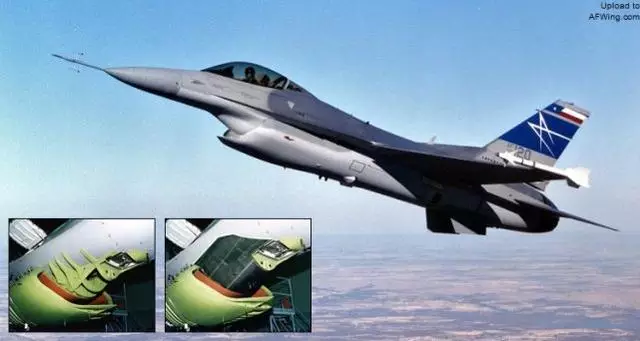
The F-16 Diverterless Supersonic Inlet (DSI) represents a groundbreaking advancement in supersonic air intake design. Developed by Lockheed Martin in the 1990s, the technology aimed to simplify traditional supersonic inlets while enhancing overall performance. By eliminating complex mechanical components and improving airflow efficiency, the DSI technology has redefined how modern fighter jets manage air intake at varying speeds.
Technological Background and Design Principles
The Core Innovation of DSI
The DSI system replaces the traditional boundary layer diverter plates, bleed systems, and bypass ducts with a three-dimensional bump compression surface. This innovation prevents low-energy airflow from entering the intake, ensuring smooth and efficient air delivery to the engine. The result is a more aerodynamically efficient and structurally simplified system.

CFD-Driven Optimization
The development of the DSI relied heavily on Computational Fluid Dynamics (CFD). Lockheed Martin employed advanced computer simulations to refine the bump geometry, ensuring optimal airflow characteristics. Additionally, wind tunnel testing using 3D-printed models validated these computational findings, ensuring reliability in real-world applications.
Structural Simplification and Weight Reduction
By removing traditional diverter mechanisms, the F-16 DSI design achieved a significant weight reduction of approximately 136 kg (300 lbs). This optimization not only enhanced flight performance but also reduced overall production and maintenance costs, with estimated savings of $500,000 per aircraft.
F-16 DSI Retrofit and Flight Testing
Modification of the F-16 Block 30
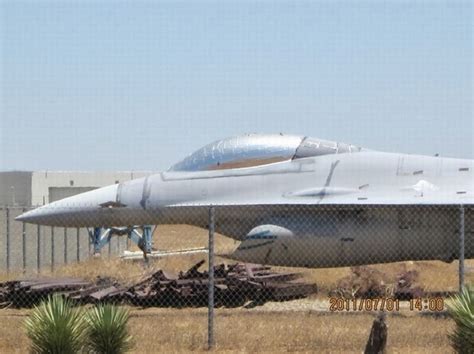
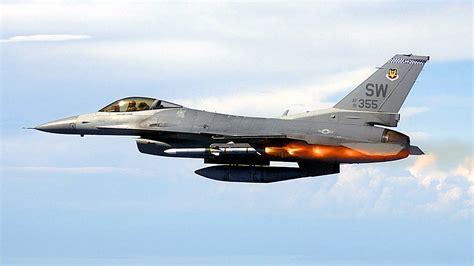
In 1996, Lockheed Martin selected a Block 30 F-16 for the DSI retrofit experiment. The modular intake design of the F-16 allowed for relatively simple integration without major structural alterations to the forward fuselage.
Flight Test Performance
Test Program Execution
The F-16 equipped with DSI technology underwent a rigorous flight test program, consisting of 12 flights over a span of 9 days. The aircraft was tested up to a maximum speed of Mach 2.0, demonstrating stable operation across its entire flight envelope.
Engine Compatibility
The aircraft retained its F110-GE-129 turbofan engine, which successfully completed 164 afterburner ignitions, including 52 under high-maneuverability conditions. Additionally, two in-flight engine restarts confirmed seamless integration between the DSI inlet and engine system.
Performance Enhancement
While maintaining comparable military thrust characteristics, the subsonic excess power of the aircraft exhibited slight improvements over the conventional intake design. This confirmed the DSI’s ability to enhance aerodynamic efficiency without compromising performance.
Key Advantages of the DSI Technology
Stealth Performance Enhancement
One of the most significant benefits of DSI technology is its contribution to reduced radar cross-section (RCS). The elimination of external diverters and movable components minimizes radar-reflective surfaces, enhancing the aircraft’s stealth capabilities.
Lower Maintenance and Lifecycle Costs
Since the DSI design removes complex mechanical parts, it inherently reduces failure points and maintenance demands. This contributes to lower operational costs, making it a cost-effective alternative to traditional intake systems.
Operational Stability Across a Wide Speed Range
The F-16 DSI modification demonstrated excellent performance from subsonic speeds up to Mach 2.0. The integrated pre-compression bump improved air intake efficiency, ensuring stable and efficient airflow across all operational regimes.
Impact on Future Aircraft Development
Adoption in the F-35 Lightning II
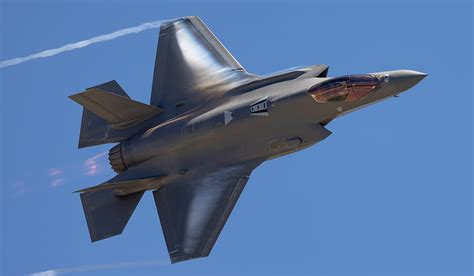
Following the successful tests on the F-16, Lockheed Martin incorporated DSI technology directly into the F-35 Lightning II. The F-35’s fixed inlet design benefits from the same aerodynamic efficiency and stealth improvements pioneered by the F-16 DSI program.
Influence on Global Aviation Technologies
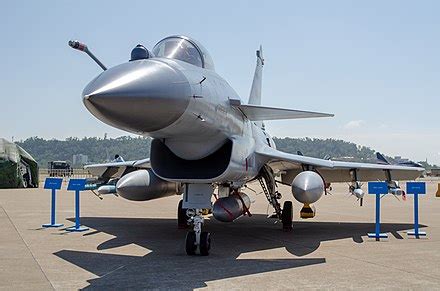
The success of DSI technology led to its adoption in various international fighter jet programs. Notably, China integrated similar DSI-based intake designs in aircraft such as the J-10B and J-20. However, the fundamental principles behind these implementations trace back to Lockheed Martin’s pioneering research and development.
Conclusion
The F-16 DSI project stands as a landmark achievement in modern aerodynamics and supersonic intake technology. By demonstrating the viability of bump compression-based inlets, this innovation laid the groundwork for next-generation stealth fighters. The integration of CFD modeling, flight testing, and cost-effective design choices cemented the DSI’s place in aviation history, proving its long-term strategic value in fighter jet evolution.
Frequently Asked Questions (FAQ)
1. What are the primary benefits of DSI technology?
The DSI system enhances stealth characteristics, reduces aircraft weight, minimizes maintenance complexity, and provides stable airflow at high speeds. It eliminates traditional mechanical diverters, improving both efficiency and cost-effectiveness.
2. How did the F-16 DSI modification impact engine performance?
The F-16 with DSI maintained excellent engine compatibility, demonstrated by successful high-performance testing. It showed no adverse effects on engine airflow while slightly improving subsonic energy efficiency.
3. Has DSI technology been used in other aircraft?
Yes, after its success on the F-16, the DSI concept was integrated into the F-35 Lightning II. Additionally, similar intake designs have appeared in aircraft like the Chinese J-10B and J-20, inspired by the original Lockheed Martin research.