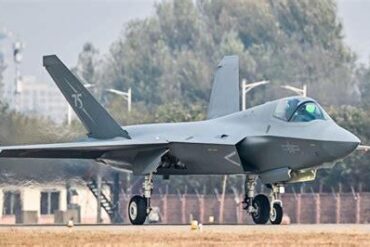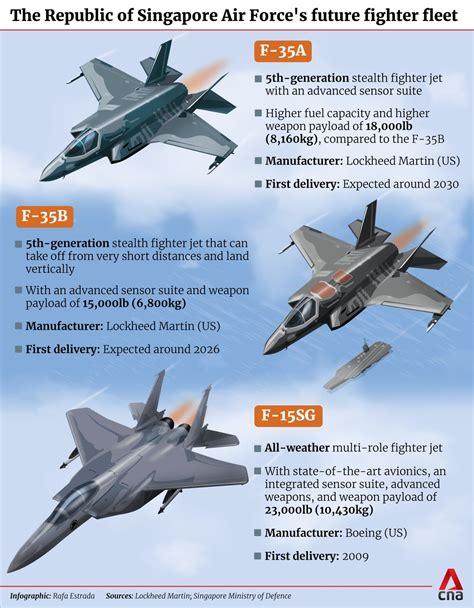
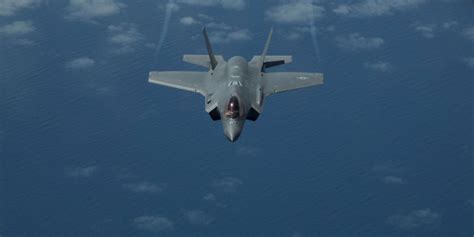
The F-35A Lightning II stands as one of the most technologically advanced fighter jets ever built, engineered for stealth, precision strike capability, and network-centric warfare. Yet beneath its cutting-edge avionics and radar-evading design lies a less glamorous reality: fuel consumption. When stretched across intercontinental distances, even a fifth-generation fighter becomes an intensive logistical challenge. Calculating how much fuel an F-35A would need to fly from the United States to China reveals not just numbers, but the complexity of modern airpower projection.
Defining the Route: Alaska to Shanghai
To ground the analysis in realism, consider a flight path from Eielson Air Force Base in Alaska to Shanghai Hongqiao International Airport. This route spans approximately 4,334 miles, representing one of the shortest viable paths between the two nations across the Pacific. While this distance is manageable for long-range commercial aircraft, it far exceeds the operational reach of most fighter jets without assistance.
The F-35A is not designed as a long-haul aircraft. Its mission profile prioritizes combat survivability and tactical flexibility, not endurance. As such, this journey immediately introduces the need for multiple aerial refueling operations, a cornerstone of modern military aviation logistics.
Understanding the F-35A’s Fuel Capacity and Range
At maximum internal capacity, the F-35A carries about 18,250 pounds of fuel. This translates to a combat radius far smaller than the total journey distance, with a maximum range of roughly 1,350 miles under ideal conditions. Even in a stripped-down ferry configuration, the aircraft cannot approach trans-Pacific distances without tanker support.
This limitation isn’t a flaw—it’s a deliberate trade-off. The aircraft sacrifices range for stealth geometry, internal weapons bays, and advanced sensors, all of which are critical in contested airspace. But when tasked with a long-distance transit, those same design priorities necessitate frequent refueling cycles.
Breaking Down the Fuel Requirements
To estimate total fuel usage, divide the journey distance by the aircraft’s maximum range. A 4,334-mile trip divided by 1,350 miles per full tank yields approximately 3.21 fuel loads. This means the jet would require more than three complete refueling cycles to complete the journey.
Multiplying 3.21 by the aircraft’s maximum fuel capacity of 18,250 pounds results in a total fuel burn of roughly 58,582 pounds. This figure represents a simplified scenario assuming optimal flight conditions, with no headwinds, detours, or combat maneuvers—all of which would significantly increase consumption.
For a clearer perspective, aviation fuel is often measured in gallons. Using the density of Jet-A fuel at 6.7 pounds per gallon, the total consumption translates to approximately 8,743 gallons of fuel for a one-way trip.
The Hidden Complexity of Aerial Refueling
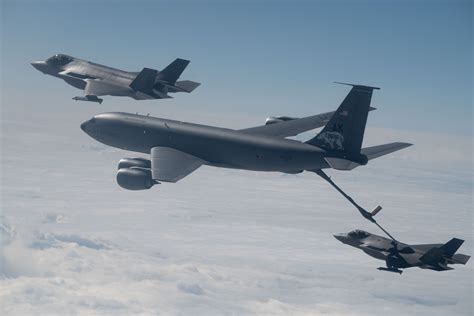
Fuel calculations alone don’t capture the full picture. Each refueling event requires coordination with tanker aircraft, such as the KC-135 or KC-46, which themselves consume substantial fuel. This creates a cascading logistical chain where support aircraft multiply the total fuel cost of a single fighter’s journey.
Moreover, aerial refueling is not a trivial process. It demands precise formation flying, stable weather conditions, and highly trained pilots. Over vast oceanic distances, these operations become even more complex, often requiring multiple tankers staged along the route to ensure mission continuity.
Operational Costs and Strategic Implications
Burning nearly 9,000 gallons of fuel for a single transit underscores the high operational cost of deploying advanced fighters over long distances. At current aviation fuel prices, this translates into tens of thousands of dollars for fuel alone—excluding maintenance, tanker support, and personnel costs.
This reality highlights why air forces rely heavily on forward bases, carrier strike groups, and allied infrastructure to project power efficiently. Instead of flying directly from the continental United States, F-35As are typically deployed in stages, leveraging regional bases and pre-positioned assets to reduce strain on logistics.
Why Range Still Matters in Modern Air Combat
Despite advances in stealth and sensor technology, range remains a critical factor in airpower strategy. Aircraft like the F-35A depend on a broader ecosystem of support to operate effectively across global distances. This includes not just tankers, but also satellite navigation, communications networks, and maintenance hubs.
The calculation of 58,582 pounds of fuel is more than a statistic—it’s a reminder that even the most advanced fighter jets are bound by the fundamental physics of fuel and distance. In a world where rapid deployment is essential, mastering these logistical challenges is just as important as winning in the skies.