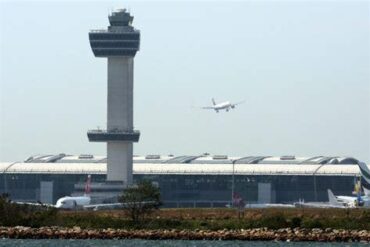
Gisborne Airport, a crucial air transit hub for New Zealand’s East Coast, plunged into unexpected flight chaos on Wednesday, July 30, 2025, after two Air New Zealand Q300 aircraft were grounded due to mechanical failures. The incident rapidly escalated into a full-blown service disruption by Thursday afternoon, leaving all flights canceled and passengers stranded with no clear resolution in sight.
Aircraft Faults Spark Cascading Delays at Gisborne
The problem began when one of the airline’s de Havilland Q300 aircraft suffered propeller blade damage, a serious safety issue whose cause remains under investigation. The second Q300, scheduled for regular service, was pulled out of operation for a cockpit control systems check—a procedure that turned out to be more complex than initially projected. With limited gate availability at Gisborne Airport, both aircraft were immobilized on the tarmac, occupying the only gates available and halting further operations.
The domino effect quickly unfolded. Without spare aircraft or alternate gate access, Air New Zealand was left with no choice but to cancel all subsequent flights by 3 p.m. on Thursday. Key domestic routes to Auckland and Wellington were abruptly cut off, triggering a wave of travel disruptions across the region.
Passenger Frustration Amid Lack of Viable Alternatives
The geographical isolation of Gisborne added another layer of complexity. With no nearby alternative airports and no rail infrastructure, passengers were presented with a grim set of options. Air New Zealand arranged road transport to Napier, approximately seven hours away by car, but this solution was far from ideal for travelers facing international connections, medical appointments, or critical business engagements.
Many travelers were left camping at the airport—some with children, others elderly—without any guarantee of when they would next be able to fly. Reports of long lines, limited seating, and unclear communication quickly emerged, casting a harsh spotlight on Air New Zealand’s crisis response protocols.
Air New Zealand’s Contingency Efforts
In an attempt to mitigate the growing unrest, Air New Zealand provided accommodation and meal vouchers to those stranded. Emergency customer support teams were deployed to assist affected travelers.
The airline also:
- Activated a mobile team of engineers flown in overnight, equipped with necessary parts for repair.
- Updated flight status and schedules through its website and mobile app.
- Issued clear guidance on passenger entitlements—including meal and accommodation reimbursement, subject to valid receipts.
However, the sheer volume of impacted passengers and the lack of replacement aircraft meant that delays were expected to extend for several more days. Many travelers were offered the next available flights out of Gisborne, but seat availability remained scarce, adding to the already tense atmosphere.
Regional Dependency Highlights Infrastructure Weakness
The disruption underscored the fragile dependency of regional New Zealand on limited air links. For residents of Gisborne—a city disconnected from the country’s rail network and more than eight hours by road from major cities—Air New Zealand serves as a lifeline. Any interruption to its service ripples through the local economy, impacting medical access, tourism, business travel, and emergency services.
Local officials and residents criticized the airline’s communication strategy, citing insufficient updates and delayed passenger notifications. With gates blocked and no redundancy in infrastructure, the airport became emblematic of a regional transport system stretched to its limits.
Ongoing Recovery and Operational Adjustments
By Friday morning, repair teams had successfully installed replacement components on at least one of the grounded Q300 aircraft. Still, thorough testing and regulatory checks remained before a safe return to service could be confirmed.
Air New Zealand has promised to:
- Expedite full repair of both grounded aircraft.
- Explore temporary off-gate parking options at Gisborne to prevent future gridlocks.
- Evaluate its fleet flexibility and spare aircraft availability for remote destinations.
The airline acknowledged the frustration faced by travelers and offered apologies while encouraging customers to contact customer service for rebooking or compensation requests. Importantly, it reinforced its commitment to regional air service continuity and promised to “do better” in future disruptions.
Aviation Resilience Under Scrutiny
The Gisborne Airport disruption has reignited national conversations about the resilience of New Zealand’s regional aviation infrastructure. Experts argue that Air New Zealand’s fleet concentration and limited aircraft diversity in regional routes increase the system’s vulnerability. A single point of failure—such as two grounded aircraft—can paralyze an entire region.
Calls are now growing for:
- Increased government investment in regional airport infrastructure.
- Expanded public-private partnerships to improve gate capacity.
- Incentives for additional operators to serve underserved regional routes.
Air New Zealand, for its part, has agreed to participate in a post-incident review to assess both operational failures and communication gaps. Aviation authorities have also initiated investigations into the Q300 propeller failure, which may have broader implications for aircraft safety across the country.
Long-Term Outlook and Passenger Guidance
While the immediate crisis is nearing resolution, the long-term impact on passenger confidence and regional travel planning may persist. Business owners, frequent flyers, and even tourists now face greater uncertainty about the reliability of short-haul domestic flights.
Air New Zealand has issued updated passenger support policies, advising those impacted to:
- Visit the airline’s disruption hub online for real-time updates.
- Retain all receipts for expenses incurred due to flight delays.
- Make use of alternate travel methods if time-sensitive commitments are at risk.
Conclusion: A Wake-Up Call for Regional Air Travel
The events at Gisborne Airport serve as a stark reminder of how fragile regional air connectivity can be in a country reliant on a small number of carriers and constrained infrastructure. For Air New Zealand, the incident has exposed operational limitations and the urgent need for improved crisis management protocols. For passengers, it has highlighted the importance of flexible travel planning—particularly when flying in or out of remote locations.
With repairs progressing and limited services expected to resume by the weekend, the focus now shifts to how quickly normal operations can be restored—and how effectively lessons will be learned.
Passengers and stakeholders alike will be watching closely as New Zealand navigates the balance between aviation efficiency, reliability, and regional equity in air travel.