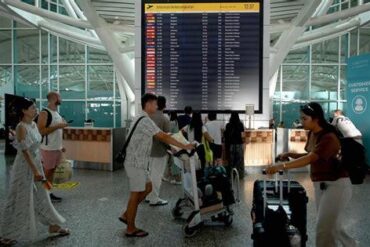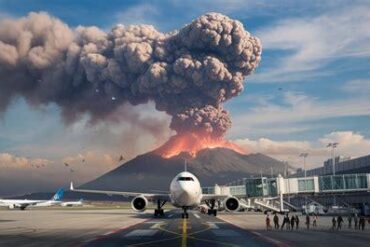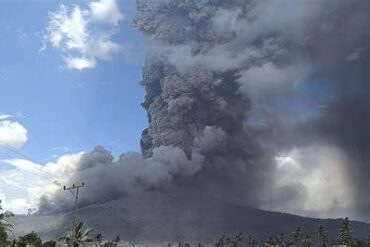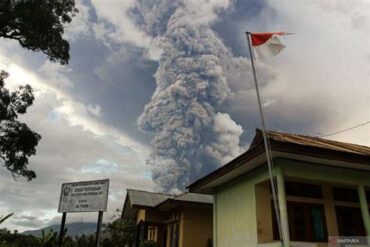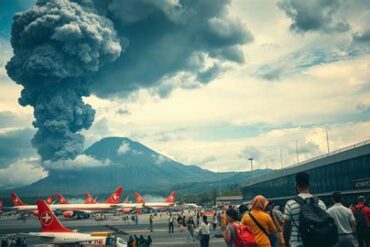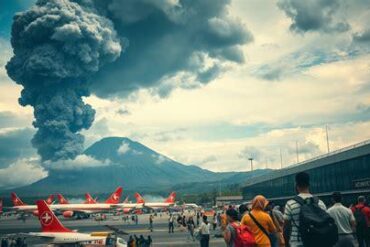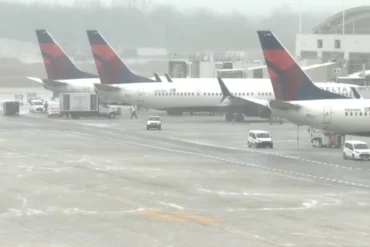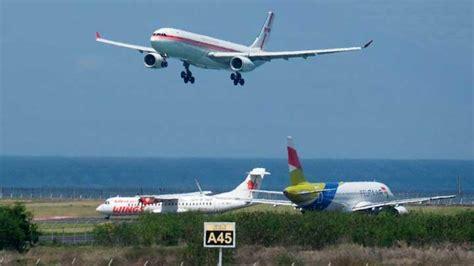
The eruption of Mount Lewotobi Laki-Laki in East Nusa Tenggara, Indonesia, has thrown the travel plans of thousands into disarray as over 120 flights were either cancelled or delayed at Bali’s Ngurah Rai International Airport. Airlines from across the globe, including KLM, Qantas, Air New Zealand, Korean Air, Jetstar, VietJet, EVA Air, and Lion Air, were forced to reroute or ground flights due to an ash plume reaching an altitude of 11 kilometers, creating serious operational and safety challenges.
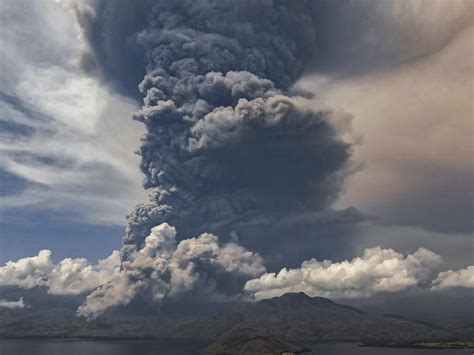
Mount Lewotobi Laki-Laki’s Violent Eruption Paralyzes Air Travel
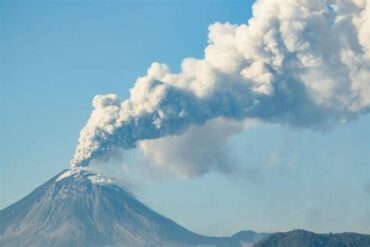
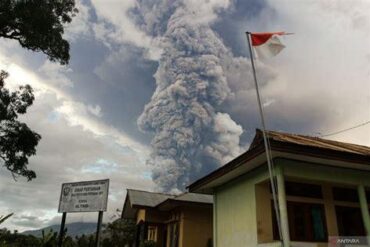
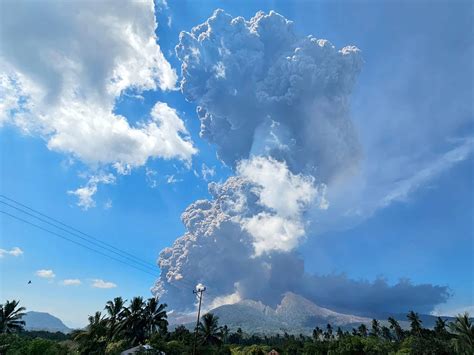
The eruption occurred on Tuesday, June 18, 2025, sending a vast cloud of volcanic ash high into the stratosphere and prompting Indonesian authorities to raise the threat level to Level IV — the highest on the national alert scale. The Indonesian Geological Agency has urged the public and tourists to maintain a minimum distance of seven kilometers from the crater, citing the risk of further pyroclastic activity.
Ngurah Rai Airport, one of Southeast Asia’s busiest gateways, was temporarily closed to assess air safety. As aviation protocols dictate, operations involving any volcanic ash in the atmosphere are heavily restricted due to the risk of engine failure and reduced visibility. The ash cloud, moving unpredictably due to high-altitude winds, has halted both incoming and outgoing traffic, with regional and long-haul carriers facing cascading disruptions.
Global Airlines Among the Hardest Hit
Among the many impacted carriers, several international and regional airlines have seen severe interruptions in their operations. The following data outlines the scope of the impact:
- KLM: 2 cancellations (100% of scheduled flights)
- Air New Zealand: 1 cancellation (50%) with no recorded delays
- Korean Air: 1 cancellation (50%) and 1 delay (25%)
- Jetstar: 1 cancellation (2%) and 5 delays (14%)
- Lion Air: No cancellations, but a staggering 21 delays (47%)
- Garuda Indonesia: 1 cancellation (2%) and 8 delays (21%)
- Malaysia Airlines: 2 cancellations (33%) and 2 delays (33%)
- Singapore Airlines: 5 cancellations (41%) and 1 delay (8%)
Other carriers such as AirAsia, EVA Air, and VietJet have also reported cancellations and delays, emphasizing the magnitude of this regional aviation disruption.
Ash Cloud Disrupts Regional and Long-Haul Routes
The effects of the eruption are not limited to Bali. With routes connecting to Australia, India, Singapore, Malaysia, and Europe, many flights have had to be diverted, rescheduled, or outright cancelled. In particular, flights between Denpasar and Sydney, as well as those from Auckland, Seoul, and Kuala Lumpur, have been disproportionately impacted.
The sudden halt at Ngurah Rai Airport has triggered domino delays across other hubs as connecting passengers fail to arrive and aircraft become mispositioned. Flight planners have had to rapidly adjust operations while maintaining safety protocols, causing considerable stress for airport authorities and airline logistics teams alike.
Passenger Safety and Evacuation Precautions
As authorities grapple with the situation, Indonesia’s National Disaster Mitigation Agency (BNPB) has led evacuation efforts in nearby villages, ensuring the safety of those residing within proximity of the volcano. Tourists, many caught unaware during their travels, were also warned to remain indoors and avoid venturing near hazardous zones.
Meanwhile, airport personnel, disaster relief teams, and the Indonesian military are actively coordinating to manage the situation, from keeping terminals operational for delayed passengers to helping stranded tourists find shelter and transportation alternatives.
International passengers have been advised to explore ferry services or overland travel where possible, and to remain in regular contact with their respective embassies or consulates if prolonged displacement occurs. Major hotels in Bali have extended discounted accommodations for stranded travelers.
Airline Communication and Passenger Advisory
Amid the confusion, airlines have turned to real-time communication channels to keep passengers informed. Major carriers, including Jetstar, Qantas, Lion Air, and KLM, have been using social media platforms and mobile apps to issue timely updates. Bali’s Ngurah Rai Airport has also activated its emergency notification system and deployed an expanded customer service team to handle the surge in rebooking and flight status inquiries.
Airlines have introduced flexible rebooking policies, with full refunds and penalty-free changes allowed for passengers whose flights were affected by the volcanic event. Still, call centers and booking desks are facing backlogs, causing some travelers additional frustration in the aftermath of the eruption.

Broader Implications for Southeast Asian Aviation
Indonesia sits on the volatile Pacific Ring of Fire, making its aviation infrastructure particularly susceptible to natural disruptions. The current eruption of Mount Lewotobi Laki-Laki adds to a long list of volcanic events that have historically paralyzed air traffic in the region, including the infamous Mount Agung eruptions of 2017 and 2018.
Such occurrences reinforce the need for resilient aviation protocols, rapid disaster response capabilities, and cross-border coordination among Asia-Pacific air traffic controllers. The domino effect of delays and grounded flights reverberates well beyond Indonesia, especially as Bali serves as a key transit point for travelers moving between Australia, Southeast Asia, and Europe.
Airline analysts warn that while the financial damage from this particular event may be absorbed in the short term, repeated volcanic incidents could push carriers to reconsider route scheduling, insurance costs, and fleet positioning strategies in the future.
Economic Impact on Tourism and Local Business
Bali’s economy, heavily dependent on tourism, is reeling from the sudden halt in air connectivity. Thousands of inbound tourists, particularly during the June high season, have been forced to cancel or delay trips. Hotels, restaurants, and tour operators face mounting cancellations and lost revenue, while local transport providers report declines in airport transfers and excursions.
Local business groups and tourism boards have urged the government to offer relief packages for small businesses affected by the fallout, warning that even a short-term halt in tourism can lead to long-lasting financial strain on the island’s economy.
Ongoing Monitoring and Forecast
Meteorological agencies and volcanic observatories are continuously tracking Mount Lewotobi Laki-Laki’s activity. Current forecasts suggest that ash emissions may persist for several more days, depending on wind patterns and volcanic pressure buildup. While no secondary eruption has been confirmed, seismic activity remains elevated.
Authorities are hesitant to reopen the airport until airspace is deemed completely safe. The Volcanic Ash Advisory Center (VAAC) in Darwin, Australia, is working closely with Indonesian aviation authorities to monitor ash dispersion using satellite imagery and atmospheric models.
Final Thoughts: A Cautionary Tale in Global Aviation
The eruption of Mount Lewotobi Laki-Laki and the resulting shutdown of Ngurah Rai Airport serve as a stark reminder of the fragile interconnectivity of global air travel. From grounded widebodies to stranded backpackers, the ripple effects of this natural event continue to unfold.
Airlines including KLM, Qantas, Air New Zealand, Korean Air, EVA Air, and Lion Air face the challenge of rebuilding schedules, managing public relations, and ensuring passenger welfare in the days ahead. The incident highlights not only the unpredictability of nature but also the critical importance of robust crisis management systems in international aviation.
Travelers are encouraged to remain vigilant, monitor airline updates, and be prepared for ongoing disruptions as authorities continue to prioritize safety in the face of one of Indonesia’s most significant volcanic events in recent memory.