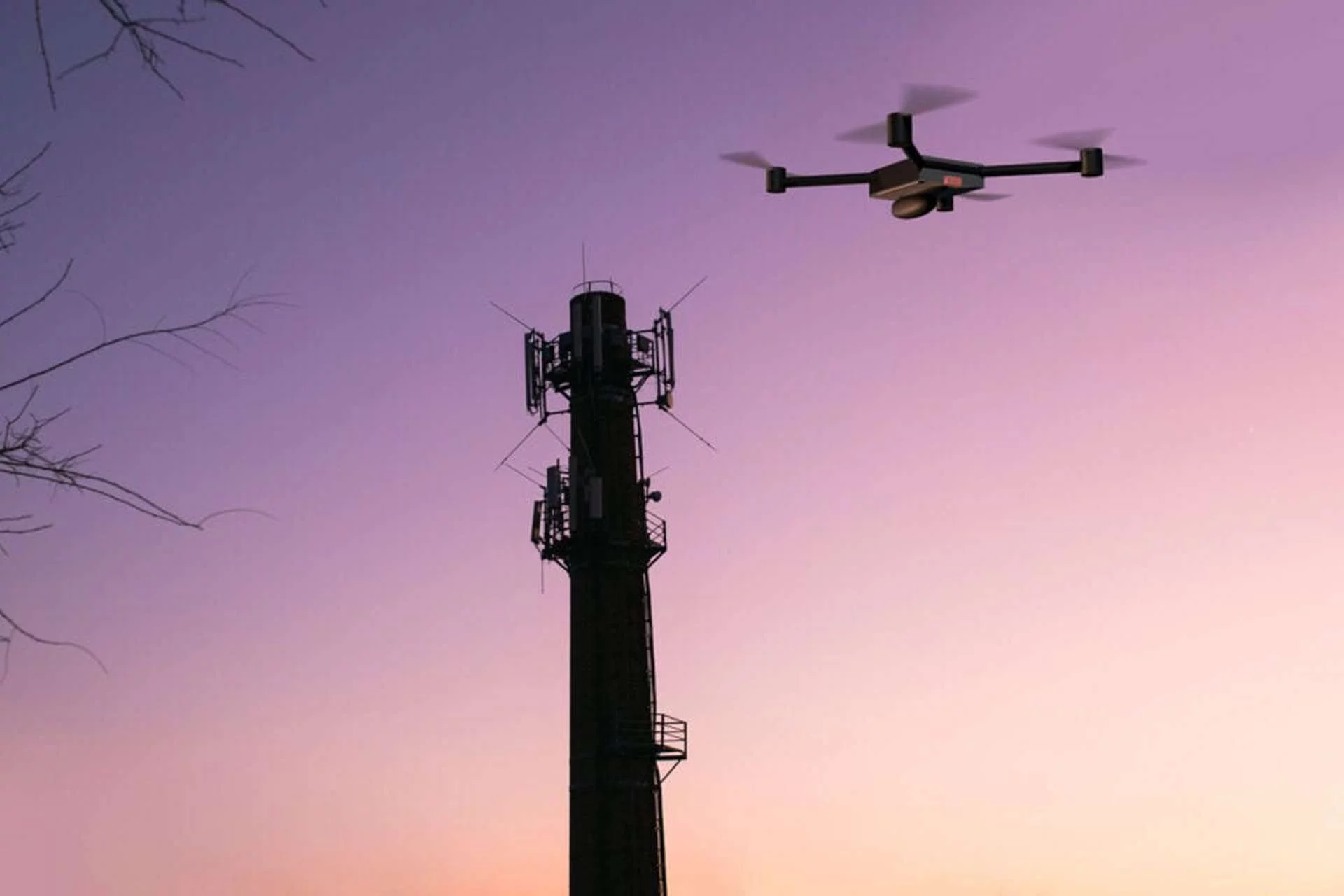
France has taken a decisive step in redefining airspace security with the launch of a telecom-based counter-drone network that leverages an astonishing 19,700 tower sites to monitor and protect critical infrastructure. Developed by Orange Business, the newly introduced Orange Drone Guardian represents a shift away from fragmented, site-specific defenses toward a scalable, nationwide detection and command ecosystem designed for modern low-altitude threats.
This move arrives at a moment when unauthorized drone activity is rapidly escalating across Europe, targeting sensitive facilities such as airports, energy hubs, military installations, and large-scale public events. Traditional counter-drone strategies—often reliant on isolated sensors or localized systems—have struggled to provide the persistent situational awareness required to counter agile, low-flying unmanned aerial systems (UAS). France’s approach directly addresses this gap by transforming existing telecommunications infrastructure into a distributed surveillance grid.
At its core, the Orange Drone Guardian system is not just another detection tool—it is a network-centric defense architecture. By integrating tower-mounted sensors, secure telecom connectivity, and sovereign cloud computing, the platform delivers real-time tracking, identification, and classification of drones operating in complex environments. This creates a seamless pipeline from detection to decision-making, enabling faster, more coordinated responses by both civilian operators and state authorities.
A Telecom Backbone Turned Security Shield
The brilliance of this system lies in its foundation: France’s extensive telecom infrastructure, operated in part through TOTEM, which manages tens of thousands of tower sites. These elevated structures provide ideal vantage points for sensor deployment, offering enhanced line-of-sight coverage across urban, industrial, and rural landscapes.
Rather than forcing each organization to build and maintain its own counter-drone network—a costly and time-consuming endeavor—Orange Drone Guardian delivers protection as a service. This model eliminates significant capital expenditure while ensuring standardized, continuously upgraded capabilities across all connected sites.
The use of telecom towers also introduces a powerful geometric advantage. Elevated sensors improve detection accuracy by reducing blind spots and enabling multi-angle tracking, especially in dense urban environments where buildings and electromagnetic interference can degrade traditional systems. The result is a high-resolution, wide-area surveillance capability that scales effortlessly with demand.
Real-Time Intelligence Through Sovereign Cloud Infrastructure
Detection alone is only part of the equation. The real strength of the system emerges in how data is transported, processed, and acted upon. Orange’s architecture relies on a secure, end-to-end managed network that feeds sensor data into a centralized operations center and the Cloud Avenue SecNum platform, a trusted cloud environment certified by France’s cybersecurity authority, ANSSI.
This sovereign cloud backbone ensures that sensitive surveillance data remains secure, low-latency, and fully compliant with national regulations. In practical terms, this means that once a drone is detected, its data is immediately analyzed, correlated with other inputs, and transformed into actionable intelligence.
Operators gain access to a continuously updated airspace picture, enabling them to assess threats, trigger security protocols, and coordinate with law enforcement or military units. The speed and reliability of this process are critical, particularly in scenarios where seconds can determine whether a drone becomes a harmless intrusion or a serious incident.
Designed for Complex and High-Risk Environments
Modern drone threats rarely occur in open, controlled spaces. Instead, they emerge in crowded cities, near critical infrastructure, and during major public events, where detection is complicated by signal interference and structural obstacles. Orange Drone Guardian is explicitly engineered for these conditions, prioritizing performance in electromagnetically dense and physically cluttered environments.
Sensors positioned on rooftops and towers feed into a sensor-to-command (C2) chain, ensuring that data flows seamlessly from detection points to decision-makers. This architecture allows for real-time correlation of multiple tracks, reducing false positives and improving overall accuracy.
Importantly, the system focuses on detection, identification, and classification, rather than direct neutralization. While it does not include built-in jamming or interception capabilities, this design aligns with the legal realities faced by many civilian operators, who often lack the authority to engage drones directly. Instead, the platform ensures that verified, legally actionable information is delivered to entities that can respond.
A Scalable Model for National and Industrial Protection
One of the most compelling aspects of the Orange Drone Guardian system is its scalability. Whether protecting a single industrial facility or coordinating security across multiple regions, the platform adapts without requiring additional infrastructure investment from the end user.
This makes it particularly valuable for:
- Airports and transportation hubs
- Energy and utility facilities
- Ports and logistics centers
- Government buildings and military-adjacent zones
- Large-scale events and urban gatherings
By providing a shared, nationwide detection layer, the system enables organizations to benefit from collective intelligence and broader coverage, rather than operating in isolation. This network effect significantly enhances the ability to detect coordinated or repeated drone incursions across different locations.
The Role of AI and Future 5G Sensing Capabilities
Looking ahead, Orange has designed the platform with future expansion in mind. The architecture is open and modular, allowing for the integration of artificial intelligence, additional sensor types, and advanced analytics tools.
AI, in particular, is expected to play a transformative role. By automating track correlation and filtering out noise, AI can reduce operator workload while improving detection accuracy in high-traffic environments. This is especially important as drone usage continues to grow, increasing the volume of airspace activity that must be monitored.
Another promising development is the potential integration of 5G radio sensing, which could turn communication signals themselves into a form of detection mechanism. Combined with digital twin technology, operators could simulate airspace scenarios, identify vulnerabilities, and optimize sensor placement for maximum effectiveness.
These innovations point toward a future where telecom networks are not just communication channels but active components of national defense systems.
Strategic Implications for Europe’s Counter-Drone Landscape
The launch of Orange Drone Guardian reflects a broader shift in how Europe approaches counter-drone security. Rather than relying solely on kinetic or electronic countermeasures, there is growing recognition that effective defense requires a layered, integrated approach.
In many cases, the biggest challenge is not stopping a drone, but detecting it early enough to respond appropriately. This is where France’s telecom-based model excels. By providing persistent, wide-area surveillance, it addresses one of the most critical gaps in current defense strategies.
Moreover, the system underscores the importance of sovereign capabilities. By keeping data processing and infrastructure within national control, France ensures that its counter-drone operations remain secure, reliable, and independent of external influence.
From Infrastructure to Intelligence: A New Security Paradigm
Orange’s initiative is more than a technological upgrade—it represents a fundamental rethinking of security infrastructure. By combining physical assets, digital networks, and cloud intelligence into a unified system, France is effectively turning its telecom backbone into a nationwide sensor network.
This approach delivers multiple advantages: faster deployment, reduced costs, standardized performance, and the ability to scale protection across diverse environments. It also creates a foundation for continuous improvement, as new technologies can be integrated without overhauling the entire system.
For critical infrastructure operators, the value is immediate and tangible. Instead of reacting to threats after they appear, they gain the ability to anticipate, monitor, and coordinate responses in real time. In a landscape where drone incidents can escalate بسرعة, this capability is not just beneficial—it is essential.
Conclusion: Early Detection as the Decisive Advantage
France’s telecom-based counter-drone network demonstrates that the future of airspace security lies not in isolated systems, but in connected, intelligent ecosystems. By leveraging 19,700 towers and a robust digital backbone, the country has created a persistent surveillance layer capable of transforming how drone threats are managed.
While the system does not directly neutralize drones, it addresses the most critical phase of the threat chain: early detection and informed decision-making. In doing so, it empowers authorities and operators to act بسرعة and effectively, preventing minor incursions from becoming major security incidents.
As drone technology continues to evolve, solutions like Orange Drone Guardian set a new benchmark for scalable, sovereign, and network-driven defense—a model that other nations are likely to study, adapt, and deploy in the years ahead.