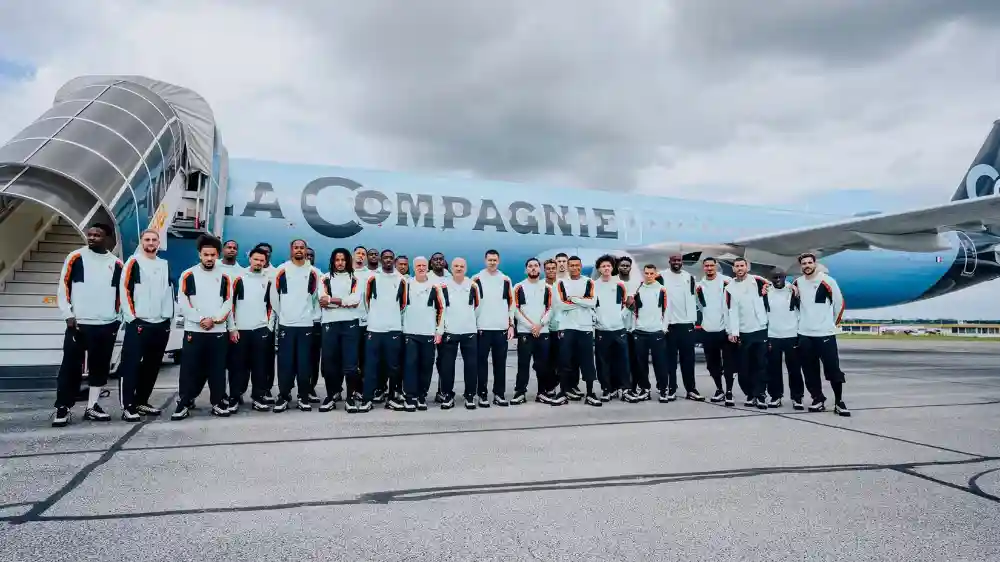
As the 2026 FIFA World Cup approaches, teams from around the globe are making their way to North America in style. Yet few arrivals have attracted as much aviation interest as the French national football team’s journey to Boston aboard an exclusive all-business-class Airbus A321neo. The unusual transatlantic charter highlighted how modern narrowbody aircraft are reshaping long-haul travel while offering elite passengers a premium experience once reserved almost exclusively for widebody jets.
France’s National Team Lands In Boston On Unique A321neo Charter
Boston Logan International Airport welcomed a rare visitor on June 10 when a La Compagnie Airbus A321neo arrived carrying France’s national football squad. Operating as flight B0532, the aircraft departed Paris Le Bourget shortly after 2:00 PM local time and completed the Atlantic crossing in seven hours and 52 minutes before touching down in Boston at 3:59 PM.
The arrival immediately stood out among the airport’s regular international traffic. Rather than utilizing a large widebody aircraft, France selected one of the most exclusive narrowbody airliners currently flying. The charter transported 26 players along with coaches, medical personnel, and support staff responsible for preparing the team for the tournament.
Boston officials and supporters gathered to welcome the squad upon arrival, with the delegation later transferring to the Four Seasons Hotel as preparations for the World Cup intensified.

La Compagnie’s Boutique Business-Class Concept
Unlike traditional airlines that divide cabins into multiple classes, La Compagnie operates an entirely business-class product. The French carrier has built its reputation around providing a premium travel experience across the Atlantic using Airbus A321neo aircraft configured exclusively for high-end travelers.
The aircraft that carried France to Boston, registered F-HNCO, entered service in 2019 and represents one of only two Airbus A321neo aircraft in the airline’s fleet. While most airlines attempt to maximize seat capacity, La Compagnie prioritizes comfort, dedicating the entire cabin to just 76 passengers.
This distinctive business model has helped the airline carve out a niche market among corporate travelers seeking a more private and personalized alternative to larger international carriers.
Inside The All-Business Airbus A321neo
Stepping onboard La Compagnie’s Airbus A321neo is a dramatically different experience from what most travelers expect from a single-aisle aircraft. The cabin features 19 rows of Collins Aerospace Diamond lie-flat seats arranged in a spacious 2-2 layout.
Every passenger enjoys direct access to premium amenities, including a large 15.6-inch inflight entertainment screen, generous personal space, and seating designed for overnight comfort. The lie-flat configuration transforms the narrowbody aircraft into a long-haul luxury platform capable of competing with premium cabins on much larger jets.
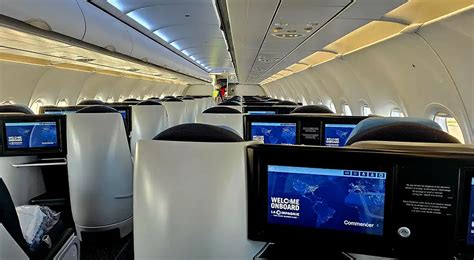
Beyond the seating itself, the airline is known for delivering a refined onboard service. Gourmet meals developed in collaboration with Michelin-starred chefs, carefully selected wines, and attentive cabin service create an experience that aligns more closely with private aviation than conventional commercial travel.
For elite sports teams crossing the Atlantic before a major tournament, such an environment offers valuable opportunities for rest, recovery, and preparation.
The Growing Role Of Narrowbody Aircraft On Long-Haul Routes
The French team’s journey also reflects a broader transformation occurring across the airline industry. Historically, long-haul flights were dominated by twin-aisle aircraft such as the Airbus A330, A350, Boeing 777, and Boeing 787.
Advances in aircraft technology have changed that equation. New-generation models such as the Airbus A321LR and Airbus A321XLR have demonstrated that narrowbody aircraft can efficiently operate transatlantic routes while maintaining strong passenger comfort and airline economics.
As a result, carriers increasingly deploy single-aisle aircraft on routes that would previously have required larger jets. This strategy allows airlines to offer more frequencies, access smaller markets, and reduce operating costs without sacrificing range.
World Cup Travel Brings Unusual Aircraft To North America
France’s arrival is just one example of the aviation activity surrounding the 2026 FIFA World Cup. National teams have been chartering a diverse range of aircraft to transport players, staff, and equipment across the United States, Canada, and Mexico.
Recent arrivals have included an Iberia Airbus A350 carrying Spain’s national team to Nashville, while Argentina completed one of the tournament’s longest journeys aboard an Airbus A330-200 from Buenos Aires to Kansas City.
These movements have created rare aircraft sightings at airports that do not normally receive such international traffic, generating excitement among aviation enthusiasts and football supporters alike.
For La Compagnie, the charter also serves as a high-profile showcase of its premium product. As World Cup travel demand surges throughout the summer, the airline is expanding operations and increasing capacity, positioning itself to capitalize on one of the busiest transatlantic travel periods in recent years. The French squad’s luxurious journey to Boston demonstrated not only the prestige associated with elite sporting events but also the growing capabilities of modern narrowbody aircraft in redefining long-haul premium travel.