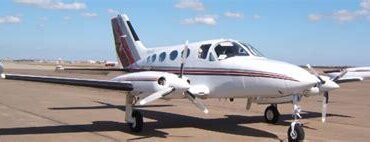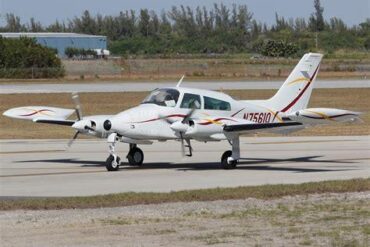
General Aviation (GA) refers to all civil aviation operations that are not part of scheduled air services or non-scheduled transport for hire. This category is often called general aviation and aerial work (GA/AW). GA includes a wide variety of activities. Recreational flying, which covers balloon, glider, and sport aircraft operations, makes up about one-quarter of GA’s 40 million annual flight hours. Other activities in GA/AW include pilot training, business aviation, and agricultural tasks like crop spraying. It also includes emergency medical services, such as transporting critically ill patients and essential medical supplies. Additionally, GA plays a role in monitoring ground traffic from the air, conducting civil search and rescue missions, supporting law enforcement, and fighting fires. Other tasks involve aerial surveys, photography, news gathering, sightseeing tours, and flight demonstrations.
According to IAOPA Europe, which represents the International Council of Aircraft Owner and Pilot Associations, around 350,000 aircraft and 700,000 pilots participate in these activities worldwide. In the United States, known as the largest single aviation market globally, about 65% of GA flights serve business and public purposes. More than 90% of the roughly 220,000 civil aircraft registered in the U.S. are classified as GA aircraft, and over 80% of the 609,000 certificated pilots fly these types of planes, according to the U.S.-based AOPA. Business aviation, defined as using any GA aircraft for business, is the most significant segment of GA/AW. In the U.S., where most of the world’s business aircraft are operated and maintained, business aviation contributes an impressive $150 billion to the economy annually, as reported by the National Business Aviation Association (NBAA).
Safety in GA is a critical concern. Similar to commercial air transport, the main causes of fatal GA accidents include loss of control in flight and controlled flight into terrain (CFIT). Other top causes include system failures, midair collisions, and unintended flights into Instrument Meteorological Conditions (IMC). In fiscal year 2021, the fatal accident rate in GA was 0.95 per 100,000 flight hours, while the overall accident rate stood at 5.26 per 100,000 flight hours. For comparison, the international scheduled airline fatal accident rate in 2019 was 0.17 fatal accidents per million flight hours, according to the International Air Transport Association (IATA).