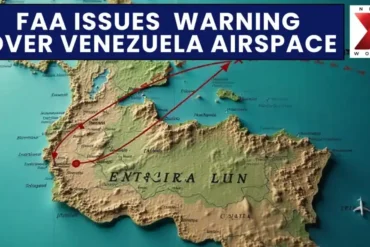
The decision by US President Donald Trump to declare Venezuela’s skies “closed in their entirety” has triggered an unprecedented and immediate shift across international aviation networks. Airlines around the world are now rerouting flights, canceling services, and redrawing journey maps to avoid Venezuelan airspace altogether. The abrupt instruction, issued on November 29, 2025, through Trump’s personal social media platform, has amplified geopolitical tensions and caused direct operational disruptions for both regional and long-haul aviation. For global carriers, the message landed as a decisive signal: fly around Venezuela or risk becoming entangled in a fast-escalating political standoff.
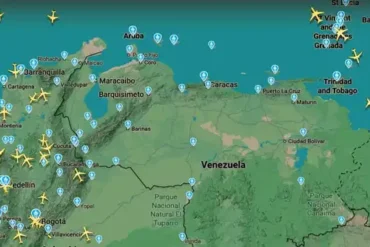
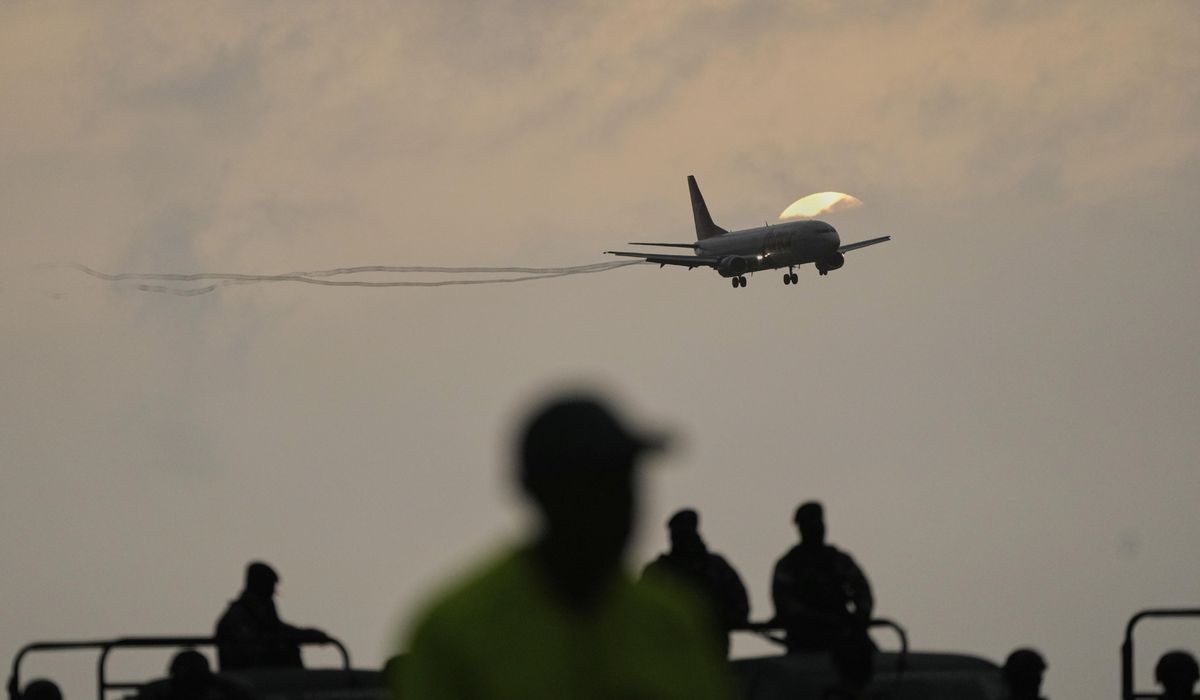
In the hours that followed the announcement, international flight-tracking data showed the skies above Venezuela nearly devoid of civil aviation traffic. Aircraft that previously depended on Venezuelan corridors for fuel-efficient routing were instead skirting the nation’s borders, following less direct paths across the Caribbean and northern South America. By Sunday morning, only a handful of local Venezuelan aircraft remained aloft, their tracking spikes drawing global attention amid the newly imposed informal no-fly zone.
The Venezuelan government quickly condemned the declaration as an act of “colonialist threat,” asserting that the United States had no authority to close the airspace of a sovereign nation. Officials in Caracas framed the move as an attempt to destabilize Venezuela’s internal security and international standing. The tensions added another layer of complication to ongoing US migrant deportation flights, which Venezuelan authorities confirmed were suspended due to the evolving situation.
Trump’s statement — directed broadly at “Airlines, Pilots, Drug Dealers, and Human Traffickers” — appeared to build on long-standing concerns raised by the Federal Aviation Administration (FAA). Weeks earlier, the FAA had urged carriers to exercise heightened caution over Venezuelan territory, citing increased military movements, risks to civil aircraft, and GPS interference that could compromise flight safety. Several major airlines, including Iberia, TAP Air Portugal, Avianca, LATAM Airlines, and GOL Linhas Aéreas, had already begun scaling back or suspending routes to Venezuela ahead of the escalation, aligning operational policies with risk-based assessments.
For the aviation sector, the airspace closure effectively transforms one of South America’s key flight corridors into a strategic void. This shift forces carriers to adopt longer and more fuel-intensive routing patterns. Flights between Europe and South America, and between North America and the Southern Cone, now face increased block times and higher operational costs. Passengers may experience extended layovers and a reduced number of available itineraries, particularly those relying on Venezuelan hubs or transit points. The closure also creates new obstacles for travelers stranded inside Venezuela, where outbound international connectivity was already sharply limited.
Even before Trump’s order, Venezuela had taken decisive steps against foreign airlines. Days earlier, authorities revoked operating rights for six major international carriers, including Turkish Airlines and operators from Colombia, Portugal, Spain, and Brazil. Venezuelan regulators argued the measure was a response to those carriers suspending service, while industry observers viewed it as a retaliatory move deepening the country’s aviation isolation.
Legal analysts emphasize that the Chicago Convention — the foundational international treaty governing civil aviation — grants exclusive authority over airspace to each sovereign nation. Trump’s declaration, therefore, lacks formal legal force. Yet in practice, carriers have treated the directive as binding due to the geopolitical stakes and the risk of military escalation in the region. The effect is a de facto airspace shutdown, created not by statute but by operational necessity and international caution.
The wider geopolitical landscape continues to intensify. The United States has expanded regional anti-drug operations, including naval patrols and targeted actions against suspected trafficking vessels in the Caribbean. Washington claims these efforts disrupt criminal networks linked to the Venezuelan government. The resulting environment has created a layer of uncertainty that aviation planners must factor into every routing decision, transforming what was once neutral airspace into a zone of heightened strategic sensitivity.
As airlines, regulators, and passengers adapt to this rapidly shifting reality, the airspace over Venezuela stands as a stark reminder of how geopolitics can reshape global mobility. A corridor that once offered efficient passage across continents has now become a high-risk frontier — one avoided not by international edict, but by the pressure of political momentum and operational prudence.