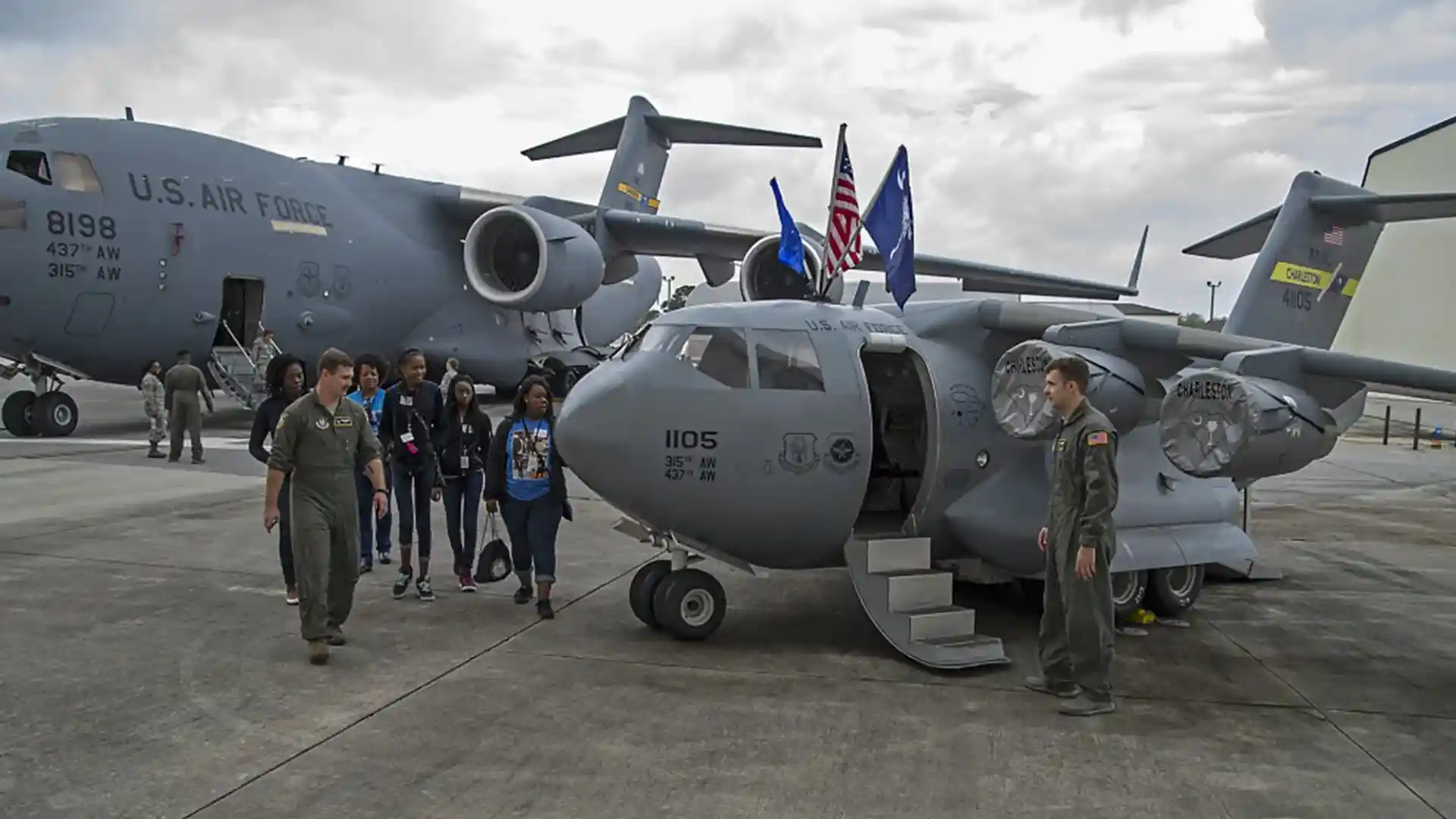
The U.S. Air Force’s mini C‑17 Globemaster III replica is a marvel of volunteer ingenuity and a powerful recruiting asset. Conceived in 1999 and constructed over 23 months from 2002 to 2004 by dedicated volunteers from the 315th and 437th Airlift Wings at Joint Base Charleston, this one‑sixth scale model transforms scrap metal and a donated John Deere Gator utility vehicle into a strikingly realistic homage to one of the world’s most capable transport jets. While its stubby fuselage, short wings, and four miniature engine pods mimic the real C‑17 down to the curve of every panel, the replica’s creators never intended it to fly. Instead, they engineered a ground‑only beast capable of speeds up to 15 mph, outfitted with mock flight station panels, authentic engine sounds, and a fully operational cargo ramp and door to simulate the real thing.
The genesis of the mini C‑17 illustrates a blend of resourcefulness and training innovation. Volunteers scavenged scrap materials—sheet metal discarded from decommissioned aircraft and surplus airframe components—to shape the fuselage and wings. Beneath this outer shell lies the chassis of a John Deere Gator, whose drivetrain and suspension provide surprising performance on tarmac and grass alike. Maintenance personnel honed their skills on every rivet and weld, learning advanced sheet‑metal techniques outside the pressures of active fleet maintenance. One officer aptly described the undertaking as a “true monster garage” project, noting that the collaboration fostered team cohesion and practical expertise that would serve the reserve wings long after the final bolt was torqued.
When the “Spirit of Hope, Liberty & Freedom” made its debut in November 2004, the realism was so convincing that some attendees genuinely believed the Air Force had unveiled a new variant of the C‑17. The model spans 28.5 feet in wingspan, measures 32 feet from nose to tail, and stands 13.4 feet tall at the vertical stabilizer, tipping the scales at about 3,500 pounds. Because of its weight and dimensions, moving the replica between events requires a purpose‑built 44‑foot NASCAR‑style trailer. Once on site, assembly by a small crew takes roughly one hour, with disassembly requiring an additional 90 minutes. Despite its immobility in air, the mini C‑17’s road‑going capabilities and lifelike presentation make it an ideal centerpiece for recruitment and community outreach.
Replica Construction and Technical Specifications
The mini C‑17’s construction process reflects practical ingenuity. The project leaders chose the John Deere Gator as the foundation for its rugged reliability and off‑road capability. Volunteers stripped the utility vehicle to its frame, reinforcing structural members to support the weight of the replica fuselage. Over the reinforced chassis, sheet‑metal technicians cut, shaped, and riveted panels that replicate the C‑17’s distinctive fuselage cross‑section. Four decorative engine pods, each echoing the contours of Pratt & Whitney F117‑PW‑100 turbofans, house speakers and vibration units to simulate engine roar at startup and taxi speeds.
Key specifications:
- Scale: 1/6 of original C‑17 dimensions
- Length: 32 ft
- Wingspan: 28.5 ft
- Height: 13.4 ft
- Weight: 3,500 lb
- Top Ground Speed: 15 mph
- Power Source: Gasoline engine and drivetrain from John Deere Gator
- Features: Operational cargo ramp, mock flight panels, authentic engine sounds, functional landing gear struts
Every component was selected for durability and authenticity. The functional landing‑gear struts, fabricated from reinforced tubing, enable realistic taxi attitude and shock absorption. The cargo ramp and door, sourced from surplus airlift equipment, open and close via hydraulic actuators salvaged from retired support vehicles. Even the paint scheme replicates the Air Force’s signature gray camouflage, applied with an airbrush to capture subtle panel‑line shadows.
Public Relations and Recruiting Mission
While Boeing discontinued production of the full‑size C‑17 in 2015, the mini replica continues to serve as a dynamic outreach tool for the Air Force Reserve. Its primary mission is to spark curiosity, inspire young visitors, and provide a tangible connection to military aviation. When stationed at community events, parades, air shows, collegiate career fairs, and even major league baseball games, the mini C‑17 draws crowds of all ages eager to pose for photos and explore its cargo bay.
The replica’s designer group christened it the “Spirit of Hope, Liberty & Freedom,” reflecting the values the Air Force seeks to impart. By offering hands‑on experiences—allowing recruits to press buttons in the mock cockpit, cycle the cargo ramp, and hear the engines rumble—the mini C‑17 transcends static displays. It becomes an interactive classroom, where Air Force recruiters can engage with prospective airmen and illustrate career paths in aviation maintenance, logistics, and airlift operations.
In 2016, the replica’s mission crossed an ocean when it was loaded aboard a real C‑17 for transport to Yeovilton, England. There, at the Royal International Air Tattoo, it secured the “Best Static Display” award, underscoring its appeal beyond domestic audiences. That victory showcased the Air Force Reserve’s creativity and bolstered international goodwill, all while reinforcing the global mobility mission embodied by the C‑17 fleet.
Logistical Challenges and Event Operations
Transporting and staging the mini C‑17 demands meticulous coordination. The custom 44‑foot trailer is equipped with an integrated winch and guide rails to cradle the 3,500‑pound replica during transit. Loading compromises between protecting delicate sheet‑metal edges and minimizing setup time have led to refinements in tie‑down techniques and foam‑padded supports. Once on site, a seven‑person crew—comprising avionics, sheet‑metal, and logistics specialists—unloads and positions the model using lightweight aluminum ground jacks.
Site requirements include a flat, paved surface at least 50 feet long by 30 feet wide, clear of overhead obstacles. Power for lighting, audio, and hydraulic actuators comes from portable generators, rigged to military‑grade power distribution panels. Setup crews deploy 360‑degree safety barriers, signage, and branded canopy tents for recruiting booths. Post‑event, teardown follows a reverse sequence: securing moving parts, disconnecting hydraulic lines, and carefully retracting the landing‑gear struts before towing the replica back into its trailer.
The Patchwork Fleet: Other Miniature Military Replicas
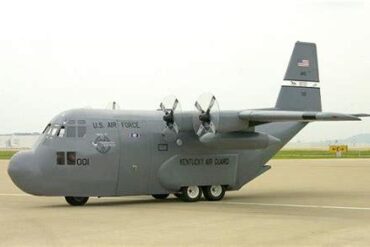
The mini C‑17 is not a standalone novelty but part of a broader “patchwork fleet” of ground‑based military aircraft models deployed by reserve and guard units across the country. At least three mini C‑130 Hercules replicas, maintained by various Air National Guard wings, operate on similar principles. These smaller models serve identical PR and recruiting functions, with proportions ranging from one‑eighth to one‑tenth scale.
Additionally, recruiting squadrons utilize mini F‑16 Fighting Falcon and mini F‑22 Raptor replicas. Each model is tailored to its platform’s unique characteristics: the mini F‑16 boasts a swiveling nosecone and playable radar display, while the mini F‑22 features LED lighting to simulate stealth coating reflections. Together, these replicas form a traveling exhibition that can adapt to diverse venues and draw interest in multiple Air Force career fields.
The benefits of this fleet approach are manifold. Volunteer maintenance crews refine their technical skills on authentic rapid‑prototype projects. Communities gain immersive, accessible glimpses of airpower heritage. The recruiting command leverages social media magnetism, capturing shareable photos and videos that amplify the Air Force’s digital outreach. By coordinating multi‑platform tours, units can foster cross‑base collaboration and optimize resource allocation, ensuring that each event delivers maximum impact.
Impact and Future Prospects
More than a decade after its first rollout, the mini C‑17 continues to exceed expectations. Its presence at events consistently drives higher recruiter engagement metrics, elevating lead generation by up to 40 percent compared to static signage alone. Survey data indicates that visitors interacting with the replica are twice as likely to request follow‑up information about Air Force careers. The model’s success has inspired concepts for future builds, including scaled replicas of unmanned aerial vehicles and early‑generation transports.
Looking ahead, reserve and guard units are exploring enhancements to existing replicas: integrating augmented‑reality kiosks that overlay technical schematics on the model, adding telemetrics displays that track ground‑speed and engine sound profiles in real time, and experimenting with hybrid‑electric drivetrain swaps to reduce generator use. Prototypes for a mini C‑5 Galaxy and a mini KC‑135 Stratotanker are already in discussion among volunteer workshops, with feasibility studies underway to assess scale, cost, and manpower requirements.
Conclusion
The mini C‑17 replica—Spirit of Hope, Liberty & Freedom—embodies the Air Force Reserve’s commitment to innovation, community engagement, and technical excellence. Born from a volunteer “monster garage” ethos, it bridges the gap between the full‑scale fleet and the public imagination, transforming scrap metal into an interactive ambassador of aerial mobility. As part of a growing patchwork fleet of miniature military aircraft, it not only recruits and educates but also hones the skills of the very airmen it inspires. In an era where digital outreach competes for attention, this ground‑bound giant proves that tangible experiences remain unparalleled in forging connections between civilian communities and the guardians of the skies.