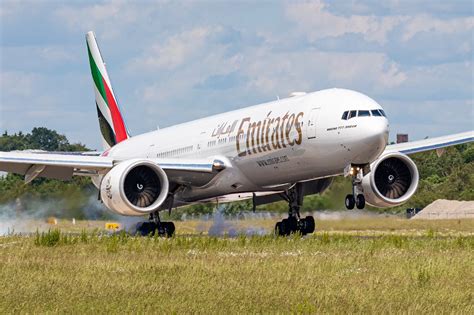
Europe’s aviation industry is confronting a defining question: will Gulf carrier expansion hollow out European cabin careers, or will it simply force long-overdue reform in a high-cost market? As Germany weighs additional landing rights for Emirates and the European Union deepens its aviation ties with Qatar Airways, cabin crew unions are sounding the alarm. They warn that what is being framed as liberalization may, in practice, become a structural shift in power—away from regulated European labor markets and toward state-backed competitors operating under different rules.
The controversy intensified after Germany signaled openness to expanding Emirates’ access, potentially including additional operations at Berlin Airport. For the Independent Flight Attendants’ Organization (UFO), Germany’s cabin crew union, the move represents more than another route approval. It signals a recalibration of market priorities, one that could accelerate competitive pressure on European airlines already squeezed by high labor costs, strict climate regulation, and intense price competition.
At the heart of the dispute lies a profound asymmetry. European carriers operate within a tightly regulated framework shaped by EU labor protections, environmental mandates, and safety oversight. Gulf airlines, while internationally certified and operationally sophisticated, are not subject to the same social and environmental obligations. Unions argue that this divergence translates directly into cost disparities—disparities that ripple through hiring, wages, and working conditions.
Regulatory Imbalance and the Economics of Competition
The accusation of “unfair competition” hinges on economics rather than rhetoric. European airlines face the European Union Emissions Trading System (EU ETS), comprehensive crew duty limitations, collective bargaining frameworks, and social security contributions calibrated to high-wage economies. These regulatory pillars are not optional; they are structural components of operating within the bloc.
By contrast, Gulf carriers benefit from state-linked financial models, infrastructure investment support, and different labor market structures. Whether labeled as subsidies or sovereign investment strategy, the effect is tangible: lower unit costs and greater pricing flexibility. When such airlines enter European markets with expanded traffic rights, they can offer aggressive fares and premium onboard experiences while sustaining profitability.
This cost advantage is amplified in long-haul markets, where Gulf carriers have built reputations for seamless hub connectivity via Dubai and Doha. Ultra-long-haul services—some stretching close to 17 hours nonstop—demonstrate the operational scale these airlines command. European network carriers, reliant on high-yield premium traffic to balance long-haul economics, increasingly find themselves competing on both price and product.
Unions argue that the issue is not market access alone, but reciprocity of standards. If European airlines cannot match the labor cost base of their competitors without dismantling domestic protections, the market ceases to be symmetrical. The result, they fear, is a gradual erosion of negotiated wages and collective bargaining strength.
Cabin Crew on the Front Line
For flight attendants across Europe, this is not abstract policy debate. It is a lived anxiety about job stability. Cabin crew roles in Europe are historically tied to union representation, codified rest protections, and predictable wage progression. These conditions evolved over decades of negotiation and industrial action.
The expansion of Gulf carriers introduces a new competitive benchmark. When passengers compare fares and onboard service, they are rarely evaluating pension contributions or social insurance structures. They are choosing price, schedule, and cabin experience. Airlines respond accordingly.
If European carriers are forced into deeper cost restructuring to remain competitive, cabin crew contracts become an obvious target. Labor is one of the largest controllable expenses in aviation. Unions warn that expanded Gulf access could accelerate outsourcing, base relocations, and revised employment terms within Europe.
EurECCA, the umbrella organization representing EU cabin crew unions, has echoed these concerns. Its position is not isolationist; rather, it calls for transparency in bilateral agreements and enforceable labor clauses. Without these safeguards, liberalization risks morphing into what critics term “social dumping”—a scenario in which regulatory arbitrage replaces productive competition.
Climate Policy and Competitive Tension
Beyond wages and contracts lies another flashpoint: climate regulation. The European Union has positioned itself as a global leader in aviation decarbonization. Airlines within the bloc must account for carbon costs and increasingly invest in sustainable aviation fuel (SAF), often at significant expense.
Gulf carriers, operating outside EU ETS constraints, face a different cost environment. While many have announced sustainability initiatives and fleet modernization strategies, they are not bound by identical regulatory frameworks. From the union perspective, this discrepancy compounds existing cost imbalances.
The paradox is stark. European policymakers pursue aggressive climate goals, yet simultaneously expand market access for airlines not subject to the same regime. Critics argue that this undermines the internal logic of European aviation policy. Supporters counter that global competition cannot be insulated by regional regulation without sacrificing connectivity and consumer benefit.
The tension reveals a deeper structural dilemma: can Europe maintain high labor and environmental standards while competing in a liberalized global aviation market? History suggests this balance is fragile.
Political Fallout and Public Scrutiny
The political dimension has intensified following controversies surrounding EU-Qatar negotiations. Public trust in aviation agreements has been strained by allegations and legal fallout tied to lobbying and influence. Even when separate from the technical substance of air service agreements, such scandals magnify suspicion.
In Germany, discussions between federal officials and Gulf counterparts during diplomatic tours have further fueled scrutiny. The optics matter. When additional traffic rights coincide with geopolitical engagement, critics see leverage rather than liberalization.
Yet governments face countervailing pressures. Expanded connectivity can lower fares, stimulate tourism, and strengthen trade links. Berlin Airport, still striving to solidify its long-haul portfolio, stands to benefit from high-profile Gulf services. Political leaders must weigh macroeconomic gains against sectoral disruption.
Market Evolution or Structural Decline?
The narrative of a “race to the bottom” implies inevitable deterioration—declining wages, weakened unions, and eroded standards. That outcome is possible, but not predetermined. Markets evolve through cycles of disruption and adaptation.
European carriers have historically responded to competitive shocks through alliances, product upgrades, and fleet modernization. The rise of low-cost carriers reshaped short-haul markets; Gulf expansion now tests long-haul resilience. The question is whether adaptation can occur without dismantling the social architecture underpinning European aviation employment.
One pathway involves embedding enforceable labor and environmental provisions into future air service agreements. Another requires European airlines to innovate operational efficiency without defaulting to labor contraction. Both demand political will and strategic clarity.
Consumers, meanwhile, remain powerful arbiters. Demand for affordable long-haul travel is rising. Gulf airlines have mastered the art of positioning their hubs as global crossroads, offering connectivity that is difficult to replicate. Any European response must account for passenger preference rather than assume regulatory insulation.
The Future of European Cabin Careers
Cabin crew roles are more than line items in a cost ledger. They embody service culture, safety oversight, and brand identity. Europe’s aviation workforce developed within a framework of collective bargaining that many consider a benchmark for social partnership.
If Gulf expansion proceeds without structural safeguards, the pressure on this model will intensify. The outcome could range from moderated wage growth to fundamental restructuring of employment patterns. Conversely, heightened scrutiny may catalyze reforms that strengthen transparency and level competitive conditions.
Aviation has always been a mirror of geopolitical and economic power. Today’s dispute over traffic rights reflects broader questions about globalization, regulation, and labor sovereignty. Whether this moment becomes a destructive race to the bottom or a catalyst for smarter integration depends on policy design, industry strategy, and the collective resolve of Europe’s aviation stakeholders.
The runway ahead is contested. What happens next will define not only route maps and fare structures, but the very character of European cabin careers in a globalized sky.