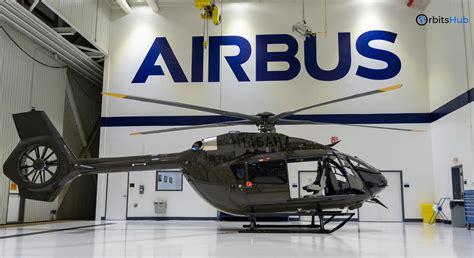
Unless you’re immersed in the aviation world, the names Airbus H145 and Eurocopter EC145 may not instantly spark recognition. Yet, these rotorcraft are among the most critical workhorses in modern-day air ambulance services, search and rescue operations, and law enforcement missions. Built on a shared lineage, these two helicopters seem closely related — and they are — but a closer inspection reveals fundamental differences that separate them in terms of performance, design, and technology.
The Birth of the EC145: A Proven Utility Platform
The Eurocopter EC145, introduced in the early 2000s, was born from a partnership between Messerschmitt-Bölkow-Blohm (MBB) and Aérospatiale, eventually unified under Eurocopter. Designed to succeed the successful BK117, the EC145 was tailored for versatility, combining a spacious cabin with twin-engine reliability, and earning trust across civilian and governmental sectors.
It quickly found favor with air medical services in North America and Europe due to its ability to carry multiple passengers, stretchers, and specialized medical equipment without compromising performance. The aircraft’s Turbomeca Arriel 1E2 engines delivered solid thrust, while its analog avionics — though eventually dated — provided essential situational tools for pilots of that era.
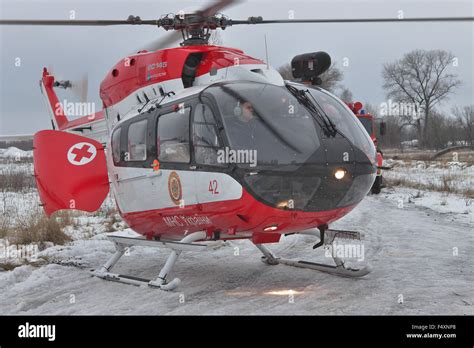
The EC145 became synonymous with reliability. But by the early 2010s, its avionics, rotor design, and cabin noise levels needed a revamp to meet modern mission demands and reduce environmental footprints.
Transitioning to Airbus: From EC145 T2 to H145
In 2014, a major shift occurred. Eurocopter was rebranded as Airbus Helicopters, aligning itself with its parent, Airbus Group. With this change came a restructuring of model designations — the “EC” prefix was dropped in favor of “H.” But this wasn’t just a name change. The EC145 T2, an enhanced variant of the original, was rebranded as the H145.
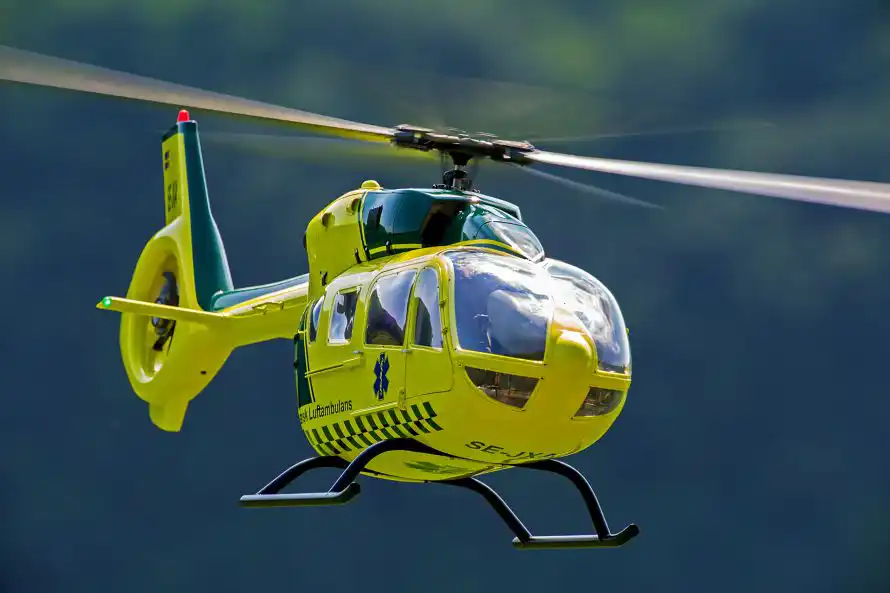
This wasn’t just a marketing move — the T2/H145 brought deep performance and safety enhancements. These included:
- More powerful Turbomeca Arriel 2E engines for higher performance
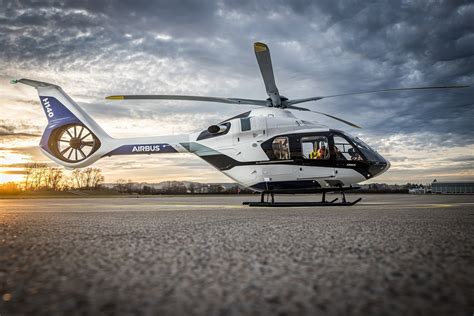
- Redesigned Fenestron tail rotor for quieter, safer operation
- Full glass cockpit with Helionix avionics suite
This rebranded aircraft didn’t erase the EC145 — it evolved it.
Powertrain Upgrade: Arriel 2E vs Arriel 1E2
The H145 uses the Arriel 2E engines, producing 894 shp each, compared to the EC145’s Arriel 1E2 engines, which offer 738 shp. The result is a clear performance edge in the H145, with improved single-engine performance, fuel efficiency, and hot-and-high capabilities — crucial for mountainous rescue missions or operations in extreme climates.
This power upgrade also contributes to a higher Maximum Takeoff Weight (MTOW). The H145 can lift approximately 3,800 kg, while the EC145 maxes out near 3,585 kg. That extra capacity may translate to an additional medical stretcher, more fuel for extended missions, or additional onboard systems like winches or camera turrets.
Tail Rotor Transformation: Safety and Silence
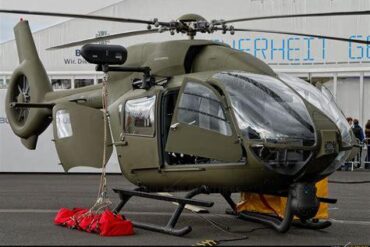
One of the most visually striking changes in the H145 is the adoption of a Fenestron tail rotor — a shrouded tail rotor enclosed within the aircraft’s vertical stabilizer. Compared to the exposed tail rotor on the EC145, the Fenestron design delivers significant operational benefits:
- Reduced risk of accidental contact with ground personnel
- Lower noise signature during hover and flight
- Improved anti-torque responsiveness
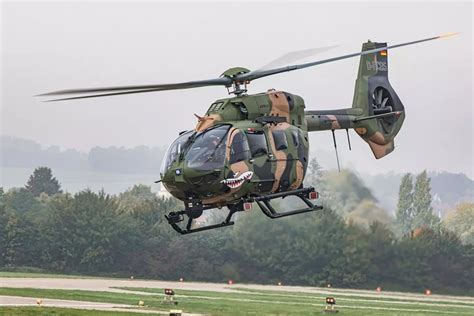
The noise-reduction advantage isn’t just a marketing point. Urban environments increasingly demand low-noise aerial platforms, especially for medical and police operations that fly at low altitudes near densely populated zones.
Advanced Avionics: Analog to Helionix
The EC145 featured avionics that were advanced at its inception but increasingly outdated as airspace and mission complexity grew. Pilots faced higher workload, lower situational awareness, and limited redundancy.
The H145, on the other hand, ships with the Helionix integrated avionics suite, Airbus’s state-of-the-art flight deck system. It includes:
- 4-axis autopilot, improving hover stability and hands-free mission precision
- Synthetic vision system for better low-visibility operation
- Mission-adaptable displays and navigation overlays
- Pilot workload reduction through intelligent automation
These upgrades translate into safer, more efficient, and mission-flexible flights, making the H145 especially appealing for EMS crews, tactical police teams, and offshore oil operators.
Mission-Specific Versatility: EMS, Law Enforcement, and More
Both helicopters have been embraced in various sectors, but the H145’s updates significantly enhance its multi-role adaptability. The modular cabin can be reconfigured in under an hour, enabling transitions from:
- Emergency medical transport with up to two stretchers and life-support equipment
- Surveillance and patrol with EO/IR camera mounts
- Passenger transport for VIP or corporate missions
The EC145 retains usefulness, particularly in cost-conscious fleets or less demanding environments. But for agencies demanding low downtime, next-gen avionics, and enhanced safety systems, the H145 is becoming the standard.
Operational Cost Efficiency and Maintenance
Despite the H145’s technological leap, Airbus has focused on maintainability. The H145 has fewer mechanical parts due to the Fenestron and integrated avionics, lowering scheduled maintenance intervals and mean time between failures (MTBF). Its digital health monitoring systems provide predictive maintenance insights, reducing unscheduled downtimes.
Although the initial acquisition cost of the H145 is higher than the EC145, its lifecycle cost benefits — from reduced training hours due to the Helionix interface to longer maintenance intervals — balance the equation over time.
Safety Enhancements and Certification Advances
Safety is where the H145 truly distinguishes itself. Besides the Fenestron tail rotor and 4-axis autopilot, Airbus has incorporated:
- Crashworthy fuel systems
- Energy-absorbing landing gear
- Redundant hydraulic and electrical systems
- Improved lightning strike protection
It also meets EASA and FAA Part 27/29 certifications, offering global operability with confidence.
The EC145, while still certified and safe, doesn’t benefit from the same automated flight envelope protection, synthetic terrain, or automated hover features, making it a more hands-on flight experience.
Summary of Core Differences
| Feature | EC145 | H145 (EC145 T2) |
|---|---|---|
| Engine | Arriel 1E2 (738 shp) | Arriel 2E (894 shp) |
| Tail Rotor | Exposed traditional | Fenestron enclosed |
| Avionics | Analog/Digital mix | Helionix Glass Cockpit |
| Autopilot | Limited | Full 4-axis |
| Noise Level | Higher | Significantly reduced |
| MTOW | ~3,585 kg | ~3,800 kg |
| Cabin Modularity | Good | Excellent |
| Maintenance Interval | Shorter | Extended |
| Health Monitoring System | Basic | Advanced digital |
Conclusion: Legacy Meets Modern Mission
The Airbus H145 is not merely a rebranded EC145 — it is the evolution of a proven design adapted to the challenges of 21st-century aviation. With its increased power, reduced noise, enhanced safety, and advanced avionics, it represents the future of light utility helicopters.
The EC145 continues to perform capably in fleets worldwide, especially in scenarios where cost and simplicity outweigh technological edge. But when it comes to mission-critical operations demanding utmost precision, efficiency, and pilot support, the H145 emerges as the superior aircraft, built on a legacy — but firmly grounded in the present.