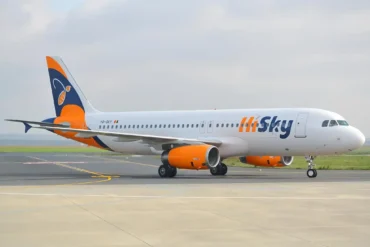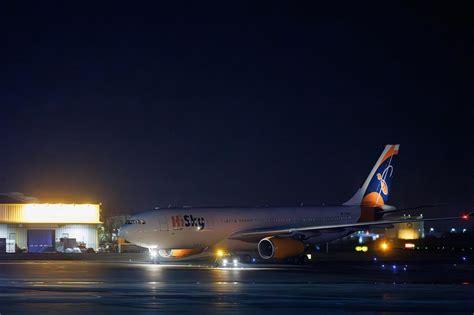
On June 10, a pivotal moment in Romanian aviation quietly unfolded as HiSky launched its inaugural direct flight from Bucharest Henri Coandă International Airport (OTP) to New York John F. Kennedy International Airport (JFK). This ambitious transatlantic route not only positions HiSky as Romania’s new contender in long-haul aviation but also marks the return of direct Romania–USA connectivity after several years of absence.
The Strategic Value of Direct Transatlantic Flights
The re-establishment of direct service between Bucharest and New York has immense geopolitical and economic relevance. The U.S. and Romania share a strong diplomatic and military alliance, and now, a direct route links two capitals of commerce, politics, and culture. For the Romanian-American diaspora, numbering over one million individuals across the U.S., particularly concentrated around New York, Chicago, and Los Angeles, this route is more than convenience—it’s reconnection.
Beyond the emotional appeal, the launch also strategically targets the underserved Eastern European long-haul market, where low-cost carriers have yet to find a stable, scalable model. HiSky aims to plug this gap, offering competitive pricing with nonstop service.
Operational Overview: Aircraft, Frequency, and Pricing
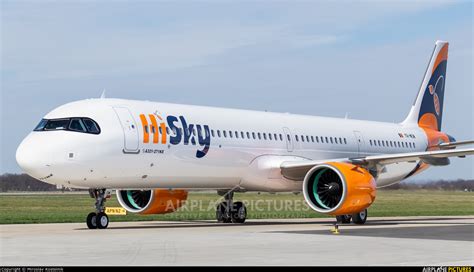
HiSky is operating this long-haul route using an Airbus A321neo LR, an aircraft that blends fuel efficiency with extended range capabilities. This narrow-body long-haul solution is increasingly popular among emerging airlines attempting to bridge medium to long-range transatlantic routes without incurring the operational costs of widebody aircraft like the Boeing 787 or Airbus A330.
The aircraft is configured in a 2-class layout, with both economy and a limited business-class section. Flights currently operate twice weekly, with seasonal adjustments expected based on demand. Initial prices reported by passengers range from $650 to $750 roundtrip, including checked luggage, carry-on, and seat selection, a proposition that few transatlantic services can rival.
In-Flight Experience: A Mixed Bag of Comforts and Challenges
Passengers on early flights provided candid accounts of the onboard experience. The general consensus describes a functional, budget-conscious environment, with notable shortcomings but an overwhelming appreciation for the affordability and nonstop nature of the service.
Entertainment System
The most common criticism surrounds the onboard entertainment system, consistently rated 3/10 by multiple passengers. English-language movie selections were dated, with one traveler sarcastically highlighting “The LEGO Batman Movie” as the peak of the in-flight options. There was no real-time flight map, minimal music availability, and no custom content offerings.
Passengers were advised to bring their own tablets, headphones, or downloaded media if expecting more than background noise.
Comfort and Seating
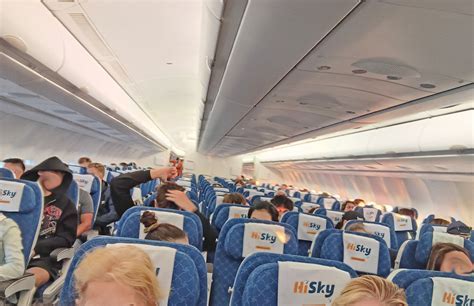
Despite being a narrow-body aircraft on a transatlantic haul, the comfort level scored a reasonable 7/10 in multiple user reviews. One fortunate flyer reported the plane being only 40% full, allowing entire rows to themselves, greatly improving comfort. Even in a full cabin, the A321neo’s newer cabin architecture provides enhanced space, mood lighting, and modern lavatories.
Food and Meal Service
HiSky’s catering service was harshly criticized, particularly by travelers with dietary preferences. Several passengers who requested vegetarian meals were provided with standard, sometimes non-vegetarian dishes, including a fish and rice entrée substituted without warning. One traveler recounted being served an unidentifiable glop, only to discover it was not vegetarian after translation.
Moreover, hot water was reportedly rationed, only offered at breakfast, and most consumables—including bottled water—had additional charges. These constraints, while perhaps understandable from a budget-carrier perspective, were flagged as avoidable irritants on a 10+ hour journey.
Crew Service and Professionalism: A Work in Progress
Another recurring theme among reviews was the flight crew’s inexperience, particularly in handling non-Romanian passengers. Described as polite but rigid, the service staff often lacked flexibility in resolving issues such as seat confusion, food mix-ups, or language barriers.
That said, some passengers appreciated the directness and honesty of the crew, stating that “at least they tell you to your face” when they cannot resolve a problem. This level of transparency, while jarring to some, earned a degree of respect from more seasoned travelers who prefer clarity over sugarcoating.
Flight Timeliness: Surprisingly Efficient
Despite occasional late departures, HiSky’s OTP-JFK route has shown impressive arrival performance. Jetstream winds on eastbound journeys helped recover time, with flights arriving up to 15 minutes early. Conversely, JFK departures experienced longer taxi times, often due to air traffic congestion and departure slot sequencing, an issue common at JFK’s Terminal 7.
Passengers reported being required to obtain physical boarding passes, even if checked in online—a procedural hiccup that may stem from airport security and customs protocols rather than HiSky’s policies.
Passenger Sentiment and Community Reception
Across forums and vlog content, the sentiment leans decidedly positive, despite frustrations. The value proposition—direct, transatlantic flights at half the cost of legacy carriers—clearly resonates with Romanian expats, budget travelers, and students.
A Reddit user summed it up aptly: “To fly direct for this price is just a steal. I recommend it and I hope they don’t stop flying this route.”
Another shared: “I can deal with semi-shitty service if I get to where I need to be on time. That’s what headphones, a good tablet, and bringing my own food is for.” This pragmatic approach reflects a growing segment of flyers who prize efficiency over luxury.
Challenges Ahead: Will HiSky Sustain the Momentum?
HiSky’s future success on this route depends on several factors:
- Regulatory consistency, including U.S. FAA and TSA requirements
- Sustainable load factors year-round, particularly in non-peak seasons
- Crew training and service standardization across multiple languages
- Upgrading onboard service quality, particularly meals and IFE
Should HiSky address these operational inefficiencies, its A321neo-based long-haul strategy could redefine low-cost transatlantic travel from Eastern Europe. However, without tangible improvements in passenger experience, particularly for repeat flyers, the novelty could wear off quickly.
Final Verdict: A Brave Start with Room to Grow
HiSky’s Bucharest to New York route stands as a symbol of ambition, tapping into a market hungry for direct, affordable transatlantic connectivity. Its maiden voyages have been rocky but not disastrous—underwhelming food, lackluster entertainment, and crew learning curves aside, it delivers on the core promise of safe, direct, and on-time travel.
For those traveling on a budget, who can compromise on frills, HiSky’s OTP-JFK flight is an undeniable bargain. With improvements to its service delivery and minor policy refinements, it could become a staple of the Romanian-American air corridor.
As the airline industry continues to evolve post-pandemic, HiSky’s calculated risk may just prove to be a pioneering move in the future of low-cost, long-haul aviation from Eastern Europe to North America.