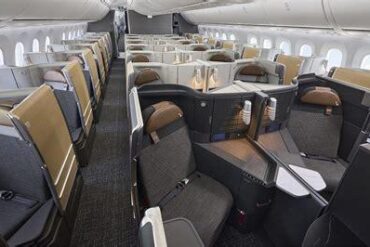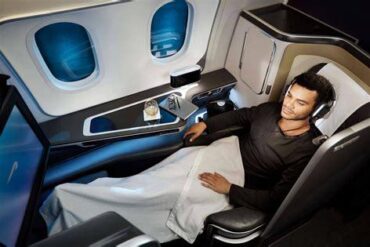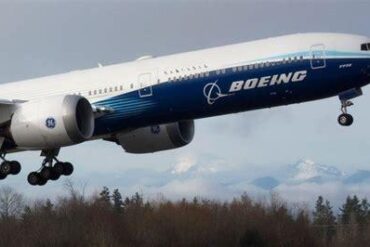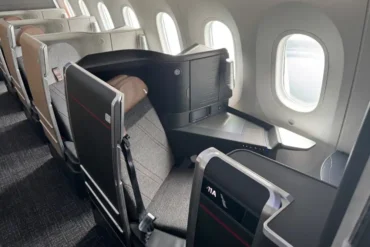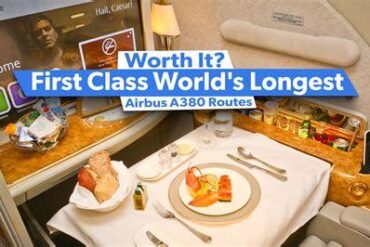
The Airbus A380 remains one of commercial aviation’s most ambitious achievements, a double-decked giant conceived to reshape long-haul travel at a scale the industry had never seen. Even though the jet never met the commercial expectations placed upon it, the aircraft continues to operate some of the world’s most demanding routes, providing business-class passengers with expansive cabins, quiet flights, and consistently high service standards. These ultra-long-haul missions push the airframe to its limits and offer travelers some of the most compelling premium experiences in the sky.
Despite the aircraft’s tumultuous history, the A380’s unique combination of range, interior volume, and structural capability allows airlines to deploy it on routes exceeding 7,500 nautical miles. Premium-cabin demand remains strong on these sectors, and the business-class experience has evolved into a defining feature of each carrier’s brand identity. With dynamic pricing models and high operational costs, fares across these long-distance corridors fluctuate considerably, influenced by seasonal demand, cabin configuration, and competitive positioning. Understanding the pricing landscape across the world’s seven longest nonstop A380 flights provides insight into how airlines leverage their flagship aircraft to command premium revenue.
As these routes span oceans and continents, they illustrate how carriers position their A380 fleets strategically for prestige, capacity, and yield optimization. Passengers choosing business class on these sectors not only access lie-flat comfort but also experience amenities exclusive to the aircraft itself, from onboard lounges to refined seating philosophies that take advantage of its wide cabin cross-section. The following sections explore each of the seven routes in detail, showing both the operational profiles and the typical cost for travelers seeking to experience them at the front of the upper deck.
Qatar Airways’ daily A380 flight from Doha Hamad International Airport to Sydney Kingsford Smith Airport ranks among the airline’s longest routes, stretching 6,680 nautical miles. Scheduled for over fourteen hours in either direction, the service showcases the upper limit of the aircraft’s performance envelope. The carrier configures its A380s with 517 seats in a three-class layout, including 48 Collins Super Diamond business-class seats arranged in a reverse-herringbone pattern. Although these seats lack sliding privacy doors, they remain fully lie-flat with direct aisle access and are supported by a 17-inch entertainment screen.
Business-class pricing on this ultra-long-haul route typically ranges from $3,800 to $6,000 one way. Award travelers can also secure seats using Avios or partner program miles, though availability on peak travel dates remains limited due to consistently high demand. The A380’s upper-deck lounge enhances the overall experience, offering a communal space unique to the carrier’s flagship aircraft.
Qantas’ Melbourne–Los Angeles A380 Operation And Its Premium Cabin Costs
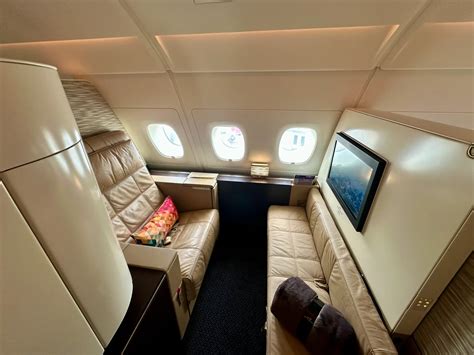
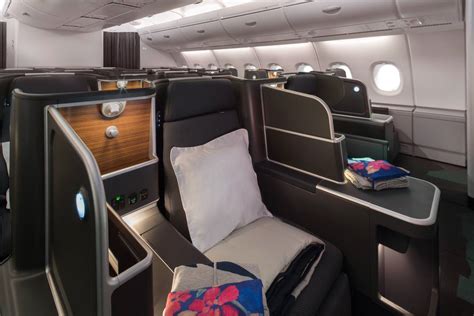
Qantas assigns its A380 to the Melbourne–Los Angeles route on select days, covering a journey of 6,683 nautical miles. The carrier’s four-class A380 cabin layout features 70 business-class seats based on the Thompson Vantage XL platform. These lie-flat seats are staggered but designed without the ‘honeymoon’ pairings found on other airlines, maintaining more consistent spacing across the cabin. Business-class travelers also gain access to the aircraft’s dedicated lounge positioned near the forward cabin.
Pricing for this long-haul sector varies widely. One-way business-class fares generally start around $3,600, though prices can exceed $9,000 depending on seasonal patterns and booking windows. Whether operated by the A380 or the Boeing 787, the route maintains similar pricing levels, reflecting the consistently strong transpacific business-class market.
Emirates’ A380 Routes To San Francisco, Houston, And Los Angeles
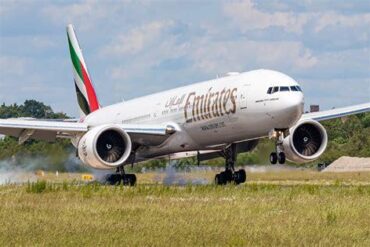
Emirates remains the world’s largest A380 operator, with more than one hundred aircraft in active service. The airline deploys the jet on several of its longest U.S. routes, including Dubai to San Francisco, Houston, and Los Angeles. Distances across these three routes range from 7,041 to 7,246 nautical miles, requiring block times exceeding sixteen hours.
Business-class fares reflect both the length of these flights and Emirates’ robust premium-cabin demand. Dubai–San Francisco typically begins at just over $4,000, but fares can rise above $12,000 depending on travel period. Dubai–Houston pricing follows a similar trajectory, ranging from $4,400 to more than $17,000, making it one of the carrier’s most expensive routes in business class during peak windows. Dubai–Los Angeles generally averages $4,800 to $5,500, though upper-end fares can surpass $13,000.
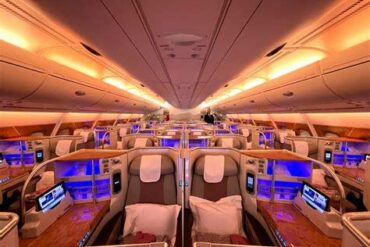
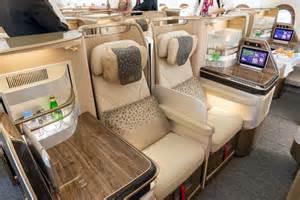
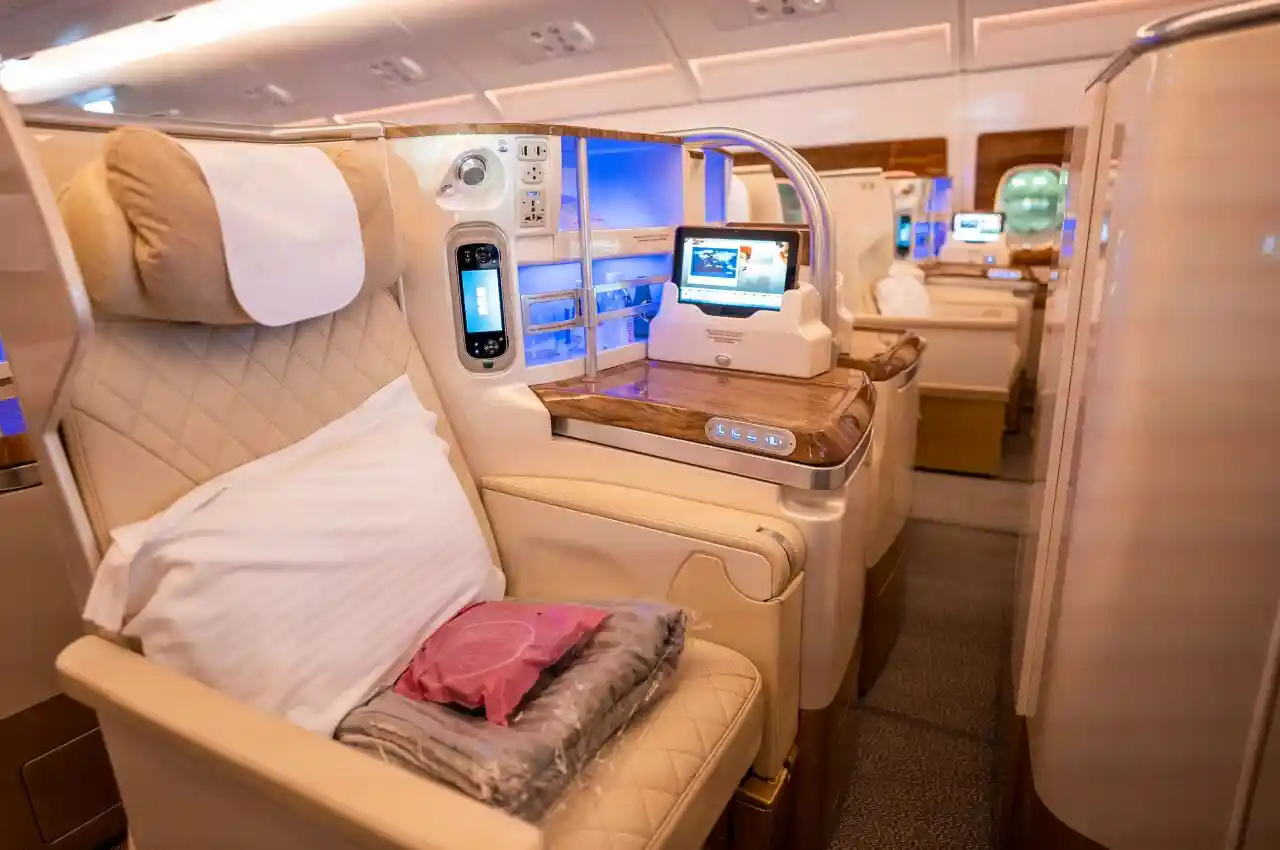
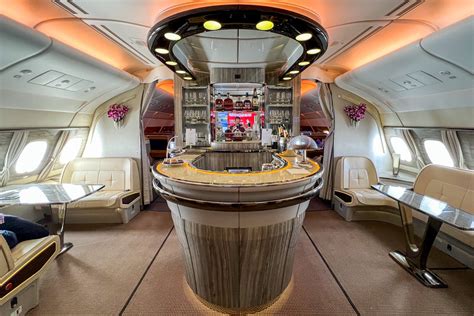
The A380s deployed on these sectors consistently feature 76 business-class seats using Emirates’ customized Safran SkyLounge platform. The staggered layout includes alternating center seats that form ‘honeymoon’ pairs in odd-numbered rows, a distinctive feature favored by couples seeking proximity on long-haul journeys. Passengers also enjoy Emirates’ signature onboard bar, positioned at the aft of the upper deck.
Qantas’ Sydney–Dallas/Fort Worth A380 Route And Its Highest Business Class Fares
Qantas operates the A380 between Sydney and Dallas/Fort Worth on several days of the week, covering a distance of 7,454 nautical miles. This route represents the airline’s longest A380 mission and one of the most demanding flights in its network. Blocked at up to 17 hours and 25 minutes on the return, the route fully utilizes the aircraft’s long-range capability.
One-way business-class fares commonly range between $6,000 and $10,000, making it one of the most expensive A380 routes globally. The higher pricing reflects both the route’s extraordinary length and the consistently strong U.S.–Australia premium-class demand. Although Qantas alternates between the A380 and the Boeing 787-9, fares remain relatively stable regardless of aircraft size, underscoring the unwavering appetite for premium seating across the Pacific.
The A380’s 70-seat business-class cabin uses the same Thompson Vantage XL design found on the Melbourne–Los Angeles route. Its larger premium footprint, expanded lounge space, and exceptionally quiet ride give the A380 a clear advantage over the 787-9 for travelers prioritizing comfort on ultra-long segments.
Emirates’ Dubai–Auckland A380 Flight: The Longest A380 Route In The World
Emirates’ Dubai–Auckland service stands as the world’s longest nonstop A380 route, reaching 7,668 nautical miles across more than sixteen hours of flight time. The return leg typically exceeds seventeen hours. The airline often assigns its newest four-class A380s to this route, incorporating premium economy alongside refreshed finishes in all cabins. Business-class seats remain the same Safran SkyLounge platform found elsewhere in Emirates’ A380 fleet, though the newest variants benefit from modernized controls and updated interfaces.
Typical one-way business-class fares fall between $5,000 and $6,000, which is comparatively moderate given the flight’s extraordinary length. Operational constraints occasionally require the airline to limit cargo or block seats for performance reasons, though the A380’s size still enables Emirates to carry far more premium passengers than either the Boeing 777 or Airbus A350 could on the same route.
The exceptional range and stability of the A380 make it particularly well-suited for this marathon sector. Passengers benefit from the aircraft’s low cabin noise, wide aisles, and a spacious upper deck that offers an experience unmatched by any twin-engine alternative currently in service.
How Pricing Reflects The A380’s Unique Position In Ultra-Long-Haul Travel
Across these seven routes, business-class fares span a striking range, from roughly $3,600 on lower-demand days to more than $17,000 during peak periods. Pricing is shaped by more than distance alone. Cabin layout, lounge access, seat design philosophy, and overall aircraft prestige influence the perceived value of each journey. Carriers using the A380 capitalize on the aircraft’s expansive cabins and smooth flight characteristics to distinguish their most premium long-haul offerings.
Even as airlines phase out four-engine aircraft in favor of more efficient long-range twins, the A380 retains a powerful niche appeal. Its presence on these routes illustrates how airlines deploy it strategically to maximize premium-class yield while delivering a flagship-level product that stands apart from industry norms. Travelers willing to invest in these long journeys receive not only lie-flat comfort but a uniquely spacious and quiet environment that continues to define the A380’s legacy.
These seven nonstop routes reveal how the aircraft remains relevant through thoughtful cabin design, sustained demand for premium travel, and the enduring appeal of a flying experience that few modern airliners can replicate. For passengers seeking comfort on the world’s longest commercial flights, business class on the A380 remains one of the most compelling options available today.