The Anatomy and Engineering of Plane Wheels
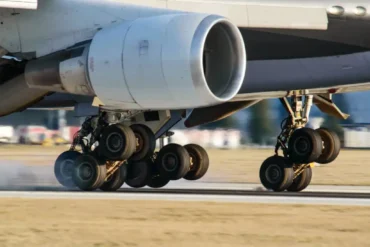
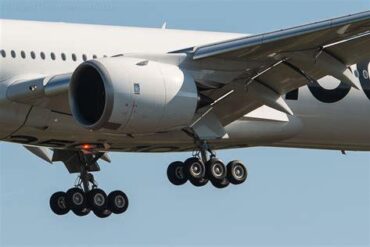
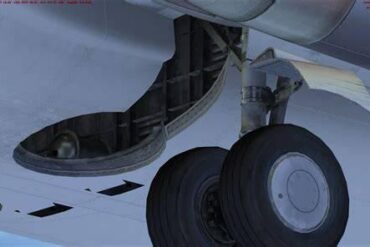
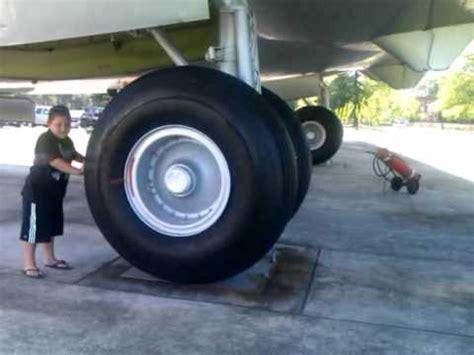
When an aircraft weighing over 400 tons hurtles toward Earth at landing speeds exceeding 150 knots, the entire burden rests on its wheels. These small components — visually unassuming, but structurally sophisticated — are among the most critical parts of an aircraft’s undercarriage. The complexity of plane wheels lies not just in their composition, but in their ability to absorb shock, manage heat, and resist catastrophic failure under conditions that no car tire could withstand.
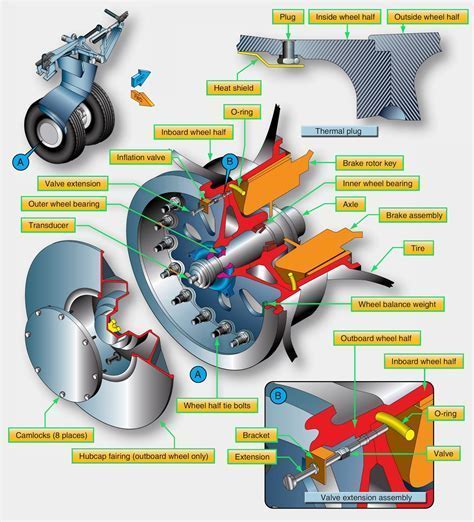
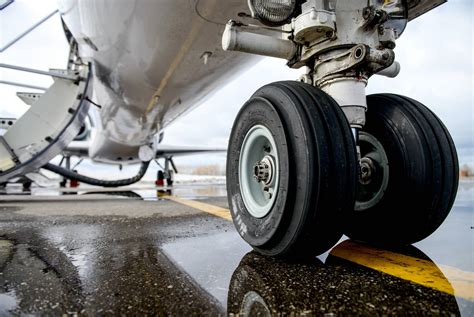
At their core, airplane wheels are made of two primary components: the rim and the tire. The rim is constructed from high-strength aluminum or magnesium alloys, designed to bear colossal loads without deforming. It comes in two segments — the inboard and outboard wheel rims — which bolt together to clamp the tire in place, unlike the simpler one-piece rim used in automobiles.
Tire Construction: Layers of Strength
Aircraft tires are masterpieces of layered engineering, often comprising up to 10 to 15 different materials, including natural and synthetic rubber, nylon, aramid fibers, and steel. Each layer serves a precise function:
-
Tread: The outermost rubber that contacts the runway, designed to resist abrasion and generate minimal heat.
-
Belt and casing plies: Made of nylon or aramid cords, these layers provide tensile strength and shape retention.
-
Beads: Steel wires encased in rubber, forming the inner edge that locks the tire onto the rim.
-
Inner liner: A leak-proof layer that keeps nitrogen inside at extremely high pressures.
The internal composition also includes undertread compounds, protector plies, and chafer strips to manage heat and mechanical stress — all geared to withstand takeoff speeds, sudden braking, and rapid acceleration without a hint of compromise.
Extreme Pressure: Nitrogen Inflation and Safety Measures
While car tires typically operate at 30–40 psi, the tires on a commercial aircraft can reach up to 200 psi. For high-performance military aircraft like the F-16, this number can soar to 320 psi. To manage this safely, plane tires are inflated with dry nitrogen gas, not air. The reason is rooted in thermodynamics — nitrogen is inert, non-flammable, and contains no moisture, thus eliminating the risk of combustion when brakes heat up during rejected takeoffs or emergency landings.
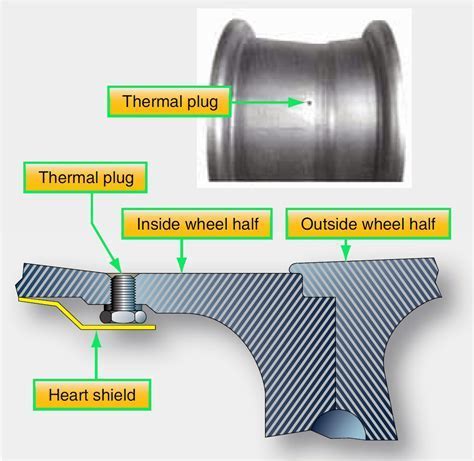
Each tire is fitted with an Over Pressure Relief Valve (OPRV), a critical component that automatically bleeds off excess gas if inflation exceeds safe limits during servicing. In parallel, thermal plugs — fusible metal inserts — act as sacrificial safety valves. If brake temperatures rise to dangerous levels, these plugs melt, allowing the tire to deflate gradually and safely, preventing an explosive blowout.
Comparing Aircraft Tires to Car Tires
While similar in appearance, aircraft and automotive tires differ dramatically in purpose and performance:
-
Structure: Aircraft tires use bias-ply construction for enhanced rigidity; car tires favor radial plies for comfort and longevity.
-
Materials: High-temperature compounds in plane tires resist melting at 200+ °C, unlike their automotive counterparts.
-
Mounting: Aircraft tires are bolted onto split rims, a far cry from the press-fit used in automobiles.
-
Lifespan: A commercial aircraft tire may endure over 500 landings before requiring retreading — and can be retreaded up to 7 times.
These distinctions reinforce that while tires on the ground and in the air may look alike, their engineering philosophies are worlds apart.
Heat Management During Landings and Rejected Take-Offs
Landing gear assemblies experience extreme thermal spikes. In a rejected takeoff, brakes may reach temperatures exceeding 1,000°C. To mitigate the resulting thermal threat to the wheels and tires, the aforementioned thermal plugs play a vital role. But beyond passive safety, modern aircraft integrate brake cooling systems, carbon composite brake discs, and cockpit monitoring to prevent tire damage during repeated operations.
Tread Design and Chines: Function Over Aesthetics
Unlike car tires which require intricate tread for road grip, aircraft tires use simple circumferential grooves. These grooves allow water to escape but minimize the risk of rubber block shearing during landing. The tires are not driven; they begin spinning only after touchdown, dragged into motion by the aircraft’s kinetic energy.
Specialized deflectors called chines are sometimes added to nose gear tires, especially on aircraft with fuselage-mounted engines. These curved protrusions direct standing water away from the engine intakes, improving both safety and engine longevity during rainy landings.
Runway Compatibility and Tire-Wear Considerations
The effectiveness of aircraft tire design is interdependent with runway infrastructure. Runways are engineered with grooves and slope gradients to drain water effectively. Even so, tires are expected to handle the occasional hydroplaning scenario, which is why minimal but functional tread patterns persist in their design.
Tire wear on runways manifests as rubber streaking, especially near touchdown zones. Despite harsh conditions, these tires endure hundreds of cycles. When the tread finally wears thin, the casing is retreaded — a process that saves costs and preserves the tire’s structural integrity.
Environmental Impact and Recycling Initiatives
Contrary to popular belief, worn aircraft tires aren’t discarded waste. Manufacturers like Michelin and Goodyear employ closed-loop recycling programs, turning shredded rubber into playground mulch, industrial mats, or even agricultural vehicle tires. This sustainability model not only reduces carbon footprint but ensures resource efficiency.
Conclusion: Engineering Trust One Tire at a Time
Each plane tire embodies decades of aerospace engineering, material science, and safety innovation. Withstanding pressures six times higher than car tires, enduring extreme thermal cycles, and enabling the safe deceleration of aircraft traveling at near-terminal velocity, these wheels represent a marvel of modern engineering.
The next time an aircraft touches down smoothly, remember: only 45 inches of expertly engineered rubber separate hundreds of tons of metal and passengers from the ground. That’s the quiet brilliance behind every safe landing.
FAQs About Plane Wheels
How often are aircraft tires replaced?
Aircraft tires are typically retreaded after around 500 landings, but the exact number varies based on aircraft type, runway conditions, and braking intensity. Most high-performance tires can be retreaded up to seven times before they are fully retired.
Why do plane tires not explode on landing?
Plane tires are designed with high-strength bias-ply layers, inflated with dry nitrogen, and feature thermal relief plugs and overpressure valves. These combined technologies allow the tire to withstand the sudden loads and heat spikes without failing.
Can you use aircraft tires on cars?
No. Despite superficial similarities, aircraft tires are optimized for short bursts of high-speed impact and thermal resilience, not for continuous rolling comfort or cornering found in road vehicles. Their structure and inflation pressures are incompatible with car suspension systems.